In a nutshell
- 🍂 Evening watering boosts disease risk: prolonged leaf wetness overnight fuels fungi and bacteria (blight, mildew, black spot), especially in dense, still plantings.
- 🌱 Roots need oxygen: cool, saturated soils at night reduce aeration, inviting Pythium/Phytophthora and causing root rot, stunting, and sudden collapse later.
- 🐌 Damp nights attract pests: slugs, snails, and fungus gnats thrive in wet surfaces and mulch, turning beds into a nocturnal buffet.
- 🌞 Morning watering aligns with plant physiology: supports transpiration and nutrient transport, reduces humidity windows, and improves calcium delivery for edibles.
- 🧰 Best practice: water deeply at the base (drip or rose), avoid wetting foliage, use mulch and free-draining soil, and prioritise consistency over quantity.
It sounds sensible: less sun, less evaporation, less waste. Yet watering plants in the evening can quietly seed problems that reveal themselves days later. In the UK’s often humid nights, moisture lingers. Leaves don’t dry. Pots stay cool and wet. That’s a recipe for disease, pests, and root stress. Morning watering aligns with plant biology and local climate rhythms, fortifying growth rather than inviting trouble. What looks like a thrifty twilight top-up can become a slow-burn setback. Before you reach for the hose at dusk, consider what happens between sunset and sunrise in your borders, containers, and greenhouse.
Overnight Moisture and Disease Risk
Evening watering increases leaf wetness duration, keeping foliage damp well into the night. That matters because many fungal spores and bacterial pathogens germinate and spread when surfaces stay moist without sunlight or airflow to dry them. Blight, powdery mildew, black spot: they all exploit this window. Leaves that stay wet overnight become pathogen playgrounds. On calm nights, a still, saturated boundary layer forms around foliage. The result is a microclimate that favours infection, especially in dense plantings and shaded plots where air movement is limited.
There’s a second, subtler angle. Water droplets can trap cool air against tissue, increasing chill stress on tender plants and slowing their overnight recovery. In greenhouses, evening watering amplifies humidity exactly when ventilation is reduced, pushing relative humidity past the threshold where spores flourish. For beds and borders, splashing late also spreads soil-borne inoculum onto lower leaves. A morning schedule trims these risks by giving sunlight and breeze a chance to dry surfaces promptly.
Soil Oxygen, Root Health, and Rot
Roots need oxygen as much as water. In the evening, saturated compost and soils cool quickly, slowing diffusion and respiration while prolonging saturation. That’s a bad combination for containers, raised beds, and heavy clay. Prolonged wetness reduces pore oxygen, encouraging anaerobic pathogens such as Phytophthora and Pythium that cause root rot and damping-off. Waterlogged nights quietly suffocate roots. You may not see wilting immediately; symptoms often appear as yellowing, stunting, or sudden collapse weeks later, especially after a heat spike when impaired roots can’t keep up.
Evening irrigation also locks in cool, wet media that slows microbial nutrient cycling. Beneficial microbes stall; harmful ones thrive. In pots, capillary action may leave the core sodden while the rim looks dry, tricking you into overwatering. Morning watering distributes moisture when temperatures rise, respiration increases, and evaporation helps prevent chronic saturation. It also primes plants to meet midday demand without creating an overnight swamp beneath the surface.
Pests, Slugs, and the Microclimate You Create
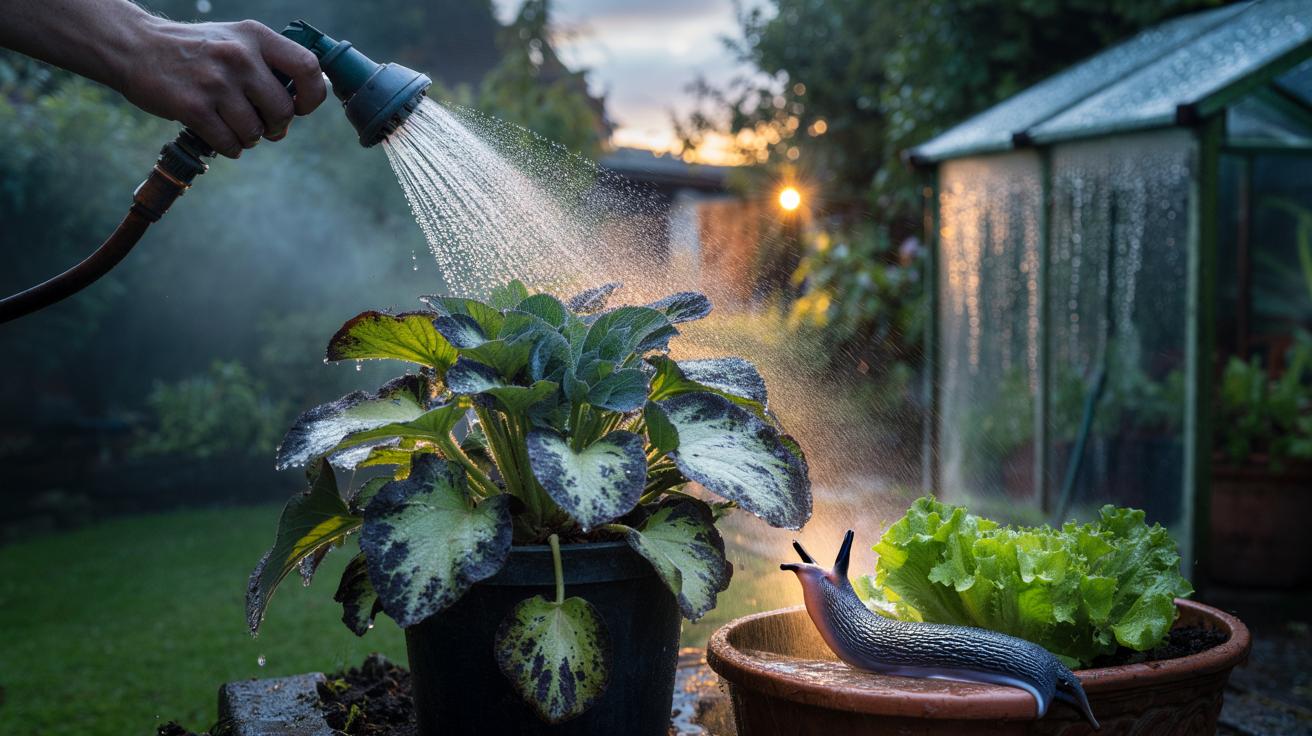
Slugs, snails, and pillbugs adore a damp, dark buffet. Evening watering sets the table. Soft new growth stays moist, mulch glistens, and predators are scarce. Gastropods follow scent trails and moisture gradients, so freshly watered beds become neon-lit motorway services for hungry molluscs. By night, dampness equals access. The same goes for fungus gnats in containers and, in warmer spells, mosquitoes around saucers and trays. In lawns, late moisture extends the dew period, accelerating fungal patches.
There’s also an indirect pest effect. Weakened, over-wet plants emit stress signals and become more attractive to sap-suckers like aphids. Leaves spotted by disease turn into inoculum sources for the rest of your plot. A dry evening surface layer breaks this chain. Targeted morning soaks at the base, avoiding foliage, deny pests the shelter and shimmer they use to navigate while still giving roots what they need for the day’s work.
Plant Physiology: Why Morning Watering Works Better
Plants wake with the light. Stomata open, transpiration ramps up, and xylem flow pulls water and nutrients from roots to shoots. Morning irrigation dovetails with this rhythm, supporting nutrient transport and photosynthesis while buffering midday heat. It also reduces leaf-to-air temperature extremes, limiting heat stress and sunscald. Water in the morning, and plants can spend energy growing rather than fighting microclimate mishaps. For edibles, this timing improves calcium delivery to rapidly developing tissues, cutting disorders like blossom end rot in tomatoes and tip burn in lettuces.
Practically, morning watering lets you see runoff, adjust emitters, and detect leaks in daylight. Surfaces dry by afternoon, collapsing the humidity window that diseases exploit. If you must water late, keep it to the root zone, use drip or a slow-penetration rose, and avoid wetting leaves. That compromise protects foliage while preventing the overnight saturation that undermines root respiration.
| Time of Day | Pros | Cons | Best For |
|---|---|---|---|
| Morning | Aligns with transpiration; leaves dry fast | Requires routine; earlier start | Beds, containers, greenhouses |
| Midday | Convenient; quick visual checks | Higher evaporation; potential leaf scorch | Only in cool, overcast spells |
| Evening | Lower evaporation; quiet hoses | Disease risk; pests; root oxygen stress | Emergency top-ups, drip to soil only |
Evening watering feels efficient, but the hidden costs stack up: disease-friendly humidity, oxygen-starved roots, and pest parades. Shift the habit, and you change the outcomes. Give plants a deep, targeted morning drink at the base, mulch to hold moisture, and choose soil that drains freely yet retains enough water for the day. Consistency beats quantity. Right water, right time, right place. With night-time risks clearer, will you rework your routine, experiment for a fortnight, and watch how your garden responds when every drop supports health rather than hazard?
Did you like it?4.5/5 (30)