In a nutshell
- 🔄 Regular turning redistributes pressure to prevent dips, extend mattress life, improve spinal alignment, and preserve edge support.
- ⏱️ Follow a schedule: rotate 180 degrees fortnightly for the first three months, then every 2–3 months; flip quarterly only if the mattress is double-sided, and always follow the care label to protect your warranty.
- 🛏️ Know your type: one-sided memory foam, latex, and pillow-top hybrids should not be flipped; double-sided pocket spring models benefit from alternating flips and rotations.
- 🧰 Use safe technique: two people lift from underneath, never by the handles; rotate head-to-foot, and for flipping, roll onto the side before lowering; air and vacuum while the bed is open.
- ✅ Support the routine: use a breathable protector, ensure slat spacing is ≤7 cm, tighten fixings, and keep reminders; early, consistent rotation limits body impressions and reduces partner disturbance.
Every complaint about mattress dips has a simple villain: repeated pressure in the same place nightly. The antidote is the humble flip and rotation routine. As UK households look to stretch value from big-ticket buys, turning a mattress can add years of service, sharpen spinal alignment, and quiet partner disturbance. By redistributing load across foams and springs, body impressions relax and support firms up again between sleeps. Not every model should be flipped, but nearly all benefit from rotation. Check your care label before you start. Here’s what causes sagging, how a regular schedule prevents it, and the safest way to do it.
Why Mattresses Develop Dips
Those tell-tale hollows are the result of material science meeting human habit. Foams experience “compression set,” fibres settle, and pocket springs lose a fraction of their height after months beneath shoulders and hips. Heat and humidity from sleepers accelerate softening, while gaps between widely spaced slats can let a mattress sag into unsupported areas. Heavier partners and a preferred side of the bed concentrate load, creating sagging and roll-together. Even premium builds are not immune; they simply take longer to show it. A dip does not always mean failure—it often means the same zones are seeing the same forces nightly.
Rotation interrupts this pattern. Moving high-pressure zones spreads stress, allowing foams to recover and springs to rebound. Latex is resilient; memory foam needs time to relax, which a rotation routine provides. Edge support also lasts longer when load is shared between sides and ends. In a centrally heated UK bedroom, materials dry and cool by day; rotating enhances that reset. Regular rotation is the simplest, most effective way to slow visible sagging and keep support even. If your mattress is double-sided, flipping compounds the benefit by presenting a fresh surface to your body.
How Often Should You Flip or Rotate?
As a rule, rotate 180 degrees every two weeks for the first three months to even out early settlement, then every two to three months thereafter. Heavier sleepers, hot sleepers, and couples with a large weight difference may benefit from monthly rotation. Most modern one-sided mattresses should never be flipped; doing so can damage layered comfort foams and void a warranty. Traditional two-sided mattresses can be flipped quarterly, ideally alternating: rotate in one quarter, flip the next. The National Bed Federation (NBF) and many UK brands recommend keeping a turning diary or setting calendar reminders.
Warranties often specify acceptable body impressions—typically 25–30 mm for foam and 35 mm for natural fillings—measured with no weight on the bed. Following the maker’s care schedule helps keep you within those limits. If a mattress sleeps warm or shows early dips, tighten the rotation cadence for a season and review results. A breathable protector, correct base with close slat spacing (no more than 7 cm), and even sheet tension complement the routine. Always follow the label: “rotate only” means rotate, never flip; “turn and rotate” means both.
| Mattress Type | Flip? | Rotate? | Suggested Frequency |
|---|---|---|---|
| Double-sided pocket spring | Yes | Yes | Flip or rotate every 2–3 months (alternate actions) |
| One-sided pillow-top hybrid | No | Yes | Every 2–3 months (monthly if heavy or hot sleeper) |
| All-foam memory foam | No | Yes | Every 2–3 months; fortnightly for first 3 months |
| Latex (one-sided) | No | Yes | Every 3 months; fortnightly for first 8 weeks |
Flipping and Rotating Technique: Step-by-Step
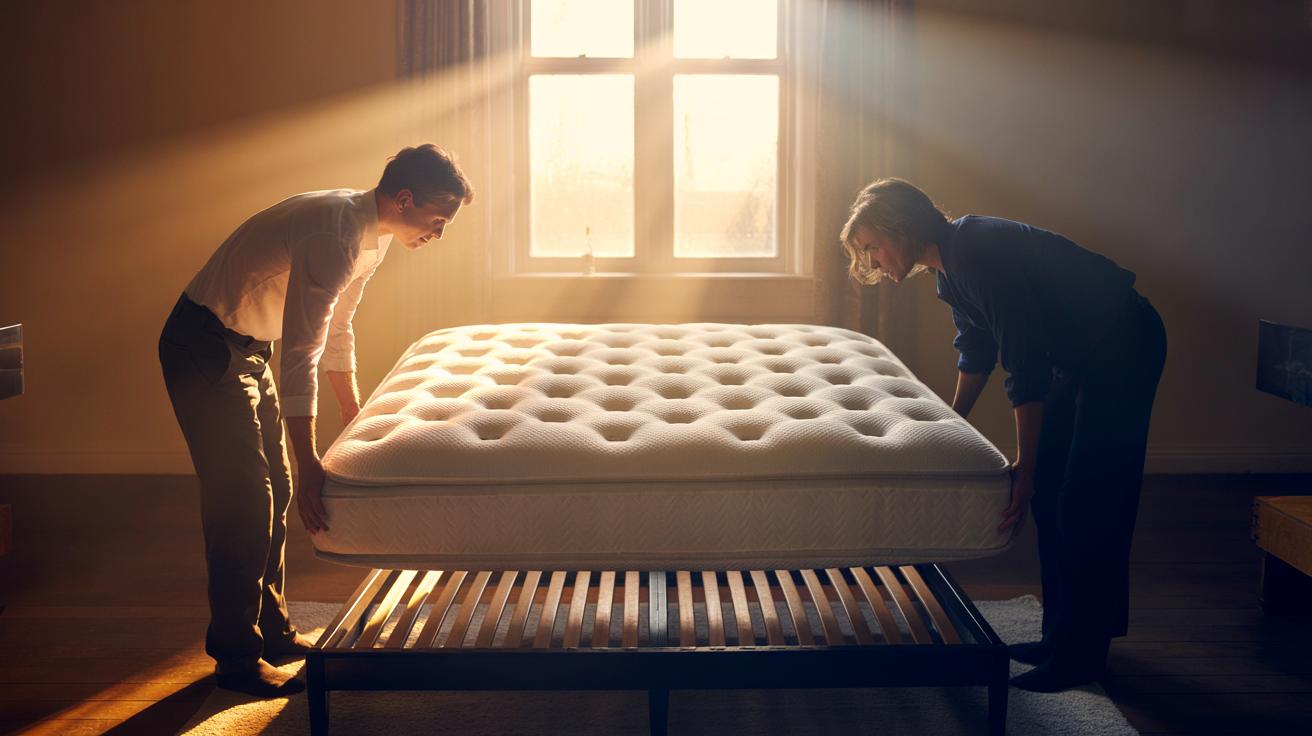
Preparation makes the job safer and kinder to the mattress. Clear bedside tables and lamps, strip bedding, and open a window for a brief airing. Two people should handle larger UK sizes; never lift a mattress by its stitched handles—they are for positioning only. Stand at opposite sides, lift from underneath, and pivot on the base rather than hauling. For rotation, turn the mattress 180 degrees clockwise so the head becomes the foot. For flipping (if allowed), roll it onto its side, then lay it down gently to avoid straining borders and springs.
While the bed is open, vacuum the base and the mattress surface, paying attention to vents and tufts. Check slats: they should be secure, evenly spaced, and not bowed. Retighten headboard fixings to silence creaks. Align labels so you know which corner was last at the head, and log the date. A breathable protector helps manage moisture and keeps fibres buoyant. Allow five to ten minutes of airflow before remaking the bed to refresh fillings and dissipate humidity. This small habit compounds into night-by-night comfort dividends.
Adopt a turning routine and a mattress stops behaving like a tired sponge and starts supporting like new for longer. Sleeper weight, room climate, and base type all influence how quickly sagging arrives, yet simple rotation evens the odds. It protects warranties, preserves edge strength, and can ease morning aches by keeping your spine better aligned. If your model is double-sided, alternating flips and rotations brings the full benefit; if it’s one-sided, a careful 180-degree turn is your ally. What schedule will suit your bed, your body, and your bedroom climate—and what change could you make this weekend to reset your sleep?
Did you like it?4.4/5 (30)