In a nutshell
- ✨ Mild abrasives gently polish the tooth’s pellicle to lift extrinsic stains from tea, coffee, and wine — a mechanical clean, not bleaching, so intrinsic shade stays unchanged.
- 🧡 Simple paste: 1 tsp turmeric + 1 tsp baking soda + 2 tsp coconut oil (optional peppermint). It’s a surface polisher, not a replacement for fluoride toothpaste, and can stain fabrics.
- 🪥 Safe use: brush with a soft-bristled brush and light pressure for about a minute, spit into a bin, rinse well, then follow with fluoride toothpaste; limit to 1–2× weekly.
- 📊 Abrasion context: RDA guides gentleness — baking soda ~7 (very mild), calcium carbonate ~70–100, hydrated silica ~20–200; DIY mixes lack formal RDA, so moderation is key.
- 🩺 Red flags and habits: stop if you notice sensitivity or gum changes and consult a dentist; support results with smart sipping, water rinses after dark drinks, and regular hygienist visits.
Spilt espresso, afternoon tea, a love affair with berries — they all leave their calling card on your smile. While professional whitening can lift deeper discolouration, many readers ask about gentler, kitchen‑cupboard fixes. Enter the turmeric paste trend: a bright yellow blend that sounds counterintuitive yet promises to polish away surface stains. The secret is not magic but mechanics. Mild abrasives loosen the protein film that clings to enamel and traps pigments, letting you brush them off before they bed in. Used correctly, a soft polish can freshen the look of teeth without scouring enamel, and it can slot into a broader routine anchored by fluoride toothpaste and regular check‑ups.
How Mild Abrasion Lifts Stains from Enamel
Your teeth are coated by an invisible protein layer called the pellicle. Tea tannins, coffee chromogens, and wine pigments bind to this film, creating extrinsic stains that dull brightness. Mild abrasives — think fine particles such as sodium bicarbonate or food‑grade powders — work by gently polishing the pellicle and the plaque that sits atop enamel. The action is mechanical, not chemical: tiny particles glide across tooth surfaces, dislodging coloured molecules so your brush can carry them away. Because this is a surface effect, it won’t alter the underlying tooth shade, but it can noticeably improve luminosity.
The art is in the balance. Enamel is hard but finite, and the wrong grit, pressure, or frequency invites wear. To stay on the safe side, pair low‑abrasivity ingredients with a soft‑bristled brush and light strokes. Oils or water in a paste act as lubricants, dispersing particles so they polish rather than scratch. Remember: enamel does not grow back, so a “gentle and occasional” approach beats daily scrubbing.
What Goes into a Turmeric Toothpaste
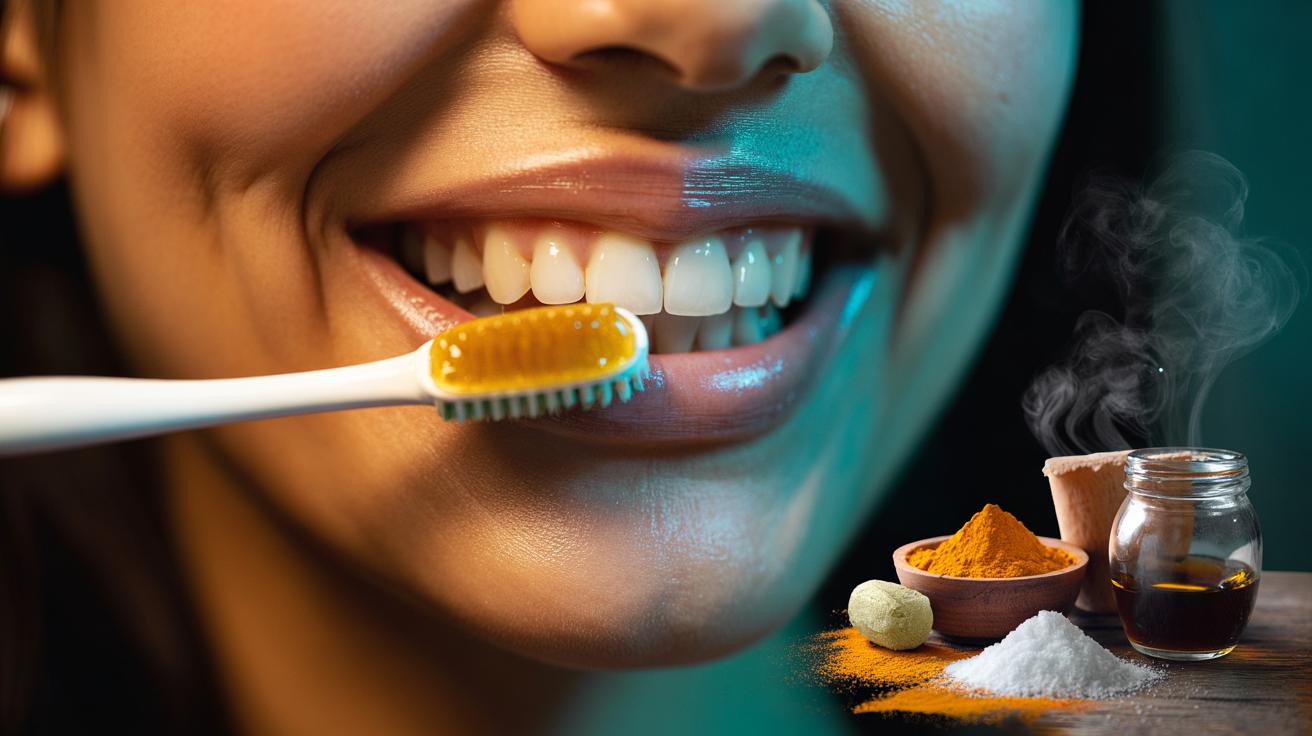
Turmeric’s golden pigment, curcumin, won’t bleach teeth, but finely ground powder can function as a soft polisher when mixed into a paste. A simple at‑home blend looks like this: 1 teaspoon organic turmeric powder, 1 teaspoon baking soda (sodium bicarbonate, a very low‑abrasivity agent), and 2 teaspoons coconut oil to bind and lubricate. Optional: 2–3 drops peppermint oil for flavour, provided you’re not sensitive. The coconut oil gives a spreadable texture and helps suspend particles so they move smoothly over enamel. Always use a separate brush and towel — turmeric will stain fabrics and grout.
This blend targets surface staining while respecting enamel, yet it is not a full replacement for your daily fluoride toothpaste. If you’re pregnant, have oral conditions, or are prone to allergies, consult your dentist before experimenting. Avoid vigorous scrubbing and skip the paste entirely if you wear porous composite restorations or have exposed dentine, where pigments can grab. Rinse thoroughly: turmeric can temporarily tint gums and plaque, but a good swish clears the colour.
Step‑by‑Step: Mixing and Using It Safely
Stir turmeric, baking soda, and coconut oil in a small glass pot until smooth. Dip a soft‑bristled brush, tap off excess, and spread a thin layer over the front teeth. Brush with light, circular strokes for about one minute, focusing on areas that pick up stain — the edges and near the gumline. Spit into a bin or tissue (coconut oil can clog pipes), then rinse well with warm water. Follow with your regular fluoride toothpaste to protect against decay; this paste is for polishing, not cavity defence.
Frequency matters: use the paste no more than once or twice a week, and not on consecutive days. Keep pressure feather‑light; let the particles do the work. Stop immediately if you notice sensitivity, roughness, or bleeding and seek professional advice. For best results, team the routine with stain‑savvy habits: sip dark drinks through a straw, swill with water after tea or red wine, and book a hygienist visit for hardened tartar your brush can’t reach.
Science Check: RDA, Risks, and When to See a Dentist
Dentists gauge abrasive strength with Relative Dentin Abrasivity (RDA). Lower numbers generally mean gentler polishing. Kitchen staples vary, and commercial toothpastes blend particles to hit safe targets. DIY mixes lack formal RDA ratings, so caution and moderation are essential. Turmeric acts as a soft polishing aid rather than a primary abrasive, while baking soda is widely regarded as low on the scale. Here’s a snapshot to frame expectations:
| Abrasive | Typical Role | Indicative RDA Range | Notes |
|---|---|---|---|
| Sodium bicarbonate | Very mild polisher | ~7 | Gentle; helps neutralise acids |
| Calcium carbonate | Mild to moderate abrasive | ~70–100 | Common in pastes; depends on particle size |
| Hydrated silica | Adjustable abrasive | ~20–200 | Formulation‑dependent; can be gentle |
| Turmeric powder | Soft polishing aid | No standard RDA | May stain fabrics; temporary gum tint |
If stains persist, or you have internal (intrinsic) discolouration, seek professional assessment. Smokers, heavy tea or coffee drinkers, and those with rough restorations may need tailored care. Watch for red flags: rising sensitivity, receding gums, or visible grooves near the necks of teeth suggest abrasion or acid wear — time to pause DIY and see a clinician. Paired with a balanced diet, fluoride, and hygienist cleanings, occasional mild polishing can safely lift surface stains.
Used with a light touch, a turmeric‑baking soda paste can freshen the look of teeth by removing the surface film that hoards colour — a modest, mechanical tidy‑up rather than a bleach. The brightest smiles usually come from consistency: gentle polishing now and then, fluoride protection daily, smart sipping habits, and routine professional care. If you’re tempted to try this sunshine‑hued paste, start small, go slowly, and keep your dentist in the loop. What tweaks would help you build a stain‑smart routine that fits your taste for tea, coffee, or curry without dimming your smile?
Did you like it?4.4/5 (30)