In a nutshell
- 🧴 The £1 pantry staple is white vinegar; its acetic acid dissolves mineral deposits and soap scum, leaving mirrors streak-free without residue.
- 🧼 Use smart ratios: 1:3, 1:2, or 1:1 with distilled water; apply to a microfibre cloth, wipe in an S-pattern, then finish with a dry buff or newsprint.
- 🧠 Pro technique: dust first, avoid over-wetting, clean on cool glass, wash microfibres without fabric softener, use straight strokes, and buff corners for a showroom finish.
- ⚠️ Safety first: prevent overspray into frames, keep vinegar off natural stone, never mix with bleach, test coated mirrors, and skip abrasive pads.
- 💷 Cost and eco wins: 750ml for about 85p–£1.20, pennies per clean, low VOCs, refillable bottles cut plastic—effective, safe, and sustainable.
Household shelves groan under the weight of products promising gleaming glass. Yet cleaning experts quietly agree on a cheaper hero: white vinegar. Widely sold in UK supermarkets for around £1, it turns out to be a mirror’s best friend. The reason is simple chemistry and smart technique. Used correctly with a microfibre cloth, this pantry staple wipes away haze, toothpaste flecks, and oily fingerprints without the tell-tale swirls. The result is a truly streak-free shine at a fraction of the price. Whether you rent a studio or run a busy family bathroom, the method is fast, safe, and surprisingly satisfying. Here’s how to make it work every time.
Why White Vinegar Beats Expensive Sprays
Most shop-bought glass sprays rely on solvents and fragrances. They can clean well, but often leave a faint film that shows up as smears in bright light. White vinegar, by contrast, contains mild acetic acid that dissolves the alkaline mineral deposits and soap scum responsible for dull, cloudy reflections. No dyes, no silicone, no sticky additives. Less residue means fewer streaks. It also evaporates quickly, helping to prevent watermarks caused by slow drying. For households in hard water areas, this fast evaporation is a quiet game-changer.
Another key advantage: predictability. Vinegar’s single active ingredient behaves consistently, so once you dial in your dilution, you get repeatable results. Professional cleaners like it for that reason alone. You can also pair it with a lint-free microfibre cloth or old-fashioned newsprint for a crisp finish. Expensive does not equal better when your goal is truly clear glass.
How to Mix the Perfect Streak-Free Solution
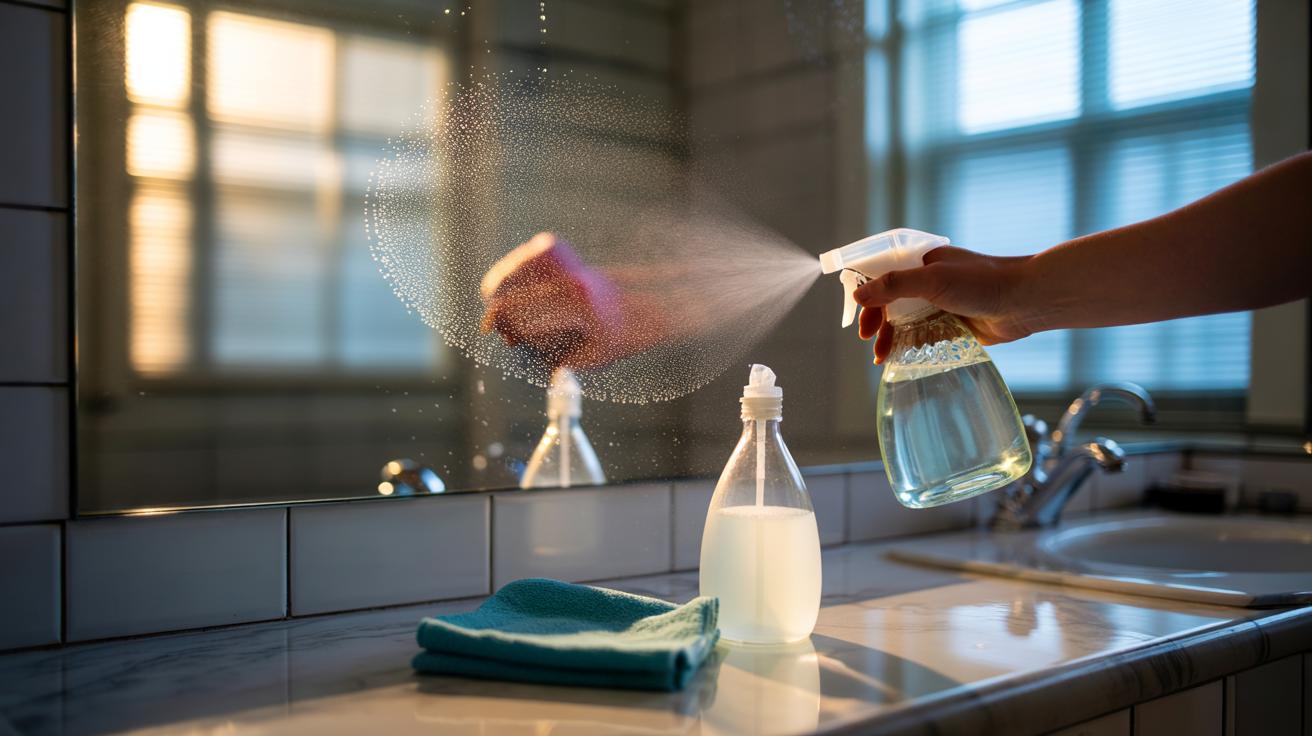
Grab a clean spray bottle. Fill with distilled water if you can (tap water works, but minerals can re-deposit). Add supermarket white vinegar. For everyday splashes, a 1:2 ratio (one part vinegar, two parts water) is ideal. For heavy toothpaste or hairspray build-up, go stronger at 1:1. Mist lightly. Wipe in a gentle S-pattern from top to bottom, edges last. Flip the cloth frequently to avoid redepositing grime. Use a dry corner for a final buff and the streaks vanish.
| Vinegar:Water | Best For | Notes |
|---|---|---|
| 1:3 | Quick daily freshen | Fast wipe, minimal odour |
| 1:2 | General bathroom use | Balances cutting power and clarity |
| 1:1 | Grease, hairspray, kids’ fingerprints | Work in sections; buff dry |
| Neat | Hard-water spots on edges | Apply to cloth, not directly |
Optional tweak: add a single drop of clear washing-up liquid to the bottle for heavy grime, then rinse with a 1:3 mix to remove any surfactant. Less liquid on the glass equals fewer streaks.
Expert Tips to Avoid Streaks and Smears
Start with dust control. A mirror dotted with lint is hard to polish. Flick off loose particles with a dry microfibre first, then spray sparingly on the cloth. Never soak the surface. Excess fluid creeps to the edges and can seep behind the mirror’s backing. Work when the glass is cool; hot midday sun accelerates evaporation and can set faint tide marks before you’ve finished wiping.
Cloth care matters. Wash microfibres without fabric softener (it coats fibres and causes smearing) and air-dry. Fold into quarters to create multiple clean faces; swap as soon as you feel drag. For a showroom finish, do a brief second pass with fresh newsprint or a dry glass towel. Use straight strokes, not circles, so you can immediately spot and correct any lines. Finish with a dry buff in the corners—where streaks love to hide.
What Not to Do With Mirrors
Avoid overspray. Spritzing directly onto the glass can send vinegar into the frame and onto wall paint. Instead, apply to the cloth and keep liquids away from exposed edges. Moisture behind the mirror can attack the silvering and cause blackened “foxing” spots. Skip abrasive pads and gritty powders; they leave micro-scratches that catch the light and look like permanent smears.
Mind your materials nearby. Keep vinegar off natural stone ledges such as marble or limestone—the acid can etch. Never mix vinegar with bleach or products containing chlorine; the reaction can release hazardous gas. Be cautious with tinted or anti-fog coatings; test a corner first. If the mirror has stubborn adhesive residue, soften with a little neat vinegar on a cloth, then follow with your standard 1:2 mix and a dry buff. Restraint wins—more product rarely equals better shine.
Cost, Safety, and Eco Credentials
In most UK supermarkets, a 750ml bottle of distilled white vinegar sells for about 85p–£1.20. Each mirror clean uses only a few sprays, so the per-job cost is pennies. No dyes, minimal VOCs, and a bottle that can be refilled again and again. The scent? Brief and sharp, but it fades as the water evaporates. Open a window or run an extractor for comfort. What lingers is the clarity, not the smell.
It’s safe when used sensibly around children and pets, and it won’t leave a slick on bathroom floors like some silicone-heavy glass polishes. Store your mix labelled and away from heat. For those tracking sustainability, swapping two commercial glass bottles a month for one bulk vinegar refill cuts plastic and transport emissions. The simplest switch can be the most effective. Your mirror—and your wallet—will notice.
From student flats to family homes, the £1 bottle of white vinegar earns its place in the cleaning caddy by delivering fast, streak-free mirrors without fuss. The method is uncomplicated: light mist on a cloth, smart strokes, a dry buff. That’s it. Fewer products, clearer results, less waste. Once you see the difference in natural light, it’s hard to go back. Will you try the vinegar-and-microfibre routine this week—and which mirror in your home will you test first?
Did you like it?4.6/5 (28)