In a nutshell
- 🔬 Vinegar reduces fog by promoting a hydrophilic film on glass: cleaning with acetic acid and a trace of surfactant lowers contact angles so water spreads thinly instead of beading and scattering light.
- 🧪 DIY mix: 1:2 vinegar:water (5% white vinegar) plus 1–2 drops of dish soap per 500 ml; apply to cool glass, spread, then finish with firm buffing to ensure an even, streak-free film.
- ⚠️ Prioritise safety: avoid natural stone, mirror edges, bare aluminium, coated lenses, and electronics; for cars, spray onto a cloth, not directly on the windscreen, and keep clear of tints and sensors.
- ⏳ Expect practical longevity of days to a couple of weeks; reapply weekly in steamy bathrooms, and remember ventilation and steady heating are the real fixes for persistent condensation.
- 📈 Consider alternatives: polymer-based commercial anti-fog formulas can last longer on mirrors and visors, while hydrophobic rain repellents are better suited to exterior car glass.
British bathrooms, winter windscreens, and office panes share a pesky habit: when humid air hits a cold surface, a milky veil of mist blooms and blurs our view. A budget fix has been circulating for years—spritzing a vinegar solution to keep glass clearer for longer. The claim of “forever” is tabloid punchiness, yet there’s compelling chemistry behind it. Vinegar reduces fog by altering how water droplets form and spread, cutting the curtain effect that ruins visibility. Used smartly, a simple acidic spray can shift surfaces toward a more manageable state. Here’s how acetic acid helps stop steam in its tracks—and what it can’t do.
Why Windows Fog: The Science Behind Condensation
Foggy glass is a textbook case of condensation: warm, moist air meets a cooler pane, and water vapour becomes liquid. On untreated glass, droplets form beads due to relatively high surface tension, scattering light in all directions and producing that familiar white haze. If those droplets were to spread into thinner films, the scatter would drop and transparency would improve. Defogging is less about eliminating water and more about changing its behaviour on the surface. The goal is to encourage a uniform sheet rather than billions of mini lenses. That’s where chemistry—particularly surfactants and acids—earns its keep.
Vinegar doesn’t warm the pane or dry the room; it nudges the interface. Acetic acid can clean alkaline residues, soap scum, and fine mineral deposits that promote beading. A cleaner, slightly modified surface can become more hydrophilic, inviting moisture to spread instead of pearl. The result is surprisingly clear glass even in steamy conditions. It’s a simple principle with practical consequences for bathrooms, kitchens, and winter car interiors.
How Vinegar Alters the Surface: Acid, Surfactants, and Hydrophilicity
Household vinegar is a 4–8% solution of acetic acid in water. As an acid, it dissolves light limescale and breaks down alkaline films that increase water’s tendency to bead. After cleaning, the glass surface presents fewer microscopic bumps and hydrophobic contaminants, so moisture can wet more evenly. Add a whisper of surfactant—a non-foaming dish soap drop per bottle—and the surface energy shifts further, reducing droplet contact angles. Lower contact angles mean flatter, less light-scattering water films. That’s the anti-fog effect you see on shower screens and bathroom mirrors after a good spray-and-buff.
Unlike silicone-heavy coatings that create slick hydrophobic beads, a vinegar-based approach tends to be hydrophilic. It won’t repel water; it helps water lie flat. The upside is clarity in humid rooms. The trade-off is longevity: films of surfactant and the acid’s cleaning benefit are slowly washed away by splashes, wipes, and time. No home-brew anti-fog is truly permanent, though regular upkeep keeps performance high without the smell or rainbow sheen some commercial sprays leave behind.
DIY Anti-Fog Vinegar Spray: Ratios, Method, and Safety
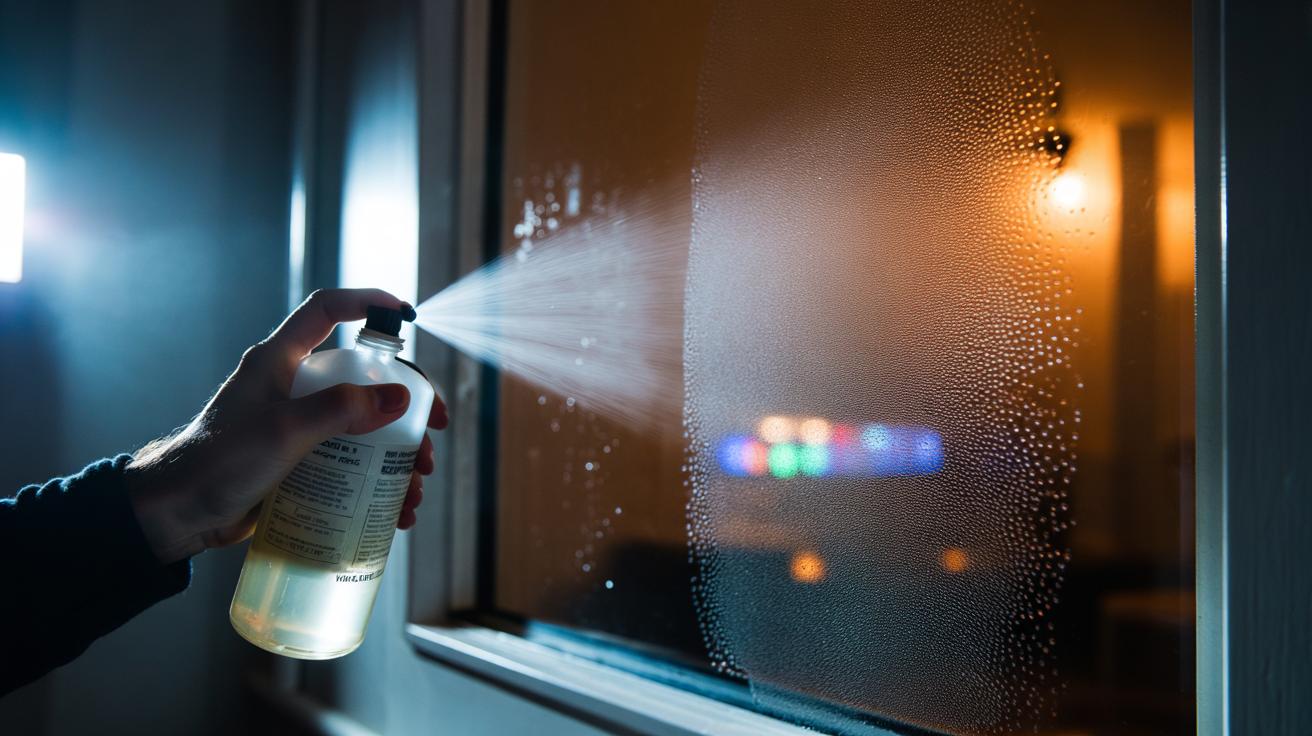
For general glass and shower screens, mix 1 part white distilled vinegar (5% acetic acid) with 2 parts water in a clean spray bottle. For tougher fogging or soap-scummy bathrooms, go 1:1 for the first pass, then revert to 1:2 for maintenance. To boost anti-fogging, add 1–2 drops of unscented dishwashing liquid per 500 ml—no more, or you’ll leave streaks. Mist onto cool glass, spread with a microfibre cloth, and buff until the surface squeaks. The buffing step is vital; it levels the film and avoids patchy drying.
Safety matters. Keep away from natural stone (marble, limestone), untreated concrete, or unsealed grout, which acids can etch. Avoid bare aluminium, some anodised finishes, and mirror edges where backing is exposed. On car interiors, steer clear of tinted films, camera housings, and sensor clusters; spray onto a cloth, not directly on the windscreen. For eyewear, camera gear, or coated screens, skip vinegar entirely—specialist anti-fog products are safer for delicate coatings.
What It Works On—and What It Doesn’t
Vinegar sprays shine on household glass, ceramic tiles, and many plastic shower screens, especially where humidity spikes quickly. Bathroom mirrors, cooker splashbacks, and interior windows benefit from the shift to a hydrophilic film that resists beading. In cars, a light application on the interior windscreen can cut the morning mist, particularly if you deal with wet coats and muddy boots. Apply sparingly and buff thoroughly to avoid streaks at night. The goal is a whisper-thin layer, not a wet pane.
There are limits. Acidic spray can degrade or discolour natural stone surrounds and can creep under mirror backing if saturating edges. On coated lenses and electronics, vinegar risks dulling finishes or weakening adhesives. Polycarbonate visors and goggles may haze with the wrong cleaner. For those, use purpose-made anti-fog gels designed for the substrate. And remember, persistent condensation also signals ventilation issues—trickle vents, extractor fans, and controlled heating are the long-term fix.
Longevity, Maintenance, and Alternatives
A vinegar-based treatment typically lasts days to a couple of weeks, depending on splashes, cleaning routines, and how often steam floods the room. Expect to reapply weekly in busy bathrooms and monthly on interior windows. Performance rises with consistency: light, regular buffing beats heavy, occasional soaking. If you want longer intervals, consider commercial anti-fog products that deposit durable hydrophilic polymers, though some can smear or ghost if overapplied. On car exteriors, use hydrophobic rain repellents instead; vinegar is not a substitute for those.
Here’s a quick comparison to guide your choice. Each option trades longevity, clarity, and surface compatibility. Apply lightly, follow with a firm microfibre buff, and test on an inconspicuous corner first to protect finishes and films.
| Option | Mix/Active | Typical Longevity | Best For | Watch Outs |
|---|---|---|---|---|
| Vinegar spray | 1:2 vinegar:water | Days to 2 weeks | Mirrors, shower glass, interior windows | Avoid stone, mirror edges, coated lenses |
| Vinegar + surfactant | As above + 1–2 drops dish soap | 1–3 weeks | Stubborn fogging, high humidity rooms | Overdose causes streaks; buff well |
| Commercial anti-fog | Hydrophilic polymers | Weeks to months | Goggles, visors, bathroom mirrors | Residue if overapplied; check compatibility |
Vinegar won’t halt physics, yet it cleverly nudges moisture to behave, turning a fog-prone pane into a clear, usable surface with pennies’ worth of ingredients. The secret is simple: clean, slightly acidic, and lightly surfactant-wet glass lets water form a thin film that your eyes can see through. Regular, gentle maintenance outperforms grand, one-off treatments. Think of it as routine care rather than a miracle cure. With that in mind, where will you try a hydrophilic approach first—your bathroom mirror, your commute’s windscreen, or the steamed-up kitchen window after Sunday roast?
Did you like it?4.6/5 (30)