In a nutshell
- 🧪 Baking soda (sodium bicarbonate) neutralises acidic compounds and adsorbs volatile molecules, acting like a dry, fragrance-free sponge for mattress odours.
- 🛏️ Follow a simple routine: strip and vacuum, sprinkle generously (100–200 g for a double), leave 2–8 hours, then vacuum thoroughly; repeat light applications for persistent smells.
- 🌬️ Improve results with airflow (open windows, use a fan or dehumidifier) and focus on seams; avoid adding liquids to memory foam or latex to prevent trapped moisture.
- 🐾 For stubborn sources (sweat, pets), use enzyme cleaners sparingly, dry fully, then apply bicarbonate; avoid vinegar+bicarbonate fizz on mattresses, and never rely on it to mask mould.
- ♻️ Safe, low-impact, and budget-friendly, bicarbonate supports a sustainable routine—yet persistent odours, sagging, or visible mildew signal it’s time to replace the mattress.
Few household remedies are as trusted as baking soda for taming stubborn mattress odours. This kitchen staple, formally known as sodium bicarbonate, works not by masking smells but by helping to neutralise and adsorb the molecules that cause them. Its fine, porous powder draws in moisture and volatile compounds lingering in foam and fabric. Because it is gentle, fragrance-free, and inexpensive, it suits most mattresses and sensitive noses. Whether you’re dealing with a sweaty summer, a lingering spill, or a room that’s been closed up too long, understanding how baking soda “sucks” smells gives you a reliable, low-cost strategy for a fresher bed and a better night’s sleep.
Why Baking Soda Neutralises Smells
The science starts with chemistry. Baking soda is mildly alkaline, so it buffers pH and helps tame sour, acidic compounds that drive many household odours. Some smell-causing molecules become less volatile when their acidity is moderated, reducing their ability to reach your nose. This is why a light dusting across a mattress surface can calm sweat-related tanginess and general mustiness. At the same time, sodium bicarbonate acts as a desiccant, drawing a little moisture from fibres; drier conditions discourage microbial activity that can feed lingering smells.
Structure matters too. Those tiny, irregular particles offer a surprisingly large surface area for adsorption—a physical cling of odour molecules to the powder’s surface. That gentle “stickiness” is especially useful in fabrics and foams where volatile organic compounds can hang around. While it won’t fix deep structural issues like mould inside a mattress core, it does reduce the everyday cocktail of body odours, stale air, and light spills. Think of it as a non-perfumed sponge for smells, not a cover-up.
How to Deodorise a Mattress Step by Step
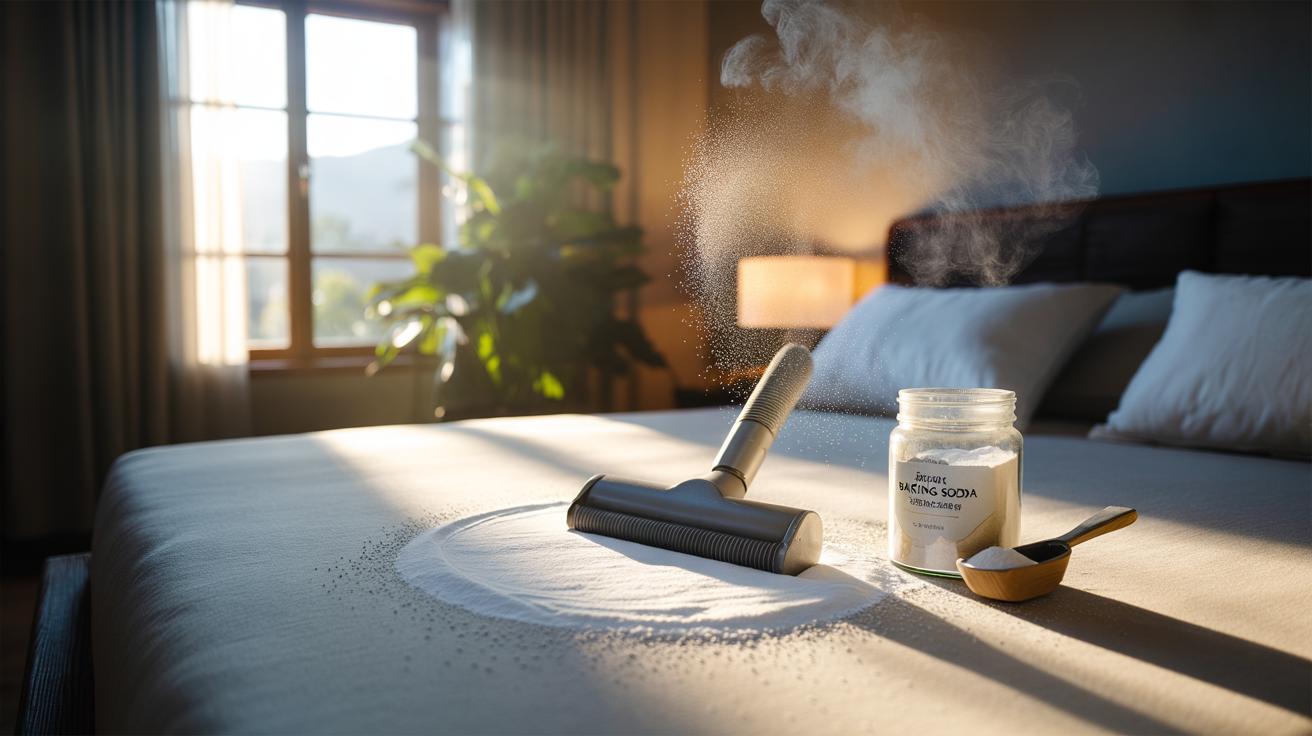
Start by stripping the bed and laundering linens hot, according to care labels. Vacuum the mattress slowly with an upholstery tool, paying attention to seams where dust and skin cells accumulate. Sprinkle a generous, even layer of baking soda over the surface—about 100–200 g for a double mattress. For odour hotspots, massage a little extra into the fabric with a clean, dry hand. Leave it to sit for at least one hour; two to eight hours is better for embedded smells. If weather allows, open a window for airflow to help volatile compounds disperse.
Finish by vacuuming thoroughly to remove all powder. If odours linger, repeat the cycle; several light applications outperform one heavy dump. Avoid wetting the mattress unnecessarily, especially memory foam and latex, which trap moisture. For a subtle scent, you can mix the powder with a teaspoon of bicarbonate-compatible dried lavender before sprinkling—fragrance-free remains best for sensitive sleepers. Store a box of bicarbonate by the laundry to refresh monthly.
| Odour Source | Baking Soda Amount | Dwell Time | Useful Extras |
|---|---|---|---|
| General mustiness | 100–150 g | 2–4 hours | Window open for ventilation |
| Night-sweat odours | 150–200 g | 4–8 hours | Vacuum seams carefully |
| Fresh spill (after blotting) | 200 g+ | Overnight | Fan or dehumidifier in room |
| Light smoke taint | 200 g | 8 hours | Cross-ventilation if possible |
Dealing With Stubborn Odours and Stains
Some smells have chemistry that outlasts a single dusting. Sweat can bond with body oils; pet accidents introduce proteins and urea. Address the source before bicarbonate work. For biological stains, blot first, then use an enzyme cleaner sparingly per label, keeping moisture to a minimum. Allow to dry fully, then apply baking soda and vacuum. Multiple light cycles are safer than soaking a mattress that can’t be machine-washed. If a patch still smells, lift the mattress and air both sides to prevent odours from resettling.
For spot treatment, make a dry boost: mix baking soda with a little cornstarch and sift onto oily marks; leave several hours to pull lipids that trap odours. Avoid vinegar and bicarbonate fizz on mattresses—it creates water and salts, adding moisture without added deodorising benefit. If you suspect hidden mould (earthy, damp smell, visible spotting), prioritise drying the room, inspect the bed base, and consider professional assessment. Bicarbonate masks must never replace mould remediation.
Safety, Sustainability, and When to Replace
Baking soda is non-toxic, non-abrasive on fabrics, and safe for most sleepers, including children and pets, when used dry and vacuumed afterwards. Always keep powders away from eyes and respiratory sensitivities; wear a light mask if you’re dust-allergic. Store bicarbonate in an airtight tin to prevent clumping and preserve potency. Avoid perfumed additives that can irritate and simply layer scent over odours. For latex and memory foam, keep liquids off the surface and rely on dry methods and airflow to protect the foam structure.
From a sustainability angle, bicarbonate is low-impact and packaging-light, making it a sound alternative to heavy aerosol deodorisers. That said, recognise limits. Persistent odours that return quickly may signal trapped moisture, chronic spills, or ageing foam. If a mattress sags, harbours visible mildew, or smells even after repeated treatments and thorough drying, it may have reached end of life. At that point, deodorising is postponement, not a cure; consider recycling routes and a breathable mattress protector for your next bed.
Baking soda earns its reputation because it tackles the chemistry of smells and the conditions that let them linger. Used regularly—vacuum, dust, dwell, and extract—it keeps mattresses fresher without perfumes or harsh cleaners. Pair the routine with airflow, dry rooms, and prompt response to spills, and you’ll break most odour cycles before they set in. Light, repeated applications beat dramatic, wet interventions every time. What does your current sleep setup need—more ventilation, a monthly bicarbonate refresh, or a deeper check of hidden moisture beneath the bed?
Did you like it?4.5/5 (26)