In a nutshell
- 📚 Musty book odours stem from VOCs, lignin breakdown, humidity, and mould growth—signals of poor storage and limited airflow.
- 🧴 Dryer sheets work via fragrance and light conditioning agents (QACs) to rebalance smells—scent balancing, not decontamination—and may leave residue on paper.
- 🧰 Safe use: dry the book first, place it in a sealed container with a lightly scented or unscented sheet beside (not inside) the pages for 24–48 hours; no direct contact.
- 🛡️ For valuables, choose archival-safe alternatives like activated charcoal, baking soda (separate dish), zeolite, or microchamber paper to adsorb odours without perfume.
- 🗄️ Prevention matters: maintain relative humidity of 40–55%, cool, stable temperatures, and good airflow to slow ageing and stop odours returning.
Every book lover has encountered it: that stale, cellar-like whiff that clings to second-hand paperbacks and long-shelved hardbacks. While mustiness is part nostalgia, it often signals trapped volatile organic compounds (VOCs), dust, and traces of old humidity. A surprisingly handy hack has entered the domestic toolkit—slipping a dryer sheet among pages to tame the odour. Used correctly, it can freshen a volume without wetting or scrubbing a single page. Yet there are caveats. This piece explains why books smell, how scented sheets actually work, and how to use them safely—alongside gentler, archivist-approved options for valuable collections.
Why Books Smell Musty
Old books absorb ambient air. Paper, glues, and cloth bindings are porous, pulling in humidity and hosting microscopic residues. Over time, lignin in low-quality paper breaks down, releasing aldehydes that join with environmental VOCs and stale dust to create that distinctive “old library” odour. If storage has been damp, spores can thrive. Mustiness is not just a smell; it’s often a symptom of poor storage and limited airflow. Sunlight and warmth accelerate chemical ageing, while fluctuating temperatures pump air in and out of pages, bringing odours along for the ride.
Multiple smells overlap. There’s the sweetish vanilla note from paper degradation; a tang of adhesives; the woolly scent of cloth boards; and, in some cases, the earthy edge of mould. The goal of any deodorising tactic is to neutralise or adsorb odour molecules rather than mask them. Dryer sheets can help, but they work best when paired with common-sense environmental fixes such as dry, stable storage and gentle ventilation.
How Dryer Sheets Work on Paper Odours
Dryer sheets are designed to reduce static and deposit light conditioners and fragrance onto fabric. Their coatings often include quaternary ammonium compounds (QACs) and microencapsulated scents. In a closed container with a musty book, these scents mingle with odours, while some odour molecules are softened by the sheet’s conditioning agents. Think of the process as scent balancing and partial adsorption, not deep decontamination. The effect can be quick—sometimes noticeable within hours—because fragrance compounds are volatile and travel easily in enclosed spaces.
There are limits. Dryer sheets do not remove the source of odour; they overlay it and can slightly neutralise some notes. On fragile or valuable volumes, perfumed residues may be unwelcome. Strong perfumes can cling to paper fibres, which collectors may dislike. For everyday paperbacks and reading copies, the trade-off is acceptable. For heirlooms or fine press books, a milder method—charcoal, zeolites, or microchamber paper—is safer. Dryer sheets treat the smell; they don’t treat the cause.
Step-by-Step: Freshening Pages Safely
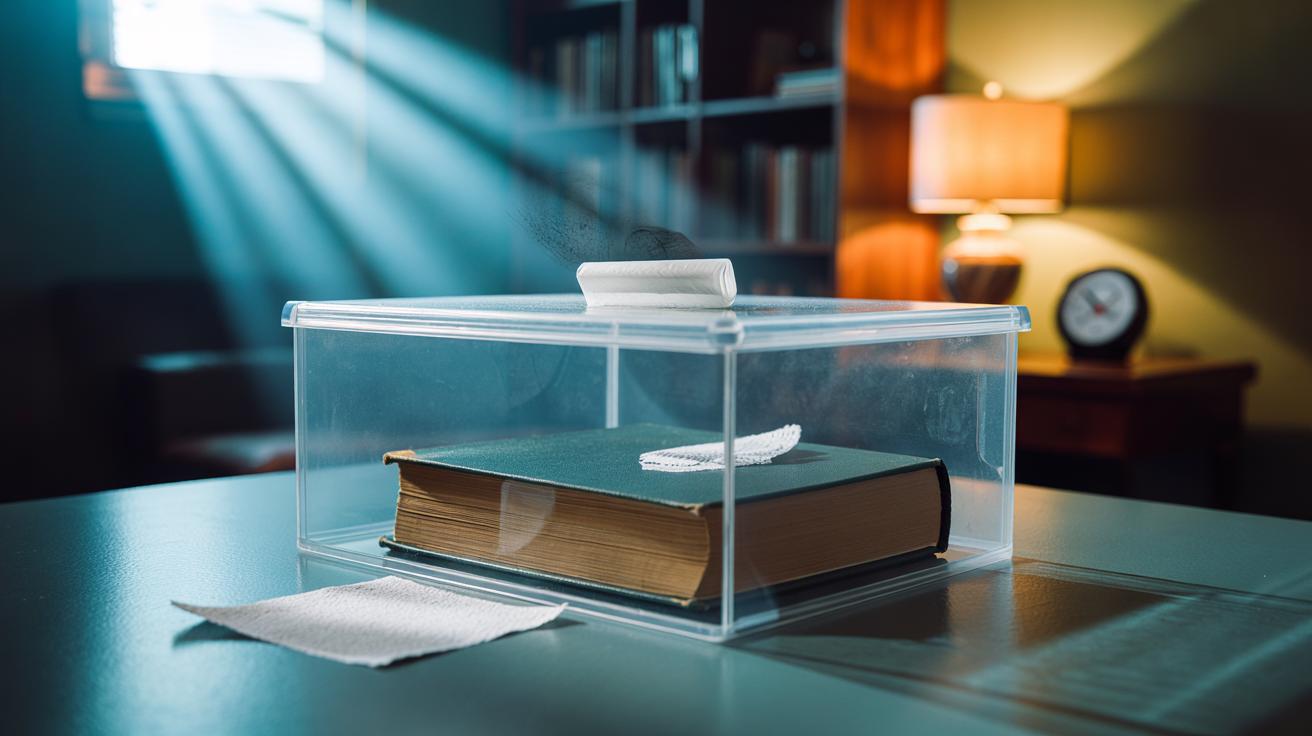
Begin by checking for damp. If the book feels cool or clammy, air it upright, fanning the pages lightly; a dry, shaded spot with gentle airflow is ideal. Never place a dryer sheet directly against damp or mouldy paper. Once the book is dry to the touch, place it inside a clean, lidded plastic box or large zip bag. Slip one unscented or lightly scented dryer sheet into the container, positioned beside—not inside—the pages. Close the container and leave it for 24–48 hours.
Open and sniff-test. If odour persists, replace with a fresh sheet and repeat for another day. To limit residue, avoid rubbing the sheet on covers or endpapers. For thick tomes, space pages with acid-free paper tented through the block to improve air circulation. Finish by airing the book on a shelf for several hours. If any visible mould appears, stop: deodorising won’t sterilise spores, and professional cleaning is wise.
Alternatives and Archival-Safe Practices
For collectors or delicate papers, passive adsorbents are kinder. Place the book in a sealed box with a sachet of activated charcoal, baking soda (in a separate open container), or zeolite granules. These materials trap odour molecules without perfuming. Rotate media every few days until the smell drops. Maintain a stable environment—about 40–55% relative humidity and cool temperatures—to slow chemical breakdown. Good storage prevents odour far better than any after-the-fact fix. If you suspect ingrained mould, consider freezing to halt growth (bagged and sealed to avoid condensation) before consulting a conservator.
Specialist supplies, such as microchamber paper, actively scavenge acids and pollutants, helping both deodorise and preserve. They cost more but avoid fragrance residues. Always test anything new with a single, expendable volume first, then scale up if results please you. For photo plates, coated papers, and leather bindings, keep perfumes away; neutral adsorbents are the safer option.
| Method | Cost | Speed | Risk to Paper |
|---|---|---|---|
| Dryer Sheet (sealed box) | Low | Fast (1–3 days) | Low–Moderate (fragrance residue) |
| Activated Charcoal | Low–Medium | Moderate (3–7 days) | Low |
| Baking Soda (separate dish) | Low | Moderate (3–7 days) | Low (avoid dust spills) |
| Zeolite / Microchamber | Medium–High | Moderate | Very Low |
A dryer sheet is an easy, domestic fix that can rescue a musty paperback before a weekend trip or a gift exchange. Used with care—sealed container, short exposure, no direct contact—it rebalances odour without fuss. For valuable or fragile books, fragrance-free adsorbents and stable storage are the kinder path. If the smell returns quickly, look to the shelf: humidity, dust, and poor airflow are usually to blame. With the right method for the right book, fresh pages are within reach. Which approach will you choose for your next thrifted treasure?
Did you like it?4.5/5 (29)