In a nutshell
- 🧴 Towels stiffen due to hard water minerals, detergent residue, and fabric softeners coating fibres; bicarbonate of soda helps by clearing build-up without reducing absorbency.
- 🔬 As a mild alkali, bicarbonate provides pH buffering, boosts detergent action, and delivers effective odour neutralisation, lifting residues so terry loops regain their spring.
- 🧼 Use 60–90 g bicarbonate in the drum, cut detergent by 25–50%, wash at 40–60°C with an extra rinse, and skip softener; for stubborn stiffness, pre-soak, then run a separate vinegar rinse (never in the same cycle).
- 🌬️ Dry smart: line dry or tumble on low–medium with wool dryer balls, and shake towels before/after drying; give loads space for better agitation and a thorough spin.
- ⚠️ Know the limits: bicarbonate won’t restore worn pile; in very hard water, add a softening/chelating booster; dose accurately, store airtight, and use occasional oxygen bleach for greying—not more detergent.
Stiff, scratchy towels aren’t a sign of poor laundering—they’re usually the by-product of hard water, detergent residue, and compacted fibres. The surprise saviour is the humble box of bicarbonate of soda in your cupboard. This inexpensive, low-impact powder can return cotton pile to its springy best, reduce odours, and make drying faster. By moderating wash pH and loosening build-up, it gives your terry cloth a second life without perfumed softeners. Skip the slick coatings and restore true softness at the fibre level. Here’s why bicarbonate works, how to use it, and where its limits lie—plus the precise steps that bring towels back from crispy to cloudlike.
Why Towels Go Stiff in the First Place
Most towels dull and harden because minerals from hard water cling to cotton’s terry loops, forming an invisible grit between fibres. Add in un-rinsed surfactants from heavy-handed detergent dosing and the silicone film from fabric softeners, and those loops mat down, losing their cushioned lift. Heat accelerates the problem: over-drying in a tumble dryer bakes residues deeper, while crammed drums limit rinsing. When loops can’t spring back, absorbency drops and that “hotel-fluffy” feel vanishes.
Another culprit is odour-causing bacteria embedded in damp pile, especially when towels languish in the basket. Detergent alone can struggle in cool, mineral-rich water, leaving a faint sourness. Over time, degraded skin oils and soap scum create a filmy glaze that traps lint and dust. The result is roughness you can feel and a dullness you can see. Bicarbonate tackles several of these causes at once without adding another coating.
How Bicarbonate Works: The Chemistry Behind the Softness
As a mild alkali and effective buffer, bicarbonate of soda gently raises wash pH, helping detergents break bonds between fibres and residues. That improved cleaning reduces the sticky film that flattens pile. Bicarbonate also neutralises acidic odours and keeps soils suspended so they rinse away, leaving cotton cleaner and less stiff. The goal isn’t perfume—it’s removing what makes towels feel harsh in the first place.
While bicarbonate isn’t a heavy-duty water softener or chelating agent, its buffering effect reduces the tendency of minerals to bind to fibres and can loosen light build-up over successive washes. It’s fabric-safe, colour-friendly, and kind to septic systems. Crucially, it avoids the hydrophobic slick left by some softeners, so water still wicks through loops. Used routinely in moderation, it supports detergent performance, encourages thorough rinsing, and preserves absorbency—key to that springy, towelled loft we crave after a shower.
| Task | Amount of Bicarbonate | When to Add | Notes |
|---|---|---|---|
| Routine towel wash | 60–90 g (¼–⅓ cup) | Directly into the drum | Reduce detergent dose by 25–50% to limit residue |
| Deep-refresh soak | 120 g per 4 L warm water | Soak 2–4 hours, then launder | Agitate halfway; good for stiff, older towels |
| Vinegar rinse (separate) | 120–180 ml white vinegar | Rinse compartment, separate cycle | Don’t combine directly with bicarbonate—both are neutralised |
| Very hard water | As above, plus softener | With main wash | Add a dedicated softener (e.g., citrate) if needed |
Step-By-Step: Using Bicarbonate to Revive Towels
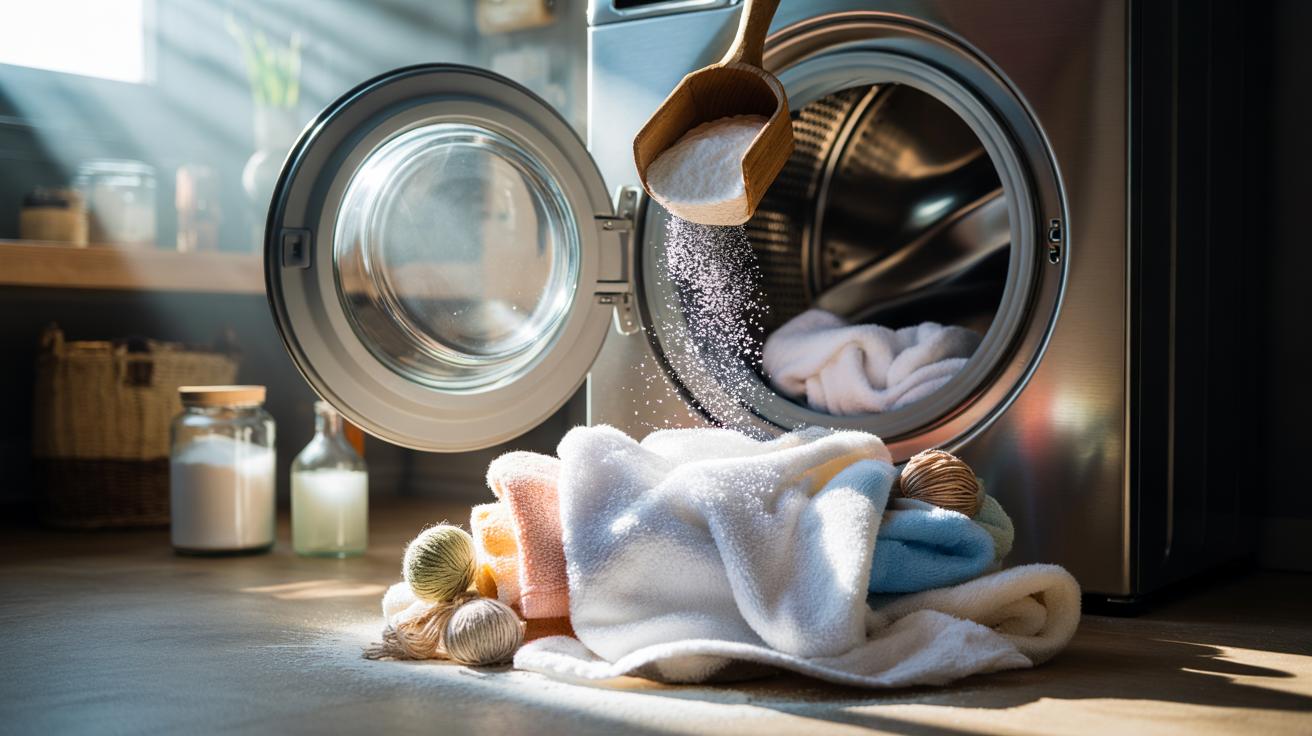
Begin with a clean machine: run a hot maintenance cycle if it smells musty. Load towels loosely—overstuffing traps residue. Sprinkle 60–90 g of bicarbonate directly into the drum, add your regular detergent at 50–75% of the usual dose, and select a 40–60°C programme with an extra rinse. Skipping fabric softener is essential—coatings defeat the whole point of freeing the fibres.
For stubborn stiffness, pre-soak towels in warm water with bicarbonate, then launder as above. To finish, either line dry in a brisk breeze or tumble on low-to-medium with two wool dryer balls to lift pile and shorten drying time. Shake towels vigorously before and after drying to re-stand the terry loops. If a faint sour note lingers, run a separate rinse with white vinegar—never in the same compartment or cycle as bicarbonate—to clear the last traces of soap film.
Common Myths, Limits, and Safety Tips
Bicarbonate isn’t a miracle cure, and it doesn’t “re-grow” worn pile. If towels have been compressed by years of high heat or heavy softener use, expect gradual improvement over several washes. In areas with extremely hard water, pair bicarbonate with a dedicated softener or a chelating booster; otherwise minerals will keep re-depositing. For deep greying, consider occasional oxygen bleach (sodium percarbonate) rather than excess detergent, which only increases residue.
Bicarbonate is safe with most cotton towels and colourfast dyes. Avoid pastes or scouring on delicate trims, and test on unusual fibres. It’s compatible with chlorine bleach, but never mix any product with acids and bleach together. Store the powder airtight so it stays active. The biggest myth? That “more” is better. Use measured doses, give towels room to rinse, and let mechanical action—good agitation and a thorough spin—do the heavy lifting for lasting softness.
Rehabilitating towels doesn’t need perfume or pricey pods—just smarter chemistry and lighter dosing. Bicarbonate restores comfort by clearing what makes cotton feel coarse, while protecting absorbency and colour. Combined with space in the drum, sensible temperatures, and a separate vinegar rinse when needed, it delivers a reliably plush finish and fresher scent. By removing residue rather than masking it, you get genuine softness that lasts. Will you try a bicarbonate routine on your next wash day—or adapt the steps to your local water and favourite towels to see what difference a few small tweaks can make?
Did you like it?4.6/5 (30)