In a nutshell
- 🍋 Boiling lemon slices releases volatile essential oils like limonene and citral that disperse quickly, masking and reducing kitchen odours in minutes.
- 🔥 Method: thin slices in 500–750 ml water on a gentle simmer for 10–15 minutes; position near the odour source and remember the peel carries most deodorising power.
- 🌬️ Prioritise ventilation—open a window or use an extractor on low—to manage terpene–ozone reactions, and treat citrus steam as a complement, not a replacement, for cleaning.
- 🧪 Know the limits: it doesn’t trap particulates or cut grease; some pets may be sensitive to citrus vapours; avoid prolonged contact with marble or natural stone.
- 🌿 Enhance and reuse: add herb/spice add-ins (rosemary, cloves) or a pinch of bicarb, and repurpose the cooled liquid to freshen a microwave or chopping boards; try peels-only for a stronger zest.
Open a pan, slice a lemon, and within minutes a tired kitchen begins to smell like a Mediterranean grocer’s stall. The effect is not magic but chemistry: heating citrus releases essential oils that evaporate quickly and mingle with the air, masking malodours and neutralising some of their sources. Steam carries these vapours into nooks that air fresheners miss, while the soft hiss of a simmer feels restorative after a day of frying, roasting, and bin-emptying. For a quick reset before guests arrive or after a pungent meal, boiling lemon slices is a low-cost, low-effort trick that turns routine clean-up into a sensory refresh.
Why Boiled Lemon Works in Minutes
Heat unlocks the citrus cocktail of limonene, citral, and other terpenes embedded in the peel. These oils are volatile, meaning they readily enter the air and cling to odour-causing molecules from fish, onions, or strong cheeses. In a small, steamy kitchen, vapours disperse fast, creating a bright, zesty veil that both masks smells and slightly alters how our noses perceive them. In many homes, you can notice odour reduction within five minutes of a steady simmer, especially when the bin or hob is the source.
The science is twofold. First, aromatic terpenes carry their own powerful scent profile that dominates stale notes. Second, some citrus compounds interact with airborne volatile organic compounds (VOCs), reducing their intensity. There is also a mild antimicrobial dimension: while steam and heat do the heavy lifting on surfaces, citrus vapour creates an unfriendly environment for some microbes close to the hob area.
Boiling produces rapid diffusion. Thin slices increase surface area, releasing oils without the harsher intensity of bottled essential oils. The peel is the star; the juice adds brightness but most of the deodorising power resides in the zest. A gentle simmer is ideal—rolling boils can scorch and dull the fragrance, while a low, steady bubble sustains a clean aroma for longer.
How to Simmer Lemons Safely and Effectively
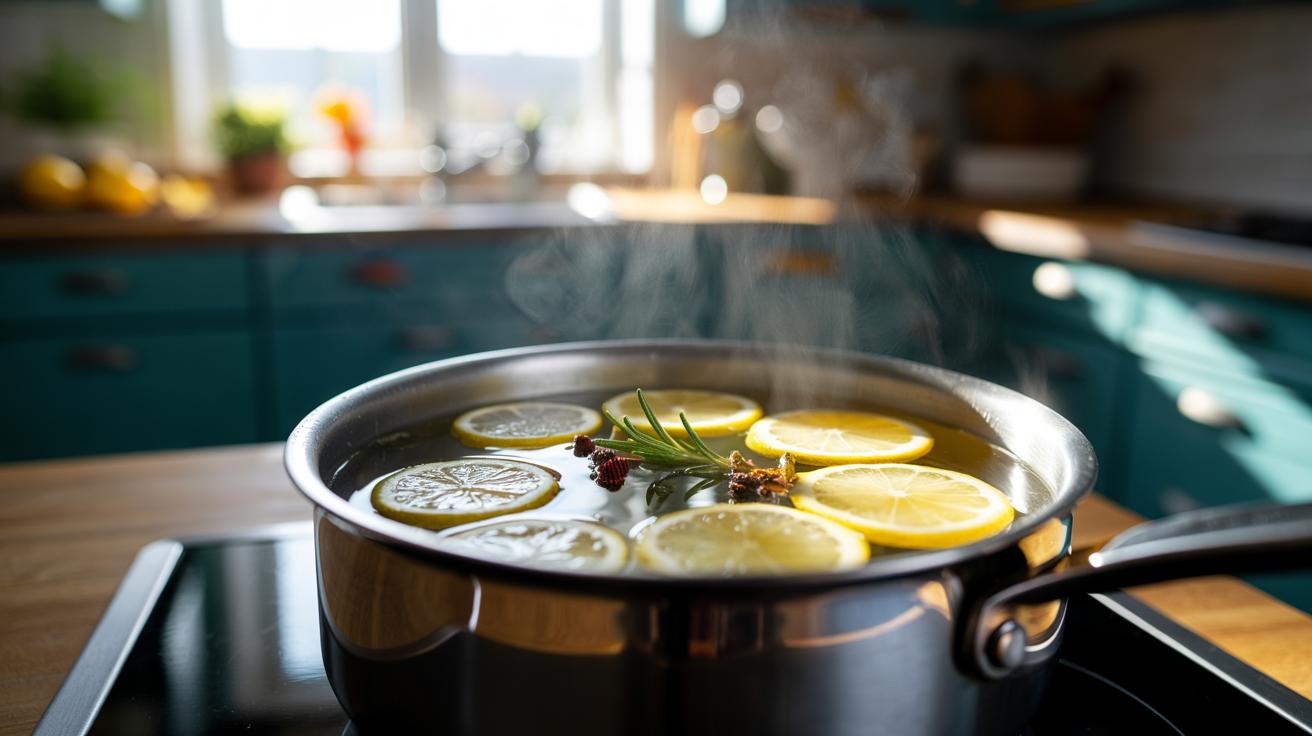
Start with one fresh lemon, washed well. Cut into 5–7 thin rounds and add to a small saucepan with 500–750 ml of water. Bring to a simmer, not a roaring boil. Keep an eye on the waterline and top up as needed. Never leave a pan unattended, and crack a window to allow stale air to drift out while the citrus plume spreads. For a deeper note, drop in a sprig of rosemary or a few cloves; for sparkle, add a pinch of bicarbonate of soda.
Put the pan close to your odour source—the hob after frying, the sink after fish prep, or near the bin before a collection day. Steam helps carry the natural oils into the room’s micro-currents, softening residual smells in fabrics and around splashbacks. After 10–15 minutes, turn off the heat and let the pot sit; gentle vapour continues to diffuse. Pet owners should ensure good ventilation, as some animals are sensitive to concentrated citrus oils.
| Input | Water | Heat & Time | What You’ll Notice |
|---|---|---|---|
| 1 lemon, sliced thin | 500–750 ml | Gentle simmer, 10–15 min | Fast odour softening; bright citrus top note |
| + rosemary or cloves | Same | Simmer 15–20 min | Warmer, herb-spice complexity; longer linger |
| Peels only | 500 ml | Simmer 8–12 min | Stronger zest aroma; less tartness |
Evidence, Benefits, and Sensible Limits
Research into limonene and citral shows they are potent aromatic compounds that can dominate malodours and, in certain conditions, chemically reduce their intensity. Users report rapid improvements after cooking oily fish, curries, or frying bacon. The method is inexpensive, aligns with low-waste habits, and avoids the cloying sweetness of synthetic sprays. Anecdotally, households find simmered citrus more tolerable than aerosol fresheners, especially for those who dislike heavy perfumes.
There are limits. Boiled lemon does not filter particulates or replace an extractor fan. In urban air, citrus terpenes can react with ozone, potentially forming small amounts of secondary pollutants. The practical takeaway is simple: keep it brief, simmer gently, and ventilate. Windows open and an extractor on low create a safer, fresher airflow while the lemon works, ensuring scent without build-up.
On surfaces, citrus steam won’t remove grease alone; pair with a wipe-down using hot, soapy water. The leftover liquid can be cooled and used to deodorise a chopping board or microwave—heat a cup of it for a minute to loosen splatters. For marble or natural stone, avoid prolonged contact with acidic liquids. When used judiciously, natural oils offer a quick, uplifting reset between deeper cleans.
Boiling lemon slices is a small domestic ritual with a big payoff: a fresher kitchen, fewer lingering smells, and a reassuring sense of order after cooking. It is affordable, fast, and rooted in the chemistry of volatile oils dispersed by steam. Use a gentle simmer, ventilate well, and treat it as a complement to routine cleaning rather than a replacement. If you are chasing a calm, clean atmosphere without synthetic sprays, a saucepan and a lemon may be your most elegant fix. How might you adapt this citrus method—herbs, spices, or peels—to create a signature scent for your own kitchen?
Did you like it?4.5/5 (22)