In a nutshell
- 🔬 The science: sodium bicarbonate (baking soda) neutralises odours by buffering acids/bases and trapping molecules via adsorption, delivering freshness that lasts beyond a day.
- 🧂 Fast method: pre-vacuum, sprinkle 10–30 g per m², gently work into the pile, let it dwell 30–60 minutes (longer for tough smells), then vacuum thoroughly; avoid wet mixes on the carpet.
- 📊 Practical guide: general mustiness 30–60 min; cooking smells 1–2 hrs; dried pet accidents 4–8 hrs; smoke overnight—ventilate rooms and treat stains before deodorising.
- ⚠️ Limits and care: best for surface-level odours; deep underlay contamination, mould, or old urine need targeted treatment; test delicate fibres (wool/silk), fix moisture sources, avoid mixing with acids.
- 💷 Safety and cost: 500 g costs £0.60–£1.00, making each refresh just a few pence; keep pets away during dwell time, use a vacuum with HEPA filtration, clean filters, and store bicarbonate airtight.
Carpet odours are stubborn but not invincible. The quiet hero of the cleaning cupboard, baking soda, can neutralise smells with surprising speed and little fuss. As a natural, inexpensive deodoriser, it targets the chemistry behind odours rather than masking them with perfume. A quick, even sprinkle, time to work, and a thorough vacuum is often all that’s required to freshen a room for days. Because it binds and neutralises odour molecules, the freshness lasts beyond the day of cleaning. Used correctly, sodium bicarbonate is gentle on most fibres, safe for busy homes, and reliable in the face of everyday smells from pets, cooking and damp weather.
The Science Behind Baking Soda’s Deodorising Power
The secret to baking soda lies in its chemistry. Also known as sodium bicarbonate (NaHCO₃), it’s amphoteric: it reacts with both acids and bases. Many carpet smells are acidic (think sour, sweaty, or food-related compounds). By meeting these with a mild alkaline buffer, baking soda shifts the pH, neutralising the volatile molecules that our noses detect. Its crystalline structure also offers ample surface area for adsorption, physically trapping odour compounds so they don’t keep evaporating into the air.
This dual action—chemical neutralisation plus adsorption—explains why results can endure. Once the compounds are bound or neutralised, there is less “fuel” for new smells to form. Unlike fragranced sprays that overlay a scent, sodium bicarbonate reduces the odour load at source, especially near the carpet’s surface. That’s why a light, even sprinkle can make a room smell naturally clean, without the tell-tale artificial note that suggests something is being covered up.
How to Use It: A Fast, Foolproof Method
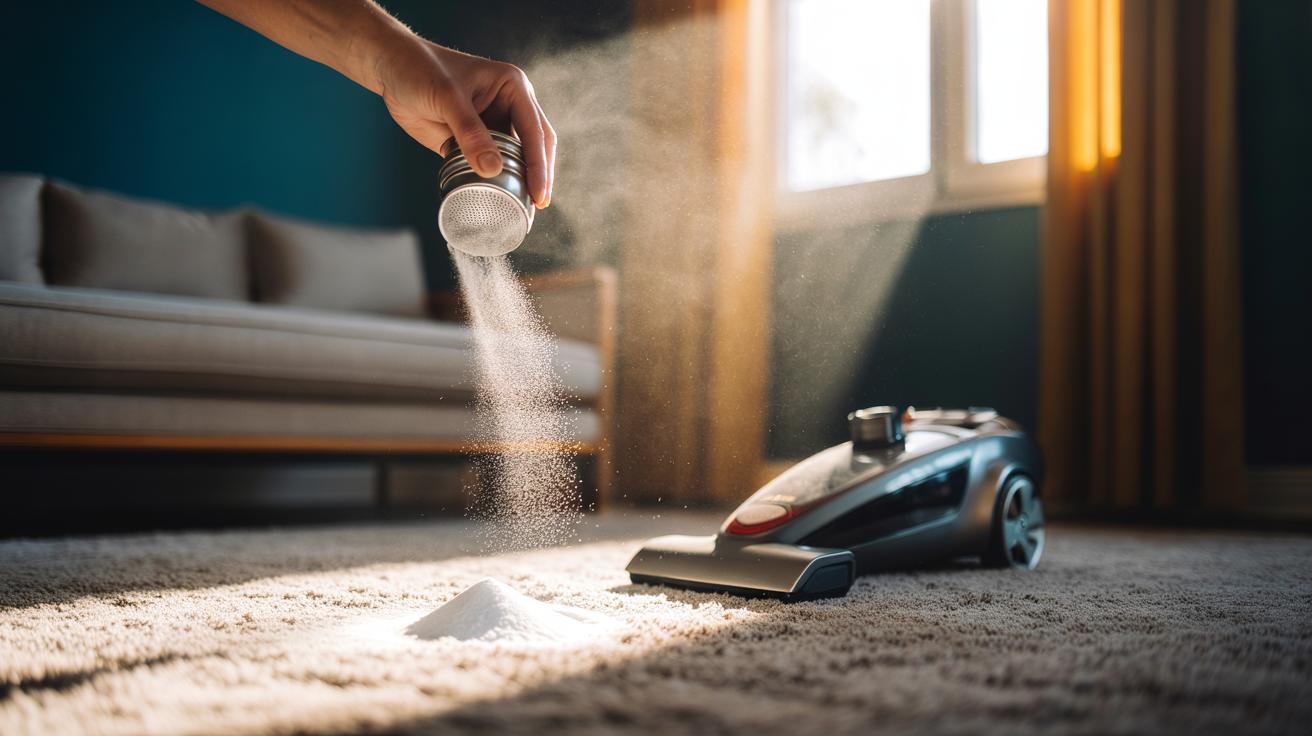
Start with a dry carpet and a slow pre-vacuum to lift loose fluff. Test a hidden corner on delicate fibres. Using a sieve or shaker, sprinkle a fine, even layer—around 15–30 g per m² (roughly 1–2 tablespoons). Work it lightly into the pile with a soft brush; don’t grind. Leave it to dwell: 30–60 minutes for everyday mustiness, longer for stubborn issues. For persistent smells, aim for 4–8 hours or overnight with good ventilation. Vacuum slowly on the highest safe setting for your carpet, making multiple passes from different directions to collect the fine powder thoroughly.
If you’re treating a recent spill, first blot thoroughly and dry before applying baking soda. Avoid adding water or vinegar directly to carpet with the powder in place; wet mixes can cake and be hard to remove from fibres. Replace or clean filters on bagless vacuums if you use baking soda often; its fine particles can tax older machines without HEPA filtration.
| Odour Source | Amount (per m²) | Dwell Time | Notes |
|---|---|---|---|
| General mustiness | 10–15 g | 30–60 min | Light, even sprinkle; ventilate |
| Cooking/fish smells | 15–20 g | 1–2 hrs | Close doors to isolate room |
| Dried pet accidents | 25–30 g | 4–8 hrs | Treat stains separately first |
| Smoke residue | 30 g | Overnight | Combine with deep vacuuming |
| Damp/mildew smell | 20–30 g | 2–4 hrs | Improve ventilation and dryness |
When It Works Best—and Its Limits
Sodium bicarbonate is excellent for everyday odours in the upper pile: lingering food smells, stale room air, and light pet aromas. It shines after parties, during damp spells, or between professional cleans. Think of it as a rapid reset for surface-level smells rather than a cure-all for deep contamination. Where it struggles is with problems embedded in underlay: old pet urine that has soaked the pad, active mould growth, or years of heavy smoke. In those cases, backing, underlay and even subfloor may need targeted treatment or replacement.
Be cautious with delicate fibres such as wool, silk, and viscose. While baking soda is generally gentle, always test in an inconspicuous area to ensure it doesn’t dull dyes or alter hand-feel. Avoid mixing with acidic agents on the carpet, which can create salts and residue. If you suspect microbial growth, address moisture first; no powder can fix a damp source. For stain removal, use appropriate cleaners, then dry fully before deodorising.
Costs, Safety, and Maintenance Tips
In the UK, a 500 g box of baking soda typically costs £0.60–£1.00. Treating a medium room might use 50–100 g, making each refresh just a few pence. It’s unscented, safe around children and pets when used sensibly, and kinder to indoor air than heavy aerosols. Keep pets away while the powder sits, and ventilate to minimise dust. Those with respiratory sensitivities should wear a light mask while sprinkling and use a vacuum with good filtration. Dispose of vacuum contents promptly to avoid re-releasing trapped odours.
For maintenance, schedule a light deodorise monthly or after cooking binges, wet weather, or houseguests. Store your bicarbonate airtight to preserve potency; it absorbs humidity. You can use a shaker lid for even coverage without clumps. If you like a hint of fragrance, mix a tiny amount of ground dried lavender or a drop of essential oil in the box—not directly on the carpet—to avoid spotting. Clean vacuum filters regularly if you deodorise often.
A quick sprinkle of baking soda followed by patient dwelling and thorough vacuuming can deodorise carpets fast and keep rooms fresher for days. It’s cost-effective, gentle, and grounded in simple chemistry that genuinely reduces smells at the source. Used with sensible ventilation and dry carpets, results are consistently reliable. If odours persist, they’re often a sign of deeper contamination, moisture issues, or fibres needing professional attention. What smell is testing your patience at home right now, and how will you tailor this simple method to tackle it?
Did you like it?4.5/5 (30)