In a nutshell
- 🍋 Boiling lemon slices releases natural oils like limonene and citral, which disperse via steam to provide effective odour-neutralising action in kitchens.
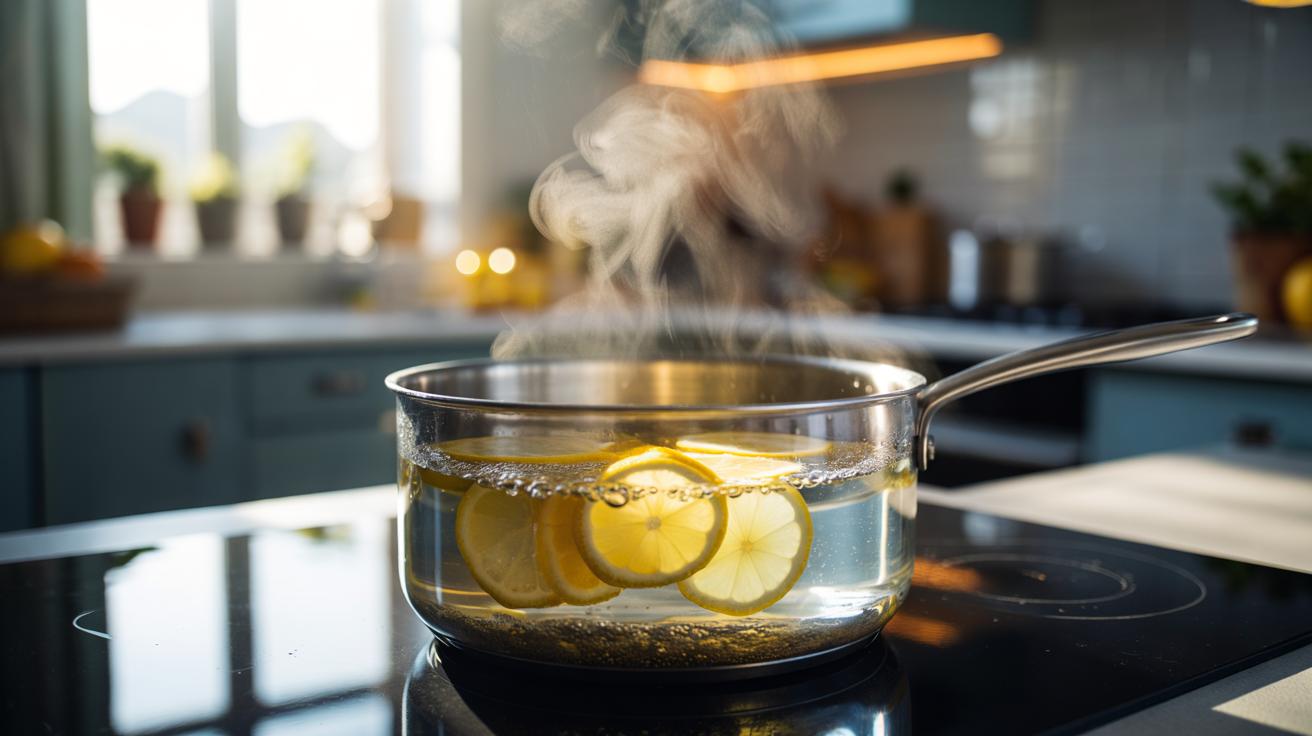
- ⚙️ Simple method: slice 1 lemon (6–8 rounds), add ~1 litre water, simmer 5–10 minutes with the lid off and light ventilation—maximising vapour carry of aromatic compounds.
- 🌿 Practical benefits: low-cost, low-waste alternative to synthetic sprays, with mild antimicrobial activity and a clean, bright scent that refreshes air without cloying.
- 🛡️ Safety and limits: it’s not a replacement for cleaning; supervise the hob, avoid prolonged acidic simmering in aluminium, and manage condensation for wood finishes.
- 🧪 Smart tweaks: add rosemary or cloves for extra terpenes, use cooled lemon water to freshen drains or wipe boards, and tailor duration for sensitive airways.
Throw a few lemon slices into a gently boiling pan and your kitchen changes in minutes. Steam lifts the fruit’s natural oils into the air, softening stubborn cooking odours from last night’s curry or a quick fry-up without resorting to synthetic sprays. It’s a thrifty fix that suits busy UK homes: low waste, low effort, and pleasantly aromatic. The sharp, bright scent masks stale notes while the citrus chemistry does more than simply perfume. Because the oils disperse with the vapour, they mingle with odour molecules and help neutralise them at source. Along the way, the ritual offers a small pause—boil, breathe, reset—before the next round of dinner prep.
Why Lemon Steam Works
When lemon is heated, compounds such as limonene, citral, and traces of pinene volatilise and ride the steam into the room. Heat meets lemon, a burst of volatile oils takes flight, and those molecules interact with lingering odours from grease, fish, or bins. In practical terms, these oils have odour-neutralising properties: they dilute smells through dispersion and can chemically soften sulphurous or fatty notes. The fruit’s mild acidity also helps, particularly where alkaline residues are involved.
There is a hygienic side to the aroma. Citrus oils exhibit antimicrobial activity in lab settings, and while a kitchen simmer is not a steriliser, the vapour and microdroplets can gently freshen the air and nearby surfaces. Crucially, it feels natural rather than cloying. The scent lifts quickly, then settles, avoiding the heavy blanket left by many aerosols. Think of it as a tidy reset between cooking sessions.
Step-By-Step: A Five-Minute Freshen-Up
Slice one unwaxed lemon into 6–8 rounds, add to a saucepan with about 1 litre of water, and bring to a lively simmer. Reduce the heat so the surface trembles and keep the lid off, allowing vapour to circulate. In small kitchens, crack a window or run the extractor on low to spread the aroma rather than trap humidity. Five to ten minutes is usually plenty; top up with water if needed and avoid a rolling boil that drives off fragrance too quickly. Never leave a simmering pan unattended.
| Item | Amount/Setting | Purpose |
|---|---|---|
| Water | ~1 litre | Carries volatile oils as steam |
| Lemon slices | 6–8 rounds (1 lemon) | Releases limonene, citral |
| Simmer time | 5–10 minutes | Maximises scent without bitterness |
| Lid position | Off | Lets vapour disperse |
| Ventilation | Window/extractor on low | Distributes aroma, reduces damp |
For a twist, add a sprig of rosemary or a clove or two—both pair well and contribute their own terpenes. When finished, pour the cooled lemon water down the sink to cut drain odours, or use it to wipe a chopping board. The peel can go into the food waste caddy, closing the loop on a near-zero-waste freshen-up.
Benefits, Limits, and Safety
The appeal is straightforward: low cost, minimal kit, and a scent that feels honest. Boiling lemon slices is ideal after frying, when the bin needs emptying, or before guests arrive. It’s a greener alternative to plug-ins, and the effect is immediate. Citrus oils create a brighter tonal note than synthetic “fresh linen” blends, and the residual steam helps loosen light films on tiles near the hob. Yet there are limits. This is not a replacement for cleaning, good extraction, and source control. If the grill pan or bin liner is the culprit, tackle that first.
Use a stainless-steel or enamel pan; prolonged acidic simmering can dull bare aluminium. Wipe any condensation from cabinets to protect wood finishes. Those with respiratory sensitivities may prefer a shorter simmer and extra ventilation. Keep pets away from the hob and don’t concentrate the liquid into a sticky reduction, which can be irritating. As a rule, keep it brief, gentle, and supervised, letting the aromatic oils do their subtle work.
In a country that loves a strong cup of tea and a well-used kitchen, this small ritual earns its place: simple, frugal, and quietly effective. The science is sensible—volatile oils disperse, odours soften—and the practice is soothing, turning a chore into a pause. Used alongside basic housekeeping, it keeps the heart of the home bright without a cupboard of chemicals. Will you try the classic lemon-only simmer, or experiment with peels, herbs, and spices to create a signature, low-waste scent for your kitchen?
Did you like it?4.4/5 (29)