In a nutshell
- 🧪 Acetic acid in white vinegar dissolves limescale and detergent residues, neutralises alkalinity, and reduces static—softening fabric by removal, not by coating.
- 🧴 Use 100–150 ml in the softener drawer for the rinse; optional pre-soak is 250 ml in 4 L for 30 minutes. Do not mix with bleach or oxidisers; spot test brights and avoid prolonged soaks for wool and silk.
- ✨ Acts as a clarifier, not a bleach: it restores true whiteness and crisper colours while improving odour control. For stubborn greying, pair with oxygen-based whitener in a separate cycle.
- 🌿 Eco and budget friendly: roughly 7–12p per wash, avoids quaternary ammonium compounds, helps keep drums and pipes cleaner, and restores towel absorbency lost to silicone softeners.
- 🚿 Ideal for UK hard water and high-efficiency machines; add fragrance via line-drying or dryer balls, and practice moderation to protect rubber seals over time.
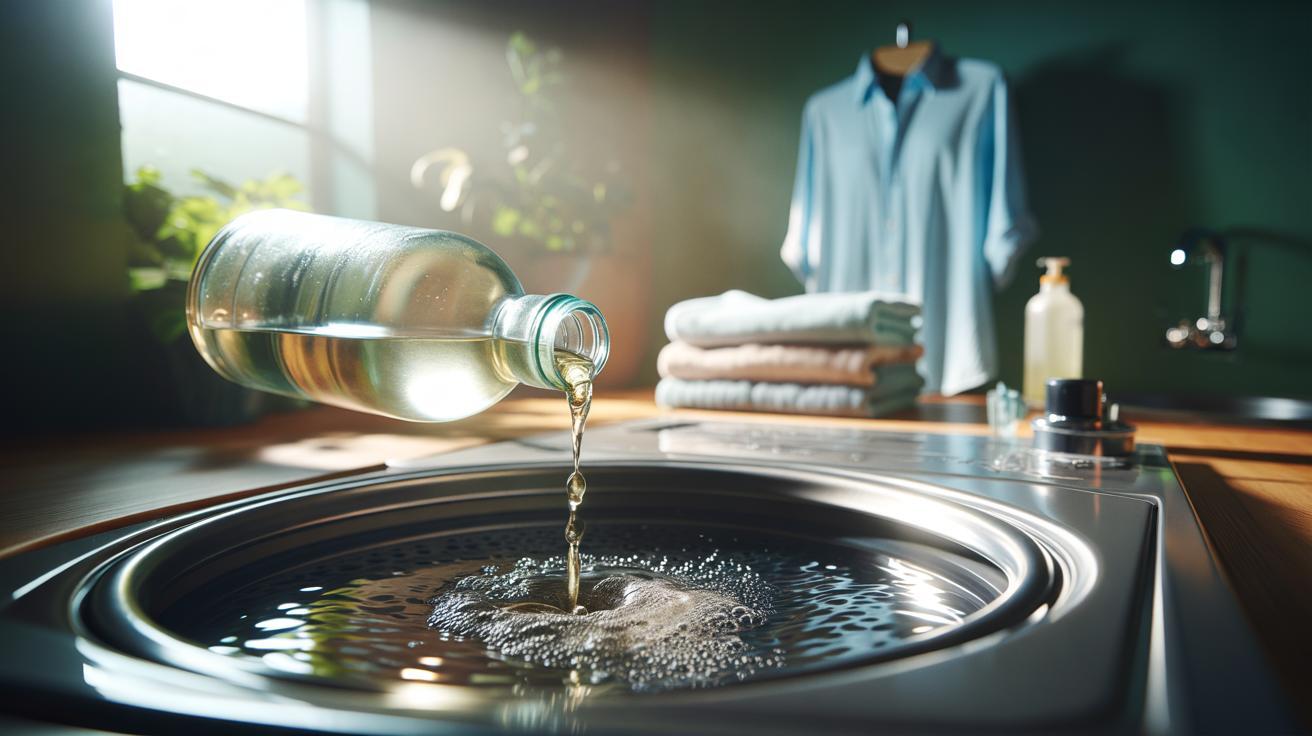
In British homes battling hard water, the quiet hero of the laundry room is often a bottle of white vinegar. Its gentle acidity lifts dulling residues, eases roughness, and brings back a soft hand-feel without the cocktail of additives found in many conditioners. The secret is simple chemistry: acetic acid, typically 5%, dissolves limescale and neutralises alkalinity left by detergents. That clears the way for fibres to move freely again, reducing scratchiness and greyness. Vinegar doesn’t coat fabrics like conventional softeners; it restores them by removing what shouldn’t be there. Used correctly, it can brighten whites, de-odour your kit, and even help your machine run sweeter—while keeping your routine low on cost and lower on chemicals.
The Chemistry Behind Softness: How Acetic Acid Works
Every wash leaves behind trace detergent residues and mineral salts from hard water. These cling to fibres, making towels feel rigid and colours look lifeless. White vinegar’s acetic acid is mildly acidic, so it neutralises leftover alkalinity and dissolves limescale (calcium and magnesium deposits) that lock in soil. By clearing these films, vinegar reduces fibre-to-fibre friction, which we perceive as stiffness. This isn’t a disguise; it’s the removal of the very compounds that cause fabrics to harden. The result is a cleaner, freer-moving yarn that feels naturally soft to the touch.
There’s also an electrostatic angle. Residues can leave uneven charges across fabric surfaces, inviting static cling and that “crackly” feel. Once those deposits are washed away, static reduces without relying on cationic surfactants used in many softeners. Crucially, white vinegar at rinse-level doses won’t strip colour or weaken cotton and linen. It simply helps the rinse water do a more thorough job, especially in areas with stubbornly hard tap supplies.
Practical Use in the Laundry: Dosage, Cycles, and Fabrics
For most machines, add 100–150 ml of white vinegar (5%) to the fabric softener drawer so it enters during the rinse. That’s enough to neutralise residues without overwhelming seals or metals. For very hard water, an occasional pre-soak can help lift ingrained greyness. Never mix vinegar with chlorine bleach or hydrogen peroxide—dangerous gases and reactive by-products can form. As with any routine change, spot test vivid dyes on an inside seam and avoid soaking delicate fibres for long periods. Keep the habit modest but regular for the best balance of softness and care.
| Use Case | Guideline |
|---|---|
| Rinse aid | 100–150 ml in the softener drawer |
| Pre-soak | 250 ml in 4 L cool water, 30 minutes max |
| Fabrics | Best for cotton, linen, everyday synthetics |
| Caution | Avoid prolonged soaks for wool/silk; spot test acetate/viscose; keep away from elastics and metal trims |
| Do not mix | Chlorine bleach or oxidisers |
Front-load and high-efficiency machines benefit from vinegar because it counteracts concentrated detergent films. Towels regain absorbency—often reduced by silicone-laden softeners—while babywear loses harshness without fragrance build-up. If you prefer scent, finish line-drying outdoors or use dryer balls rather than adding oils to the drawer.
Brighter Whites and Clearer Colours: What the Evidence Shows
Vinegar is not a bleach; it’s a clarifier. By dissolving mineral films and neutralising alkaline residues, it exposes the fabric’s true brightness, especially on whites dulled by hard water. Acetic acid can also chelate trace metal ions that cause yellowing or greying. That’s why a rinse with vinegar often makes shirts look “newly laundered” rather than chemically brightened. The brightness you see is the absence of grime, not an artificial optical trick. Colours, too, appear crisper when residues stop scattering light from the fabric surface.
Odour control is another win. Many laundry smells come from alkaline sweat breakdown and trapped bacteria within residue layers. Vinegar’s mild acidity helps neutralise these compounds and flush them out. For heavy staining or set-in greys, consider an oxygen-based whitener in a separate cycle; never run it with vinegar. The two-step approach—thorough clean, then clarifying rinse—delivers brighter linens without the plasticky hand of some softeners.
Eco and Money Matters: Comparing Vinegar With Fabric Softeners
Household white vinegar is widely available across UK supermarkets, often affordable per litre. At typical doses, it can cost in the region of 7–12p per wash; mainstream softeners range roughly from 3–12p depending on brand and dose. The calculus isn’t purely price. Vinegar avoids quaternary ammonium compounds and microplastic-laden formulations, and it helps keep drum and pipes clearer of scale. Used sparingly, vinegar can support both fabric feel and machine hygiene. That said, moderation matters: daily heavy dosing may hasten wear on rubber components—alternate with plain-water rinses.
If you miss fragrance, seek low-residue detergents and rely on air-drying for that clean, neutral scent. Towels benefit most: removing silicone residues restores thirsty loops. For extra fluff, add wool dryer balls rather than liquid conditioners. The upshot is a simpler basket: a solid detergent, a measured vinegar rinse when needed, and fewer additives fighting one another across your wash cycles.
White vinegar’s appeal lies in its clarity of purpose: remove what weighs fabric down, and softness follows. By tackling limescale, leftover alkalinity, and clingy films, it brightens whites, steadies colours, and makes everyday textiles kinder on skin. Keep doses modest, never mix with bleach, and treat delicates with care. In a country where hard water is routine, that little bottle carries outsized clout for both wardrobe and washing machine. How might you adapt your laundry routine—cycle by cycle—to harness vinegar’s quiet chemistry while keeping safety, fabrics, and budget in balance?
Did you like it?4.6/5 (28)