In a nutshell
- 🍋 Citrus freezer sachets harness natural oils (including limonene, citral and linalool) to neutralise musty odours; freezing preserves volatiles for a slower, longer scent release.
- 🧊 DIY: fill muslin pouches with citrus peel/zest and rice or bicarbonate of soda, freeze in an airtight container, then rotate into drawers; bruise to refresh and compost spent peel.
- 🗄️ Smart placement: tuck sachets in drawers, wardrobes, linen cupboards and shoe racks; avoid direct contact with silk/leather and pair with silica gel or activated charcoal for moisture and strong smells.
- 🛡️ Safety: use minimal essential oils, keep away from children and cats, test for colourfastness, and protect wood with a liner to prevent oil marks.
- 🌱 Sustainability: upcycle leftover peels, reuse pouches, and create seasonal blends—an effective, low-waste alternative to synthetic fresheners.
Musty drawers are the quietly persistent menace of British homes: they creep into linen cupboards, settle into gym-kit drawers and leave fibres smelling stale. A tidy fix is hiding in your freezer. Citrus freezer sachets turn kitchen leftovers into a natural deodoriser that lifts stubborn whiffs without chemical fog. Zest or peel captures a burst of aromatic oils which, when chilled, stay potent until you are ready to refresh a space. Natural citrus oils neutralise musty odours rather than masking them, making small spaces feel distinctly cleaner. Here’s how those oils work, how to make the sachets, and where to place them for best results.
The Science Behind Citrus Freshness
Open a lemon and the air fills with limonene, citral and linalool—volatile compounds that define citrus scent. These natural oils bind with malodour molecules from stale air and fabric, softening sharp notes and leaving a crisp, clean impression. Some citrus constituents exhibit mild antimicrobial action, discouraging the microbes that drive that “old cupboard” smell. This is why a small sachet can shift a drawer’s atmosphere without a spray. The key is controlling evaporation: left on the counter, oils flash off quickly and benefits fade.
Freezing changes the pace. When peels or zest are chilled soon after preparation, their volatiles are effectively “paused”. Once the freezer sachet is placed in a drawer, warmth and airflow coax the oils out gradually. Combine citrus with an absorber such as rice or bicarbonate of soda and you also catch moisture—the other engine of mustiness. Dry fibres smell fresher and hold scent for longer.
Making Freezer Sachets at Home
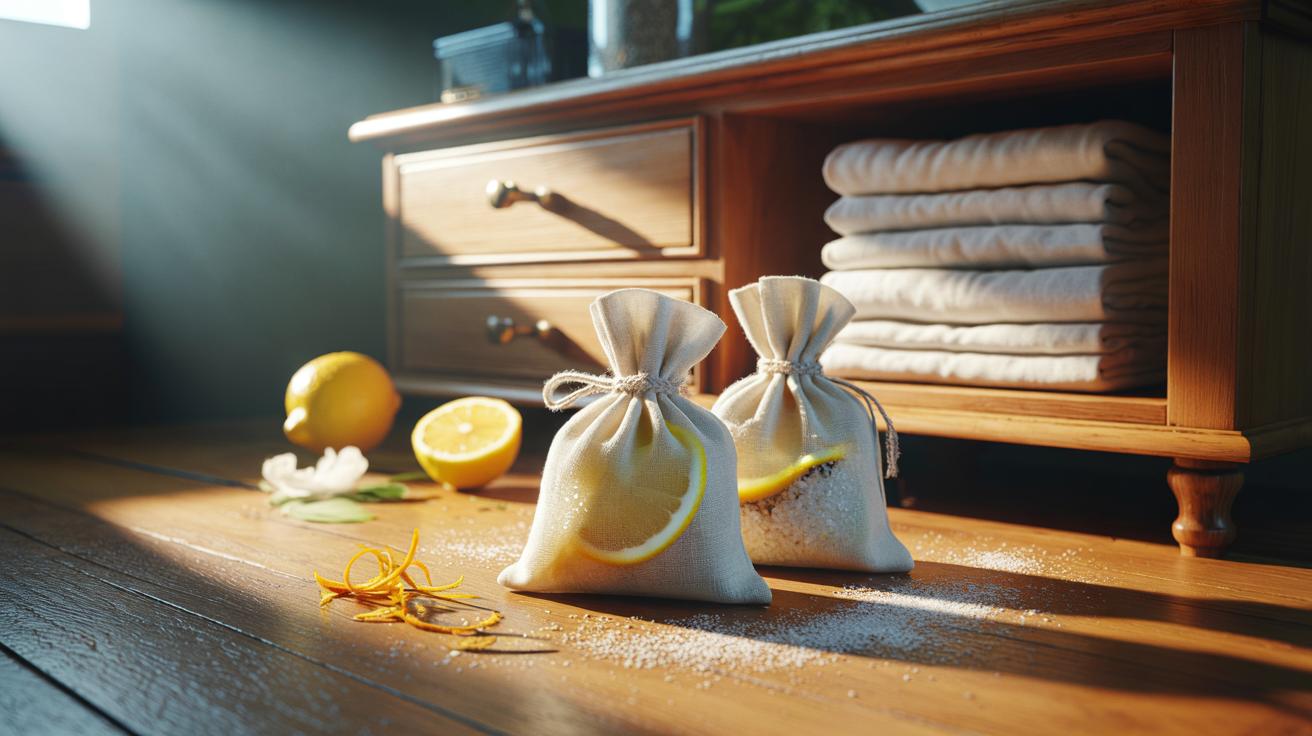
You will need: clean citrus peels or fine zest (lemon, orange, grapefruit, lime), 2–3 tablespoons of uncooked rice or bicarbonate, and breathable pouches such as muslin or old cotton hankies. Pat peels dry to remove excess juice, then chop into thin strips. Mix with the rice or bicarb and spoon into your pouch, tying securely. Optional: add two drops of food-safe citrus essential oil to boost intensity. Do not soak the fabric—too much oil can stain fibres.
Pop the filled pouches into an airtight container and freeze for at least three hours—overnight is ideal. Freezing preserves the top notes of the scent until deployment. When ready, place one sachet per drawer. Expect a fresh hit for one to two weeks, with a softer trail for several more. To revive, squeeze the pouch to bruise the peels, or return to the freezer for a few hours and rotate back in. Replace contents monthly, and compost the spent peel for a low-waste cycle.
Where and How to Use Them
Drawers, shoe racks, linen cupboards and gym bags all benefit from a sachet tucked at the back or beneath folded items. Keep them out of direct contact with silk, leather and polished wood to avoid potential oil transfer. For wardrobes, hang a pouch near the hem of garments where air moves; for bedding, slide one between sheet stacks. Pair with a small silica gel packet in damp-prone spaces to reduce humidity spikes after showers or rainy days. Placement matters: aim for airflow, not compression. Replace or refresh as scent fades, and rotate citrus varieties to keep your nose keen and your storage lively.
| Location | Sachet Size | Expected Longevity | Helpful Add-on |
|---|---|---|---|
| Sock/underwear drawer | 1 small pouch | 2–3 weeks | Rice for moisture control |
| Linen cupboard | 2 medium pouches | 3–4 weeks | Bicarbonate for odour absorption |
| Wardrobe | 1 hanging pouch | 2–3 weeks | Silica gel to cut humidity |
| Shoe rack/gym bag | 1 sturdy pouch | 1–2 weeks | Activated charcoal for punchy smells |
Safety and Sustainability Considerations
Citrus is gentle, yet the oils are concentrated. Keep sachets out of reach of children and pets; cats, in particular, can be sensitive to citrus terpenes. If using essential oils, stick to a drop or two and avoid direct garment contact. Check for colourfastness on delicate fabrics. When in doubt, place sachets in a corner or under a drawer liner. If you notice any irritation from scent, remove and ventilate the space. For wooden furniture, a thin paper coaster under the pouch prevents oil marks.
Waste less by using leftover peels from daily fruit and composting the contents when done. One muslin pouch can be washed and reused for years, cutting plastic and packaging from synthetic fresheners. Consider seasonal blends: lemon with rosemary for spring, orange with clove in midwinter. If you need a lower-scent option, rely on bicarb and a whisper of zest. Small, mindful tweaks can outpace shop-bought solutions while keeping your home’s fragrance honest and clean.
Citrus freezer sachets bring together chemistry, thrift and a streak of kitchen craft, turning peels that might be binned into a practical defence against musty drawers. The volatile oils do the airy work, while rice or bicarbonate quietly handles damp—the real culprit behind stale odours. With a few minutes of prep and a stash in the freezer, you can rotate freshness through cupboards, wardrobes and shoe racks all year. Will you start with lemon-bright linen or orange-sweet knitwear—and what bespoke blend will become your home’s signature scent?
Did you like it?4.5/5 (27)