In a nutshell
- 🎾 The tennis ball trick uses the ball’s felt to provide gentle abrasion that lifts rubbery scuffs from vinyl, linoleum, laminate, and sealed hardwood in seconds—without chemicals.
- 🧭 How-to: start with a clean, dry ball, clear grit, optionally slit and mount on a broom handle, use light circular pressure, wipe residue, then buff; always test inconspicuously.
- 🧱 Best surfaces: excellent on vinyl/LVT and linoleum; good on laminate, sealed hardwood, and glazed tile; keep pressure minimal and avoid embedded grit.
- 🚫 When to skip: avoid oiled/waxed wood, raw timber, and uncured finishes; use alternatives like a microfibre cloth with pH‑neutral cleaner, a white eraser, bicarbonate paste, or a light melamine pass.
- 🌱 Savings and safety: repurposing a tennis ball reduces chemical cleaners, costs, fumes, and downtime; label, wash, and rotate balls, and add felt pads plus regular sweeping to prevent new scuffs.
Scuff marks on floors are the housekeeper’s nemesis: those grey streaks left by school shoes, office chairs, and hurried trolley wheels. Cleaning experts across the UK swear by a surprisingly effective fix hiding in your sports bag: the tennis ball trick. With a few guided rubs, a clean tennis ball can lift stubborn scuff marks from vinyl, linoleum, and many sealed hardwood finishes—without chemicals or endless scrubbing. It’s cheap, quiet, and gentle on most protective coatings. A clean, dry tennis ball can erase most scuffs in seconds, turning a tedious task into a quick touch-up. Here’s how it works, where it shines, and when to choose an alternative.
Why a Tennis Ball Works on Scuffs
The magic lies in a tennis ball’s felted surface and pliable rubber core. The felt provides a mild, uniform abrasion that “keys” into rubbery streaks left by shoe soles or chair feet, while the ball’s bounce creates controlled friction without gouging the finish. Think of it as a reusable, low-grade eraser that targets residue rather than the floor itself. On common surfaces—vinyl, linoleum, laminate, and sealed hardwood—the ball’s texture grips the mark and lifts it cleanly.
Because there’s no liquid, you avoid swelling wood fibres or dulling a sheen with harsh solvents. Still, the physics depends on preparation: remove grit first so the ball doesn’t drive particles across the finish. Used with light, consistent pressure, a tennis ball removes scuffs while respecting the protective coat beneath. This balance explains why caretakers in schools and facilities have relied on the trick for years.
Step-by-Step: How to Use the Tennis Ball Trick
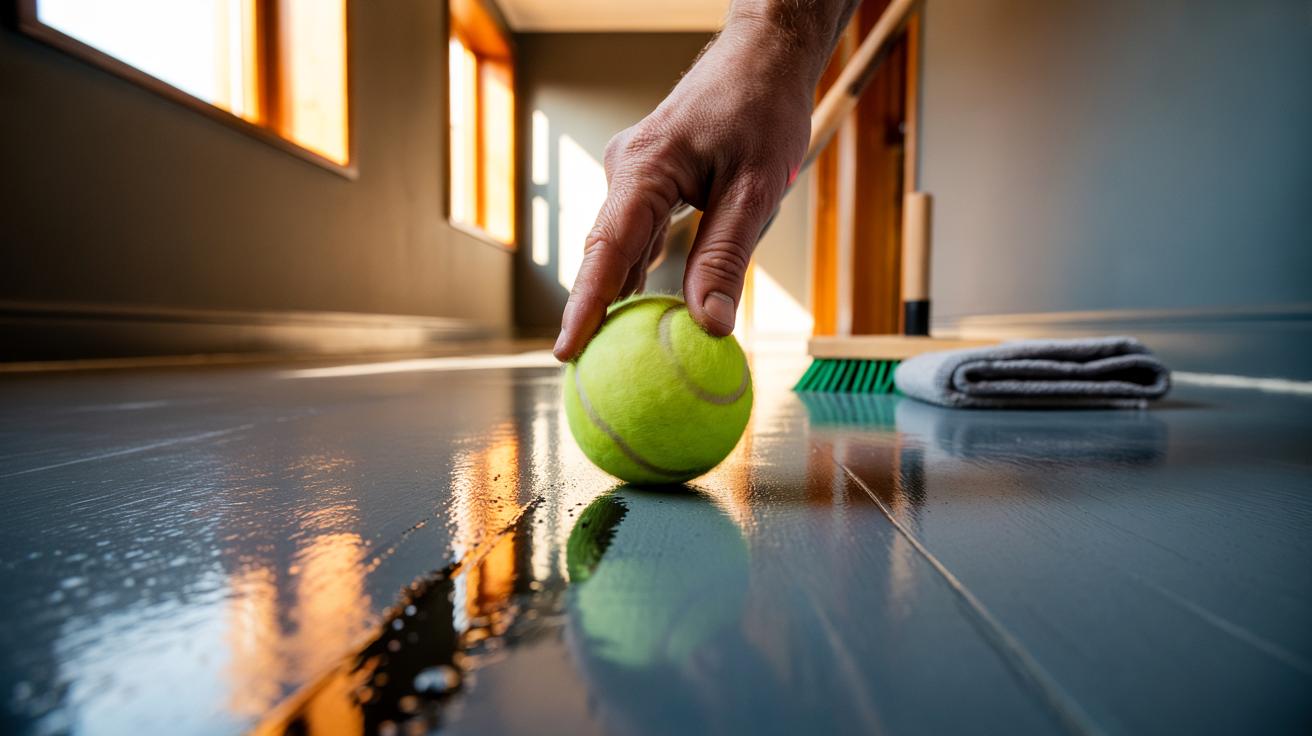
Start with a clean, dry tennis ball. Sweep or vacuum the area to clear sand and dust. For ergonomic use, make a 2–3 cm cross-shaped slit in the ball and push it onto a broom handle—a caretaker classic that saves backs and speeds up long corridors. Place the ball on the scuff and apply steady, gentle pressure with a tight circular motion. After a few seconds, pause, wipe away residue with a microfibre cloth, and reassess.
Always test on an inconspicuous spot to confirm the finish is durable and colourfast. On sealed hardwood or high-gloss vinyl, go slowly and avoid aggressive scrubbing. If a mark lingers, alternate short, controlled twists with a clean section of the ball to maintain traction. For wide black streaks from rubber casters, a slightly firmer pass works—still resist the urge to lean in hard, which can haze delicate coatings.
Finish by buffing the area lightly with a dry cloth to restore uniform sheen. If the ball collects grime, wash and dry it before the next session, or rotate to a fresh one.
Where It Works Best: Floor Types and Results
The tennis ball shines on resilient floors and sealed finishes commonly found in homes, schools, and offices. Here’s a quick reference to help you decide when to reach for the ball first and when to pause. Matching the technique to the surface ensures fast results without risking dull patches or micro-scratches.
| Floor Type | Suitability | Notes |
|---|---|---|
| Vinyl/LVT | Excellent | Light, circular motion; clears rubber scuffs swiftly. |
| Linoleum | Excellent | Gentle pressure preserves protective polish. |
| Laminate | Good | Use minimal pressure to avoid sheen changes. |
| Sealed Hardwood | Good | Test first; avoid rubbing on gritty residues. |
| Tile (Ceramic/Porcelain) | Good | Great on glazed tiles; grout unaffected. |
| Oiled/Waxed Wood | Not advised | Can disturb finish; use gentler alternatives. |
For textured floors, angle the ball to pick up streaks on raised areas first. On matte finishes, a soft buff afterwards keeps the appearance even.
When Not to Use the Trick and Safer Alternatives
Skip the tennis ball on oiled or waxed wood, raw timber, or any floor with a delicate, hand-rubbed finish—the friction can shift sheen or lift product. Be cautious on freshly sealed surfaces that haven’t fully cured. If the finish feels tacky or new, let it harden before introducing any abrasion. Avoid using a filthy ball: embedded grit can turn a gentle tool into an abrasive hazard.
For sensitive floors, reach instead for a damp microfibre cloth with a drop of pH-neutral cleaner, or try a white pencil eraser on pinpoint marks. A soft paste of bicarbonate of soda and water can remove light transfer on tiles—rinse thoroughly. On resilient floors with extreme scuffs, a specialised rubber scuff remover or a melamine pad used lightly may help, but always test first and stop at the earliest sign of dulling.
Sustainability and Budget Benefits
Households, schools, and facilities teams love the tennis ball trick because it’s frugal and green. Repurposing an old ball extends its life, reduces waste, and cuts down on chemical cleaners. A single ball can service long hallways, sports halls, and kitchen work zones, with results that measure up to costlier consumables. For maintenance teams, the time saved per mark translates into real budget relief across a large estate.
There’s a safety upside, too: no fumes, no wet floors, and minimal disruption to classrooms or offices. Keep one ball per area to prevent cross-contamination, label them, and wash periodically. Pair the trick with felt pads under chairs and regular sweeping to prevent repeat scuffs. The payoff is a quietly smarter routine: fewer products, cleaner floors, and a workflow that favours prevention over correction.
The humble tennis ball earns its place in the cleaning kit by blending speed, control, and surface safety. With smart preparation, light pressure, and a quick test patch, you can banish everyday scuffs without solvents or hard graft. From vinyl kitchens to school corridors, it’s a low-cost method that delivers professional-looking results in moments. Used thoughtfully, this simple tool helps protect finishes and budgets alike. Where will you try the tennis ball trick first, and which floor in your home or workplace is crying out for a swift, scuff-busting pass?
Did you like it?4.5/5 (28)