In a nutshell
- 🧲 Clean top-to-bottom to work with gravity, preventing dust and droplets from falling onto already-polished surfaces.
- 🗺️ Follow a consistent room order: ceilings and vents, then mid-levels and touchpoints, skirting next, and floors last to avoid re-dirtying.
- 🧽 Use the right kit: microfibre for capture, a HEPA vacuum with wand for high spots, and damp-dusting up high to limit resuspension.
- ⏱️ Nail the timing: ventilate first, degrease and descale early, polish near the end, then vacuum before mopping and let surfaces dry undisturbed.
- ✅ Outcome: fewer passes, reduced product use, better hygiene on high-touch points, and consistently spotless finishes across every room.
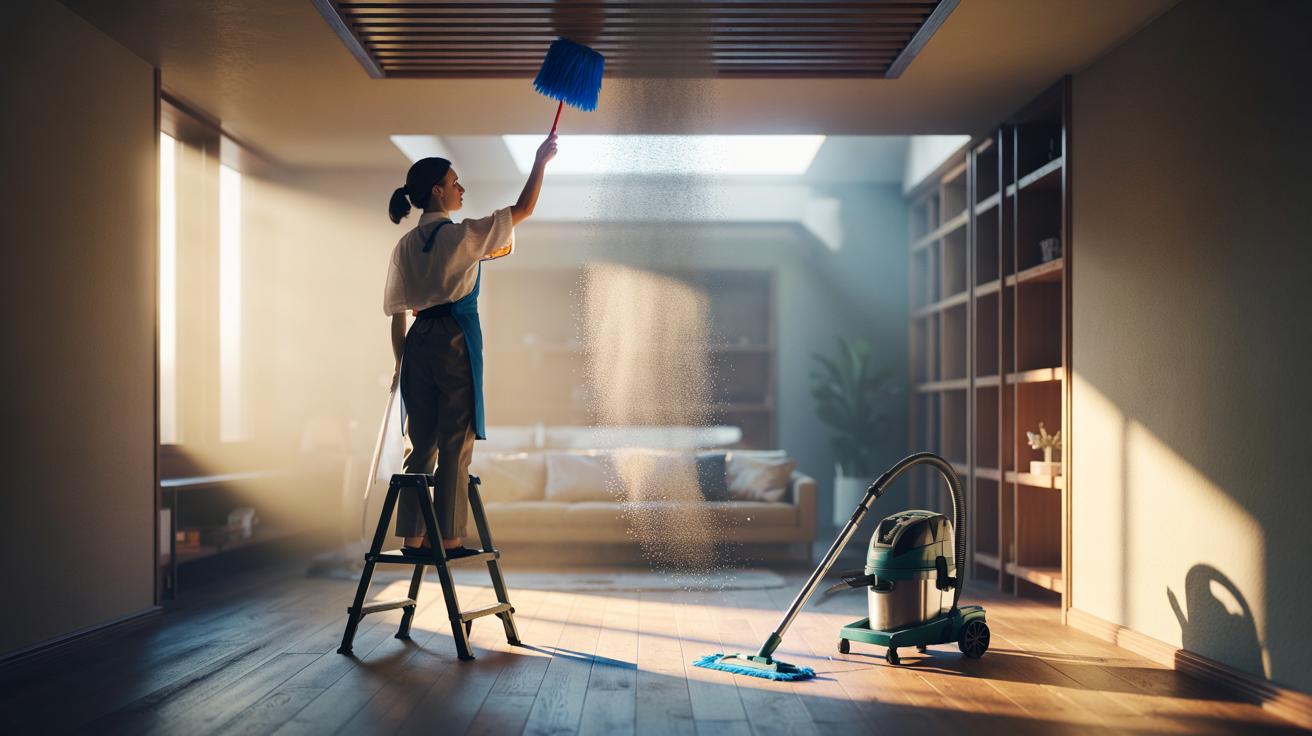
The golden rule of professional housekeeping is deceptively simple: clean from the top down. It is more than habit; it is a method rooted in physics, time management, and the consistent pursuit of a streak-free finish. Start high and you disrupt dust, pollen, and grease at their source rather than chasing them later across worktops and floors. This order prevents re-depositing grime on areas you have already perfected. Whether you are sprucing up a studio flat or turning over a large family home, a top-to-bottom approach reduces passes, conserves energy, and delivers a visibly sharper result. Here is how the best housekeepers make that order work in real homes.
The Physics Behind the Top-Down Rule
Housekeeping is practical science in motion. Dust, dander, and microscopic kitchen aerosols settle in layers under the pull of gravity. Touch the ceiling cornice or upper shelves and you disturb that layer, sending particles drifting. If you have already polished the table beneath, you will instantly spoil your own work. Cleaning from high to low respects the natural direction of fall, so the very last thing you perfect—typically the floor—collects what everything else shed. The same logic applies to moisture: steam and fine droplets rise, condense on cool surfaces above, and dry into specks if not cleared early.
Airflow compounds the effect. Opening windows while you dust creates a gentle pressure path that carries loosened particles downward and outward. Professionals choose strokes that nudge debris with gravity, not against it. Resuspension—the tendency of tiny particles to lift back into air when agitated—is minimised by damp-dusting up high, then progressively drier polishing at mid-levels, and finally a slow, HEPA-filtered vacuum pass at ground level. The fewer times you re-touch a surface, the cleaner the finish.
A Room-by-Room Order That Stops Re-Dirtying
Kitchens and bathrooms produce sticky residues that snag dust like Velcro. Housekeepers begin with lights, vents, and the top faces of cupboards before working down to splashbacks and counters. Handles, switches, and taps sit mid-level and get oily fast, so they are tackled only after overhead grime has fallen away. In living areas, the sequence is similar: ceiling cobwebs and high shelves first, then picture frames and electronics, then skirting boards and finally the floor. Bedrooms add headboards and wardrobe tops to the upper tier; in children’s rooms, toy shelves follow the same descent.
Below is a concise order that prevents clean areas being soiled by later tasks. Always leave floors last, and schedule waste removal after you finish dusting to avoid re-blooming odours.
| Zone | Typical Tools | Why First? | Risk If Left Late |
|---|---|---|---|
| Ceilings, vents, high shelves | Extending duster, damp microfibre | Dislodges settled dust | Fallout soils polished surfaces |
| Upper walls, frames, lamps | Microfibre cloth, mild cleaner | Removes smuts and cobweb traces | Smears on glass and screens |
| Worktops, fixtures, switches | Non-scratch pad, disinfectant | Hygiene-critical contact points | Recontamination post-polish |
| Skirting, low furniture | Crevice brush, cloth | Collects falling dust | Tracks grime onto floors |
| Floors | HEPA vacuum, mop | Final catch-all stage | Streaks and grit underfoot |
Tools and Techniques That Keep Dust Moving Downward
The kit matters. Microfibre cloths trap particles electrostatically, so they lift films rather than flicking them into air. Use light moisture for upper areas to pin dust; save sprays and polishes for mid-level gloss where you can buff without spatter. A HEPA-filtered vacuum with a telescopic wand reaches coving and vent grilles, pulling contaminants into a sealed bag rather than redistributing them. A dry duster alone often creates the illusion of clean while seeding the room with fine debris.
Technique keeps the descent neat. Work in S-shaped strokes to avoid edge-heavy smears, and keep a second cloth purely for drying to stop streaks forming below. Switch attachments as you drop: soft brush for lampshades, crevice tool for skirting. In wet zones, a squeegee sends water straight down the pane, where a towel catch waits on the sill. Contain debris with a lined caddy so you are not trekking to the bin mid-task.
Professional Timing: When to Vacuum, Mop, and Polish
Time sequencing is as crucial as physical order. Start with at least five minutes of air exchange to reduce airborne load, then attack high dust while the air is moving. Leave fragrant polishes until the penultimate phase so their volatile compounds are not stripped away by ventilation. In kitchens, de-greasing overhead cabinets before you address the hob prevents aerosolised cleaner settling on the cooker you just buffed. In bathrooms, descale and rinse glass early, but do the final squeegee after taps are polished to catch any late drips.
Vacuuming comes immediately before mopping, with slow passes to allow suction to capture heavier sediments released during earlier stages. Mop in the direction of the exit so you do not rewalk damp floors; change water as soon as it clouds to avoid a grey film. Drying time completes the cycle: leave doors ajar and skirting clear so airflow finishes the job. The surface is only truly clean once it is dry and undisturbed.
Across countless homes, the most consistent tell of professionalism is sequencing. Work with gravity, not against it; start high, finish low; and time each product so you never undo your gains. That is why a top-to-bottom routine delivers quicker, cleaner rooms with fewer passes and less product. It is a quietly disciplined craft that turns effort into lasting shine. As you look at your own cleaning habits, where could a small tweak in order save you time and stop re-dirtying—what step will you move higher or lower in your next clean?
Did you like it?4.5/5 (28)