In a nutshell
- 🦠 Odours come from a sticky biofilm of detergent, softener, body oils and limescale; a targeted deep clean and a hot maintenance wash break it down and flush it out.
- 🧼 Step-by-step reset: power off; scrub the detergent drawer; wipe the door gasket; run a 60–90°C cycle with white vinegar and bicarbonate of soda or a machine cleaner; clear the drain pump filter; dry and air.
- ⚗️ Choose your chemistry: natural options are cheap and effective for odours, while specialist cleaners hit heavy grime; alternate in hard-water areas and never mix vinegar and bleach.
- 🔁 Prevention habits: leave door and drawer ajar, wash towels at 60°C weekly, dose detergent to water hardness, wipe the gasket, and service the filter quarterly.
- 🌬️ Payoff and troubleshooting: expect fresher laundry, faster drying and better cleaning; if smells linger, try smaller loads, switch detergent and improve utility room ventilation.
Your washing machine should deliver that just-laundered crispness. But if towels emerge with a faintly swampy whiff, the culprit rarely hides in the fabric. It lurks inside the appliance itself. Low-temperature cycles, excess softener, and hard water invite residue and microbes to settle in. A thorough, no-nonsense deep clean restores the sparkle and the scent. It’s part science, part elbow grease, and all about consistency. Below, you’ll find a clear plan that scrubs away odours at the source — not just masking smells with perfume. Do this once, set a routine, and your laundry will smell fresher for longer. Here’s how to start.
Why Your Machine Smells—and How Deep Cleaning Helps
Modern habits make machines stink. We wash cooler, we dose generously, and we shut the door tight after every spin. The result is a sticky biofilm of detergent, softener, and body oils that clings to the drum, hides in the rubber gasket, and settles along the drain path. In hard-water areas, limescale strengthens this grime like concrete, creating a cosy home for bacteria and mildew. You smell them before you see them. If your washer smells, your laundry will too. A deep clean breaks up that film, flushes it out, and removes the nutrients microbes feed on.
Think of it as clearing the plumbing of a small kitchen. You need heat, chemistry, and agitation in the right order. A hot maintenance wash (60–90°C) softens grease and loosens deposits; an acid such as white vinegar or a specialist descaler dissolves scale; oxygen bleach or machine cleaner knocks back microbes. Finish by emptying the drain pump filter to prevent recirculation of fluff and grit. Once the film is gone, smells vanish with it, and fabrics dry fresher, faster.
Step-by-Step: Drum, Gasket, Detergent Drawer, and Filter
Start with safety and prep. Power off at the socket, then pull out the detergent drawer. Soak it in hot water with a splash of washing‑up liquid, scrub the channels with an old toothbrush, and rinse until the water runs clear. Wipe the drawer cavity too; hidden gunge lives at the back. Move to the door gasket: peel back the rubber lip and remove coins, hair, and lint. Spray a 1:1 mix of hot water and white vinegar or use a machine‑safe disinfectant, then work into creases with cotton buds. Never mix vinegar and bleach. Choose one chemistry per session.
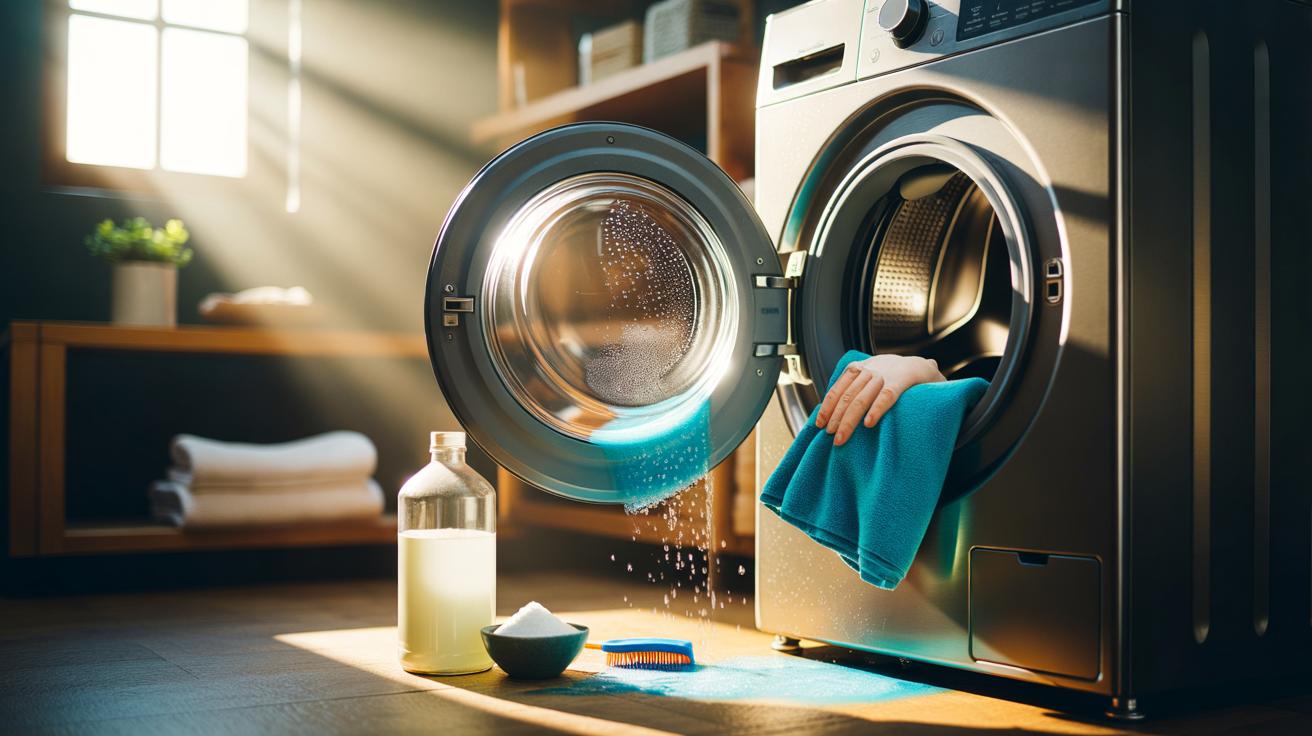
Run the drum clean. For a natural route, add 500 ml white vinegar straight into the drum and 2 tbsp bicarbonate of soda in the drawer, then select a 60–90°C cotton cycle. Prefer a branded cleaner? Dose as directed and run the hottest full cycle the machine allows. When finished, wipe the drum and gasket dry. Now tackle the drain pump filter: open the lower hatch, place a tray or towel, release the emergency hose (if fitted), then unscrew the cap. Remove grit, buttons, and threads; rinse the filter and housing. Refit firmly, run a short rinse, and leave the door ajar to air.
Final flourish: clean the exterior and the door glass with a mild spray, and pop the drawer back only when fully dry. That’s your reset complete.
Natural Cleaners Versus Specialist Products
There’s a pragmatic choice to make. White vinegar and bicarbonate of soda are cheap, widely available, and brilliant at dissolving limescale and neutralising odours. They shine for regular upkeep in soft to moderately hard water. However, they’re not disinfectants in the medical sense, and overuse of strong acids may shorten the life of some rubber parts. Specialist machine cleaners combine surfactants, oxygen bleach, and scale inhibitors, delivering targeted cleaning at maintenance temperatures. They cost more per cycle but are highly effective when smells are stubborn.
Use a natural method for monthly freshen‑ups, especially if you run an occasional hot wash. Deploy a branded cleaner when a machine is heavily soiled, inherited with unknown history, or you notice visible mould. In very hard‑water regions, alternate: one month vinegar‑based, the next a descaler or manufacturer‑approved treatment. Pick one chemistry per cycle, read the label, and dose accurately. Overdosing detergent or cleaner is a fast track to more residue and recurring odours.
Prevention: Habits That Keep Odours Away
Good habits beat crisis cleans. After every wash, leave the door and detergent drawer ajar to vent moisture. Once a week, run towels at 60°C with the correct measure of powder; the higher heat helps suppress biofilm. Measure detergent to your water hardness and load size — too much creates residue, too little leaves soils behind. If you live in a hard‑water area, favour powder and add a softening agent or descaler as recommended. Wipe the gasket weekly, and empty the filter quarterly before it becomes a swamp of lint.
Build a simple schedule and stick to it. It’s quick, cheap, and avoids the “why do my clothes still smell?” spiral. Airflow is your ally — never close a wet machine. The table below offers a snapshot you can pin inside a cupboard for easy reference.
| Part | Cleaner | Frequency | Notes |
|---|---|---|---|
| Drum (maintenance wash) | White vinegar or machine cleaner | Monthly | Run at 60–90°C on empty |
| Door gasket | Vinegar solution/disinfectant | Weekly | Wipe folds; dry after use |
| Detergent drawer | Hot water + washing‑up liquid | Fortnightly | Remove and scrub channels |
| Drain pump filter | Rinse under hot tap | Quarterly | Place tray; check for coins |
| Inlet hoses | Visual check | Annually | Look for kinks or leaks |
A deep‑cleaned washing machine doesn’t just smell better — it washes better. Fabrics feel lighter, dry faster, and hold onto fragrance instead of stale humidity. Keep chemistry simple, keep cycles hot when it counts, and keep air moving. Consistency is the secret, not heroic weekend scrubs. If you’ve followed this guide and still battle funk, consider shortening loads, switching detergents, and checking ventilation in your utility room. The small, regular rituals are what protect the big investment. What will you add to your routine this week to keep your machine — and your laundry — beautifully fresh?
Did you like it?4.4/5 (25)