In a nutshell
- 🍋 The lemon peel trick: heat peel + 250 ml water on high for 90–120 sec, rest 2–3 min to let steam work, then wipe; use peels as a mild scrubber.
- 🔬 Why it works: citric acid and limonene lift grease and neutralise odours, turning the lemon into a natural deodoriser that leaves a clean, zesty scent.
- ⏱️ Timings and tweaks: suits 800–900 W ovens; use a wide microwave-safe bowl; add bicarbonate of soda or a splash of vinegar for stubborn smells; never run empty or seal the bowl.
- 🛡️ Safety and stains: drop in a wooden stir stick to prevent superheating, keep your face back from steam, treat tomato marks with a bicarb paste, and clean the turntable ring and rollers.
- ♻️ Maintenance wins: a quick weekly steam keeps the door seal, vents, and interior fresh, delivering a glossy finish for pennies and a low-cost green routine.
The simplest kitchen ideas are often the most satisfying, and few are simpler than the lemon peel trick that rescues a tired, whiffy microwave. In homes and rented flats across the UK, this quick ritual turns lingering curry, fish, or burnt popcorn smells into a bright, zesty breeze. You need only a lemon, some water, and two spare minutes. That’s it. As a journalist who’s tested countless hacks, I rate this one highly for its speed, thrift, and surprisingly glossy finish. It’s a low-cost, low-effort reset that works on both odour and grime. Here’s the why, the how, and the safety notes to keep your microwave in mint condition.
The Lemon Steam-and-Peel Method
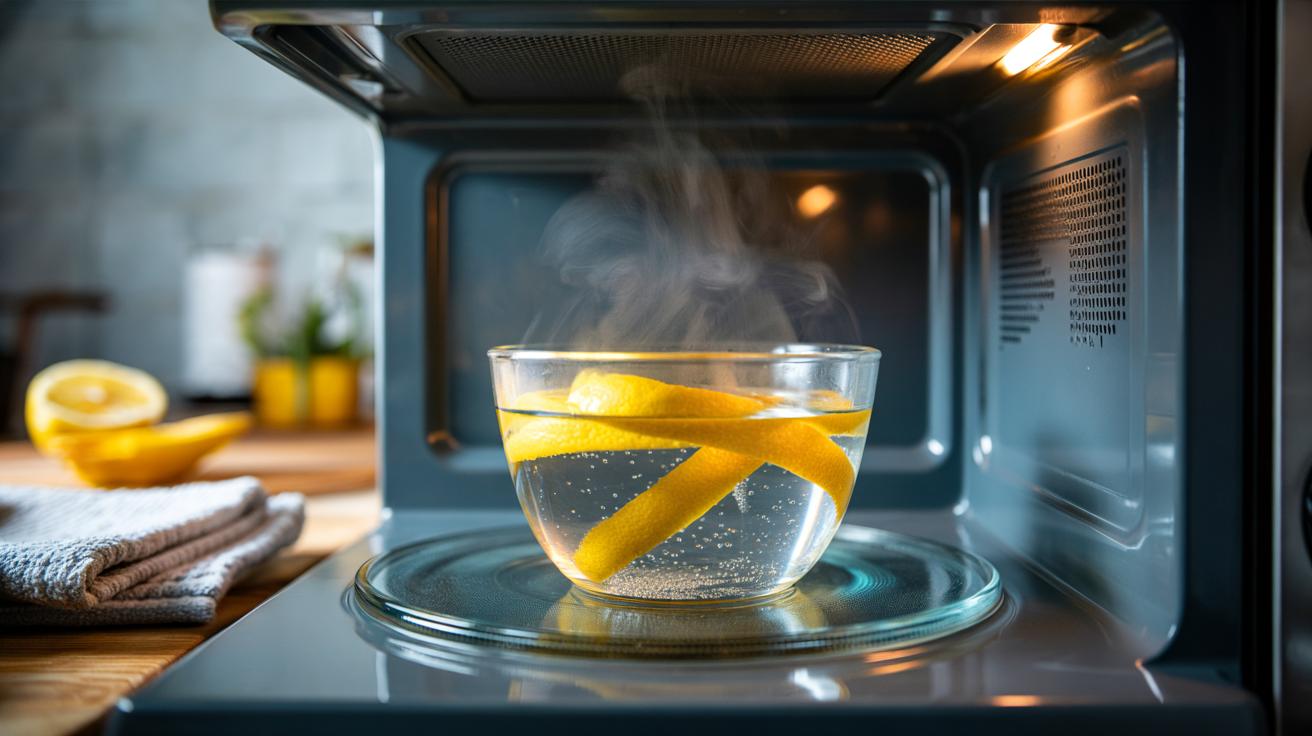
Start with a fresh lemon. Rinse it, then peel thick strips of zest with a vegetable peeler, keeping the pith to a minimum. Place the peels in a microwave-safe bowl with 250 ml of water. Squeeze the juice of half the lemon into the bowl if you want added punch. Place it in the centre of the turntable. Heat on high for two minutes, then leave the door shut for at least another two minutes to let the lemony steam penetrate every corner. This gentle pause matters more than people think.
Carefully remove the bowl. It will be hot. Dip a clean microfibre cloth into the warm liquid and wipe the interior walls, ceiling, and door seal. Use the softened lemon peels as a mild scrubber for stubborn splatters, especially on the turntable. The steam loosens grease; the peel’s oils cut through it. Dry with a fresh cloth. That’s the reset: bright, clean, and citrus-fresh in under five minutes. For heavy build-up, repeat once more rather than cranking up the time.
Why Citrus Works: The Science and the Scent
Two forces make this trick effective: heat and chemistry. Hot vapour softens claggy food films, but it’s the lemon’s citric acid and essential oils that lift residues and neutralise odours. Citric acid chelates minerals and breaks up greasy bonds, so the wipe-down needs far less elbow grease. Meanwhile, limonene—an oil concentrated in the peel—acts like a gentle solvent, leaving a subtle polish on the interior surface. This is why peel, not just juice, is crucial.
There’s also a sensory boost. Strong food smells often cling to porous plastics and door gaskets. The aromatic molecules from the peel disperse in the steam, then settle lightly on those surfaces, replacing stale notes with a clean, zesty fragrance. It’s not a perfume bomb; it’s fresher than that. Think of it as a quick, natural deodoriser that also does the cleaning. Unlike harsh sprays, you’re left with no synthetic chemical haze.
Step-by-Step Guide with Timings and Variations
Consistency makes this hack almost foolproof. Use a bowl with a wide top to expose more water to heat, creating robust steam quickly. Two minutes suits most 800–900 W UK microwaves; powerful models may need only 90 seconds. Always rest the steam before opening the door; that’s when the magic happens. If odours persist, add a teaspoon of bicarbonate of soda or a splash of white vinegar to the water—both amplify deodorising power without clashing with the lemon scent. Never run the microwave empty, and never seal the bowl completely.
| Item | Quantity | Setting/Time | Purpose |
|---|---|---|---|
| Lemon peel | 6–8 wide strips | With 250 ml water | Releases oils; boosts cleaning |
| Water | 250 ml | High, 90–120 sec | Generates steam to loosen grime |
| Bicarbonate (optional) | 1 tsp | Same as above | Neutralises strong odours |
| Rest time | 2–3 minutes | Door closed | Allows vapour to work |
Finish by wiping the door seal, vents, and corners—areas that trap the worst smells. For weekly upkeep, a 60‑second lemon steam is enough. Quick, clean, and surprisingly restorative.
Safety, Stains, and Stubborn Smells
Microwaves can superheat liquid in smooth vessels. To reduce risk, place a wooden stir stick, bamboo skewer, or a clean coffee stirrer in the bowl. It provides nucleation points for bubbles to form safely. Always open the door cautiously and keep your face back from the initial burst of steam. If you’ve got baked-on splatters, pre-wipe with warm soapy water, then run the lemon cycle. You’ll use fewer passes and protect the interior coating.
Tomato stains? They’re pigment-heavy. Apply the lemon steam, then spot-treat with a paste of bicarbonate of soda and a few drops of the hot lemon water. Rinse well. For recurring odours from fish or reheated takeaways, run a longer two-stage session: steam, wipe, then repeat with fresh water and peel. Don’t neglect the turntable ring and rollers; they harbour drip lines. Replace peeling interior waveguide covers and damaged seals—no scent hack can fix failing hardware.
There’s a quiet pleasure in opening a microwave and being greeted by freshness, not last night’s dinner. The lemon peel trick delivers that, and it costs pennies. Steam does the heavy lifting, natural oils finish the job, and your cloth glides rather than scrubs. Fold it into your weekly routine and you’ll extend the life of the appliance while keeping the kitchen feeling civilised. It’s quick, it’s green, and it works. What other tiny, thrifty habits have transformed the feel of your home, and which should we investigate next?
Did you like it?4.5/5 (26)