In a nutshell
- 🧼 Dish soap works instantly because its surfactants reduce surface tension and friction, while low viscosity and capillary action let it slip under the band to create a thin, slick film.
- 🧭 Safe removal steps: elevate the hand to reduce swelling, cool rinse, apply a pea-sized amount of dish soap, then use gentle twisting or a floss wrap—stop if pain, numbness, or discolouration appears.
- 🧪 What to use or avoid: Dish soap is best; hand soap/conditioner can help; petroleum jelly and cooking oils leave residue; avoid harsh solvents like acetone or bleach and protect porous stones.
- ⚠️ Safety first: never force the ring, keep everything lubricated, rinse thoroughly after, and seek a jeweller or A&E if circulation looks compromised—no at-home cutting tools.
- 🛡️ Prevention tips: consider seasonal ring sizing, remove rings before heat, exercise, or flights, keep rings and knuckles clean, try morning fitting, and use guards or hinged shanks for large knuckles.
It is the kitchen hack that jewellers, nurses and parents all swear by: a dab of dish soap can coax stubborn jewellery off swollen fingers in seconds. When heat, salt or exercise make a ring feel welded to skin, panic often makes the situation worse. In truth, the right lubricant and a calm, methodical approach are what set the ring in motion again. The science is simple, the execution precise, and the benefits immediate. Here’s how this everyday liquid lowers friction, eases pressure and protects both skin and metal, alongside practical steps to use it safely and what to do next to prevent a repeat.
Why Dish Soap Works on Stuck Rings
At the heart of the trick are surfactants—molecules in washing-up liquid with a water-loving head and oil-loving tail. They wedge themselves between the ring and the finger’s micro-ridges, creating a thin, slippery film. That film cuts surface tension and friction, so the ring no longer grips skin like a tyre on tarmac. The soap also forms micelles that gather sweat and skin oils, allowing them to glide rather than drag. This rapid wetting effect is why dish soap seems to “work instantly” compared with thicker creams.
Equally useful is the liquid’s low viscosity, which lets it flow into tight gaps the eye can’t see. A few drops travel under the band by capillary action, cushioning the metal-skin interface. Because washing-up liquid rinses cleanly, it leaves minimal residue on stones or settings when compared with heavy oils. You’re creating a temporary, ultra-thin lubricant that unlocks movement without harming the ring. It’s simple physics—and a small dose is all you need.
Step-by-Step Method: Sliding Jewellery off Safely
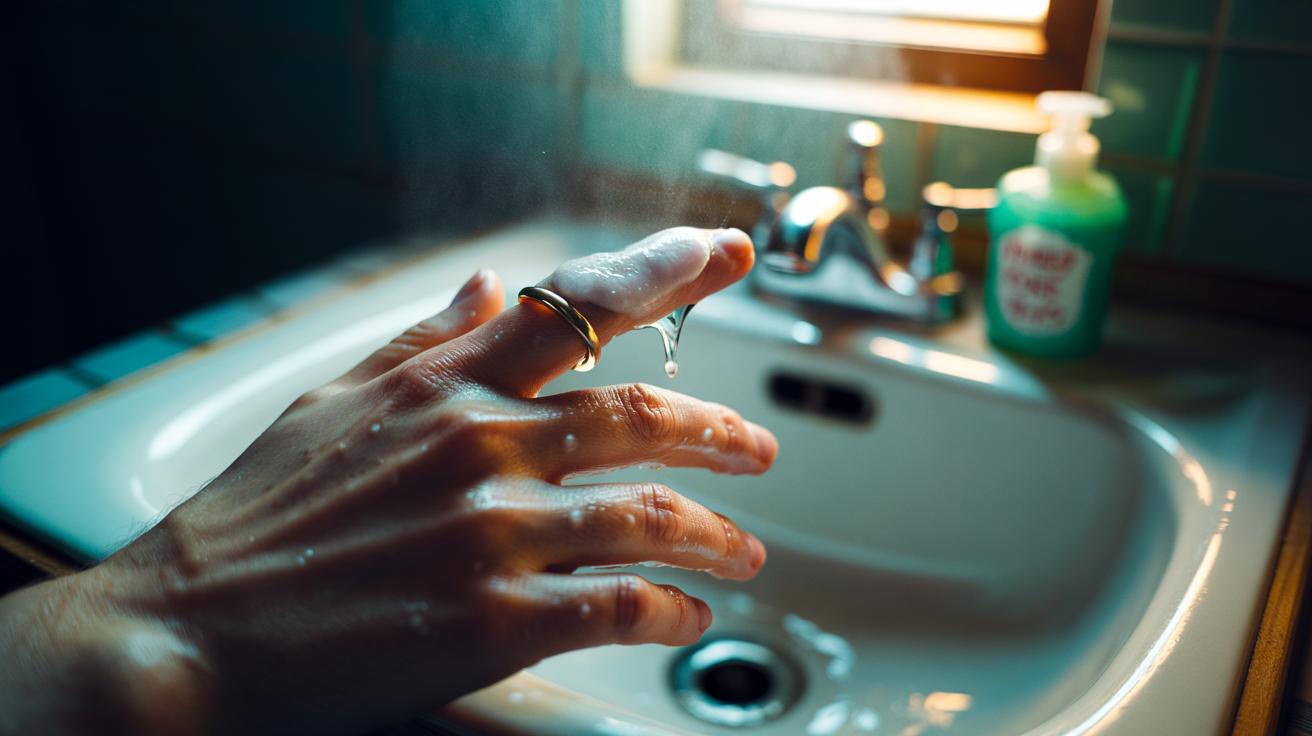
First, take the heat out of the situation. Raise your hand above heart level for two to three minutes to reduce swelling. If comfortable, rinse the finger in cool water, then pat dry—wet skin reduces grip for the next stage. Apply a pea-sized amount of dish soap around the ring and knuckle, working it under the band. Twist the ring gently as you pull, moving a millimetre at a time rather than yanking. Reapply a drop of soap if it dries. If there’s a raised knuckle, roll the skin back with your other thumb to shorten the distance.
For a stubborn band, wrap dental floss or thin elastic under the ring toward the fingertip in snug coils, then unwind from the base while guiding the ring forward—keep everything slick with soap. Stop immediately if you feel sharp pain, numbness, or see blue or white discolouration. If circulation looks compromised, cut the attempt short and seek a jeweller’s help or visit A&E. Patience and lubrication are your allies; force is not.
What to Use—and What to Avoid
Not all lubricants behave alike. The ideal choice reduces friction fast, reaches narrow spaces, and rinses away without affecting stones. Dish soap checks all three boxes. Liquid hand soap and hair conditioner work in a pinch but can be too thick. Petroleum jelly is slick yet bulky, making initial penetration harder, and it can cling to settings. Silicone-based lubricants are very slippery but may leave residue that traps grit. Avoid any product that could attack adhesives or delicate surfaces.
| Lubricant | How It Works | Residue | Jewellery Safety | Notes |
|---|---|---|---|---|
| Dish soap | Surfactants reduce surface tension | Rinses clean | Generally safe | Best first choice |
| Hand soap | Similar to dish soap | Light residue | Safe | May be less slick |
| Conditioner | Emollients add slip | Moderate residue | Usually safe | Thicker; reapply sparingly |
| Petroleum jelly | Occlusive layer | Heavy | Can attract dirt | Harder to clean settings |
| Cooking oils | Basic lubrication | Oily film | Risk for porous stones | Avoid with pearls/opals |
Avoid harsh solvents such as acetone or bleach, which can damage finishes, and never try at-home cutting tools. When in doubt, pause and let a professional assess the ring.
Preventing Future Ring Jams
Swollen fingers have many triggers: heatwaves, long walks, salty meals, pregnancy, and arthritis. Consider seasonal ring sizing; a fit that’s perfect in winter might pinch by August. Remove rings before exercise, hot baths, or flights, and keep a small bottle of dish soap or hand gel in your bag for emergencies. Clean rings and knuckles regularly; a film of lotion or grit raises friction under the band. A clean interface is your cheapest insurance against sticking.
Time of day matters too. Try rings in the morning when swelling is lowest, and use adjustable ring guards if weight or temperature fluctuates. If your knuckle is larger than the base of the finger, ask a jeweller about hinged shanks that open and close securely. Store rings separately to protect stones, and book periodic checks on prongs and settings. Prevention starts with a good fit and calm routine habits—small tweaks that keep the sparkle, not the struggle.
In the end, the humble bottle by the sink is a quiet hero: a scientific shortcut that turns panic into poise. A few drops of dish soap, a steady twist, and stuck becomes sliding, without scuffs or drama. Treat discomfort as a signal, not a test of strength, and call a professional when circulation seems at risk. The goal is a safe finger and an intact ring. With these practical steps and a clearer grasp of the physics, are you ready to keep your favourite bands moving freely whatever the day throws at your hands?
Did you like it?4.3/5 (21)