In a nutshell
- 🧩 The bread heel works because its porous, viscoelastic crumb compresses around sub‑millimetre glass shards, while the crust provides backing; slight natural moisture boosts adhesion without smearing.
- 🧤 Safe cleanup: sweep big pieces first, wear gloves and shoes, dab with the crumb side in short pats, fold the bread inward as it fills, and inspect under angled light; avoid standard vacuums that can spread particles.
- 🔬 Science insight: fresh bread’s soft foam structure and mild tack create micro “cups” that hold shards; starch retrogradation in stale bread reduces grip—use fresh or slightly soft slices, damp not wet.
- 🧰 Method match-ups: the bread trick excels on hard floors and worktops, while tape/lint rollers finish the job; kneadable putty helps in grout, and HEPA vacs are best left for professional cleanups.
- 🗑️ Aftercare: double-bag the spent bread and bin immediately; seek professional help for widespread tempered glass “snow,” shards in vents or drains, or unstable source glass; recognise limits on carpets.
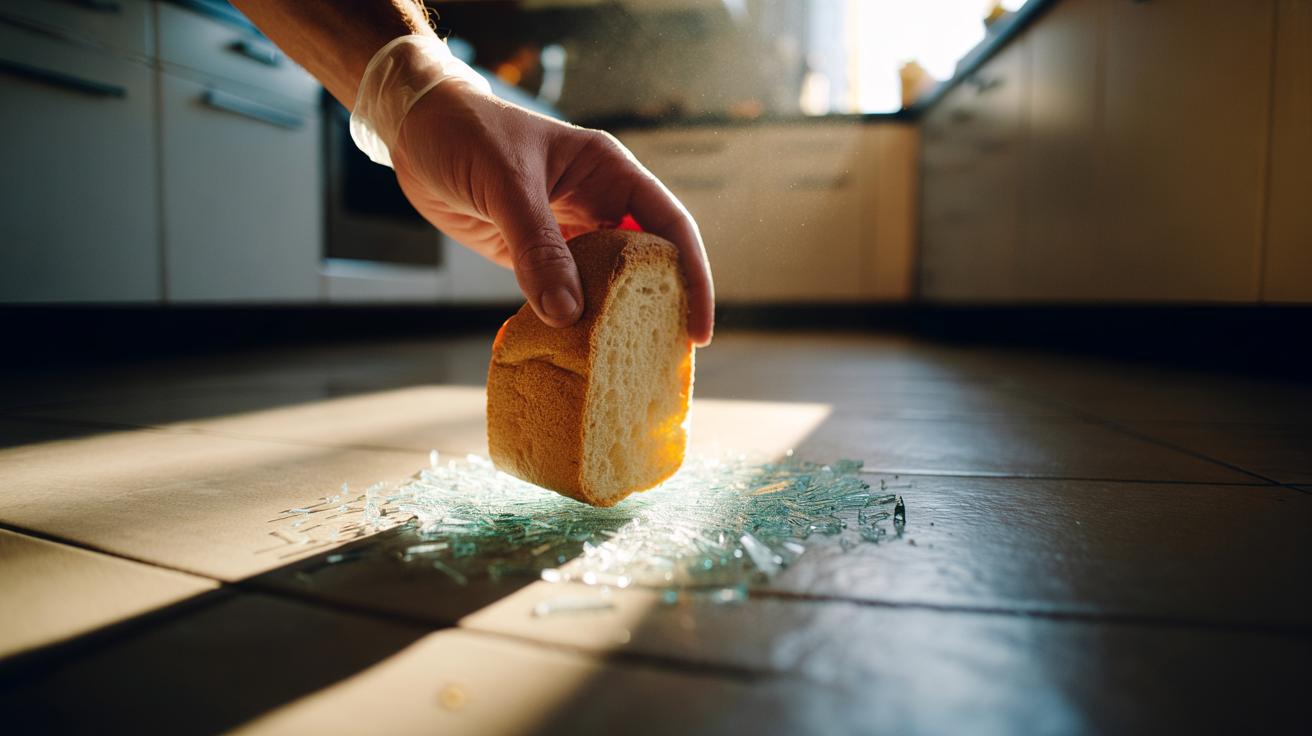
Spilled a tumbler, swept the obvious pieces, and still worried about the glittering specks that bite later? One humble hero from the kitchen—the bread heel—has earned a place in the household safety kit. Pressed gently against the floor, its soft, springy crumb snags fragments too small for a brush, sparing fingers and paws. The method relies on a mix of texture, slight moisture, and pressure that encourages glass to lodge and stay put. Used correctly, a slice of bread can make microscopic hazards visible, collectible, and disposable with minimal risk. Here’s how the trick works, why it’s effective, and when to consider other options.
Why Bread Works on Broken Glass
At the core of the method is the bread’s porous, compliant matrix. Fresh crumb contains a network of bubbles bound by a viscoelastic gluten-starch scaffolding. When you press the heel—the denser end slice—over a surface, the structure compresses and flows around irregular shapes. This creates mechanical “cups” that partially engulf micro‑shards. Because the bread’s surface is micro‑rough and slightly tacky, contact points anchor sharp splinters without letting them slide. That combination—softness, texture, and gentle pressure—turns a kitchen staple into a precision pickup tool.
Moisture helps, but not as glue. The tiny humidity present in fresh bread reduces friction at first contact, then increases adhesion as the crumb deforms and rebounds. The heel’s crust provides a firm backing, allowing controlled pressure while the interior does the trapping. Crucially, the method targets sub‑millimetre shards that brooms and dustpans miss or scatter. Compared with paper towels, which tend to shear and snag, bread’s fibrous network resists tearing and keeps fragments embedded until disposal.
Step-by-Step: Using a Bread Heel Safely
Start by removing the big, obvious pieces with a brush and pan, working slowly towards the centre. Always wear thick gloves and closed shoes when dealing with glass. Switch off fans or airflow that might spread particles. Place a fresh bread heel crust-side up in your palm, then press the crumb side lightly onto the target area. Use short, overlapping pats rather than smears; this keeps shards embedding perpendicular to the crumb instead of sliding. Fold the bread inward as it fills, so captured fragments stay enclosed.
Move methodically under angled light from a torch or phone. The raking beam reveals micro‑glints that ambient lighting hides. Replace the heel when it becomes visibly studded; a second small piece ensures coverage. For kitchen floors, finish by dabbing with tape or a lint roller along skirting and grout lines. Double-bag the spent bread and shards, expel air, and bin immediately. Do not vacuum fine glass with a standard home vacuum—airflow can propel particles or damage the appliance.
Science of Crumb Structure and Capillary Action
Bread crumb behaves like a soft foam. Its cells range from tiny to large pockets, creating voids that accept irregular debris. When pressed, the foam compresses, increasing the contact area; on release, it partially recovers, exerting a gentle hold on anything lodged. The gluten network delivers elasticity, while starch gel imparts mild tack. This explains why fresh or slightly soft bread outperforms stale slices: as bread stales, starch retrogradation hardens the crumb, reducing conformability and grip.
Moisture distribution matters. A heel retains more crumb mass beneath a firm crust, acting like a built-in pressure plate that prevents overcompression. Minute surface moisture can create capillary bridges at contact points between glass and crumb fibres, subtly improving adhesion without soaking. A damp—not wet—crumb maximises trapping while preventing smearing or disintegration. Excess water collapses the foam and leaves residue, so aim for fresh bread at room temperature rather than sprayed slices or paper towels.
Comparing Methods and When to Seek Professional Help
The bread technique excels at post-sweep cleanup of smooth surfaces—tiles, sealed wood, laminate, counters. It has limitations on plush carpets, gravelly grout, or outdoor paving. In those cases, targeted tape, a lint roller, or kneadable putty can finish the job. When glass shatters from an oven door, hob, or large window, prioritise area control and consult a professional if you suspect continuing breakage or embedded fragments. Below is a quick guide to common options and their best uses.
| Method | Pros | Cons | Best For |
|---|---|---|---|
| Bread Heel | Conforms, traps micro‑shards, cheap | Less effective on thick pile or wet areas | Hard floors, worktops, skirting edges |
| Tape/Lint Roller | Excellent finish, visible pickup | Adhesive residue on delicate finishes | Final pass after sweeping/bread |
| Damp Paper Towel | Accessible, disposable | Tears, pushes shards sideways | Very light debris on smooth tiles |
| Kneadable Putty | High adhesion, mouldable | Cost, potential residue | Porous surfaces, grout lines |
| Vacuum (Specialised) | HEPA containment, reach | Not typical home kit; risk with standard vacs | Professional/site cleanups |
Call a glazier or appliance engineer if tempered glass has “snowed” across a large area, if shards are in vents or drains, or if the source glass remains unstable. For carpet, isolate the section, pick visible pieces with tweezers, then use targeted putty and a HEPA vacuum with a fresh bag. Safety first: gloves, careful lighting, and controlled movements prevent secondary injury. The bread heel remains a smart, low-tech solution for those last menacing specks.
The unassuming crust from a loaf brings together physics, texture, and common sense to make homes safer after a breakage. With a plan—sweep, bread heel, tape, inspect under angled light—you reduce risk and reclaim your floor without drama. It’s a gentle antidote to the chaos of shattered glass, as satisfying as it is sensible. Paired with protective gloves and patient technique, it outperforms hastier fixes. What other everyday items could we reimagine as precise tools for domestic safety, and how might you adapt them to the quirks of your own home?
Did you like it?4.5/5 (27)