In a nutshell
- 🧪 Baking soda (sodium bicarbonate) neutralises odour by buffering pH, reacting with volatile fatty acids, and providing light moisture absorption and adsorption—creating a drier, less bacteria-friendly shoe environment.
- 👟 Safe use: sprinkle 1–2 tsp per shoe for 8–24 hours, then tip and brush out; for leather/dyed linings, use sachets. Avoid wet pastes; optional blend: 2 parts baking soda, 1 part cornflour, pinch of zinc oxide.
- ⚖️ Comparisons: pair bicarbonate with activated charcoal, silica gel, or cedar shoe trees to manage humidity; antiperspirants treat sweat at the source. Combining methods often delivers the best results.
- 🧦 Prevention habits: rotate shoes 24–48 hours, choose breathable uppers and moisture-wicking socks, wash and dry feet thoroughly, and store footwear in airy spaces; consult a GP for hyperhidrosis.
- 💡 Takeaway: use baking soda as a low-cost backbone to reset shoes overnight; add accessories for stubborn moisture, focusing on removing causes rather than masking scent.
Footwear that traps perspiration quickly becomes a breeding ground for bacteria, and the resulting smell can outlast even the longest commute. A simple cupboard staple offers a practical fix. Baking soda—also known as sodium bicarbonate—is a fine, alkaline powder that helps absorb sweat and neutralise the acids responsible for the classic gym-bag whiff. Sprinkled into shoes, it works quietly overnight, cutting moisture and bounding up odorous compounds that cling to fabrics and insoles. Because the powder tackles both wetness and chemistry, it goes beyond masking scent and actually reduces its source. Here is how it works, how to use it safely, and where it sits among rival deodorisers.
The Science: How Baking Soda Neutralises Odour
Foot odour arises when sweat mixes with skin microbiota, producing volatile fatty acids such as isovaleric acid. Sodium bicarbonate is mildly alkaline and functions as a pH buffer, reacting with these acids to form non-volatile salts and releasing carbon dioxide in minuscule amounts. This reduces the concentration of the smelly molecules that reach your nose. The powder’s fine particles offer a broad surface area, capturing some odour molecules through physical adsorption, while also wicking light moisture from the insole. A drier shoe is a hostile environment for odour-causing bacteria, cutting future smell at source.
While not a heavy-duty desiccant, baking soda helps moderate dampness during the crucial hours after wear, when warm shoes tend to trap humidity. It is also inert enough for regular use, unlike harsher chemical treatments. Because it is a powder, it penetrates seams and fabric layers where sweat accumulates, targeting the microclimates bacteria prefer. Result: less moisture, lower acidity, fewer odours, and a fresher start the next morning without perfumes that only disguise the problem.
Step-By-Step: Using Baking Soda Safely in Shoes
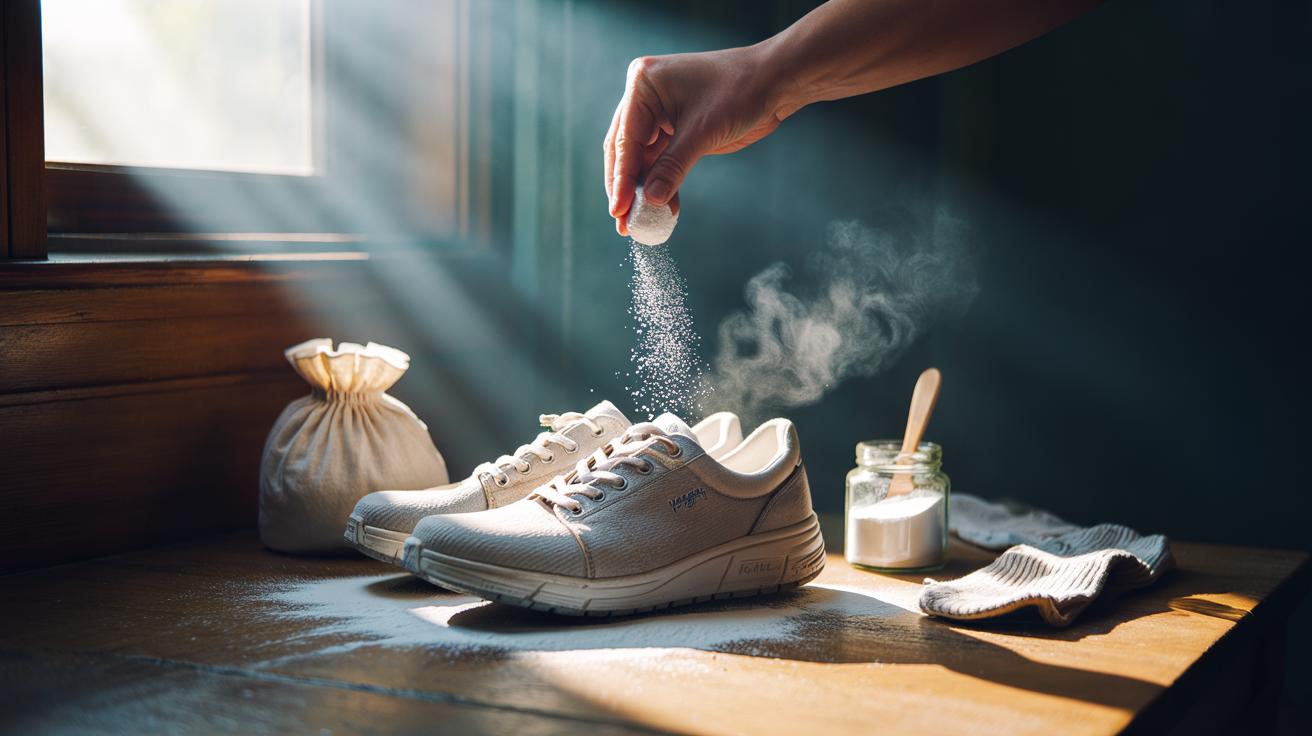
After removing shoes, tap out debris and let heat dissipate for 10 minutes. Sprinkle 1–2 teaspoons (5–10 ml) of baking soda into each shoe, tilting so the powder coats the toe box and heel. Tap the sides to distribute; leave for 8–24 hours. In the morning, tip out the residue and brush or vacuum the interior. For leather or dyed linings, prefer a sachet: spoon the powder into a coffee filter, muslin square, or thin sock, tie it off, and place one pouch per shoe to avoid direct contact. Repeat two to three nights per week during sweaty seasons.
For heavy use, make a gentle refresh blend: 2 parts baking soda, 1 part cornflour (to boost moisture uptake), with an optional pinch of zinc oxide for antimicrobial support. Avoid wet pastes inside footwear; moisture can warp insoles and stain leather. Test first on an inconspicuous area if your shoes have delicate finishes. If you experience skin irritation, keep powder strictly in sachets and consider switching to moisture-wicking socks. Do not apply to broken skin, and air shoes in a dry, ventilated spot to maximise the powder’s effect.
Comparing Deodorisers: Baking Soda vs Alternatives
Different deodorisers tackle smell through distinct mechanisms: neutralising acids, absorbing moisture, binding molecules, or controlling perspiration. Baking soda excels as a cheap, accessible odour neutraliser with light drying power, yet some scenarios call for heavier moisture management or active antimicrobial action. The options below show how common choices stack up so you can match method to your footwear and routine.
| Method | How It Works | Best For | Notes |
|---|---|---|---|
| Baking soda | Buffers pH, adsorbs odours, absorbs light moisture | Everyday trainers, canvas, fabric linings | Use loose powder or sachets; gentle and low-cost |
| Activated charcoal | High-surface-area adsorption of volatile compounds | Persistent odours in enclosed footwear | Often sold as reusable bags; less messy but pricier |
| Cornflour/talc | Moisture absorption | Very sweaty days, summer wear | Little chemical neutralising; pair with bicarbonate |
| Silica gel | Desiccant pellets reduce humidity | Drying soaked shoes | Place in pouches; does not neutralise acids |
| Cedar shoe trees | Wicks moisture, resins add light scent | Leather dress shoes | Also preserves shape; slower odour control |
| Antiperspirant (feet) | Aluminium salts reduce sweat production | Hyperhidrosis or all-day wear | Apply to skin, not shoes; patch-test for sensitivity |
Combining methods is often most effective: use baking soda overnight for odour neutralising, then insert cedar trees or a charcoal pouch between wears to keep humidity low. For intense sweat, a clinical-strength foot antiperspirant can cut the problem off at source while powders maintain the shoe environment.
Preventive Habits That Boost Results
Even the best powder needs help from good habits. Rotate pairs to allow 24–48 hours of drying time between wears. Choose breathable uppers and swap original insoles for washable, moisture-wicking versions if odour builds quickly. Socks matter: merino wool or bamboo blends move sweat away from skin and dry faster than cotton. Wash feet with mild soap, drying carefully between toes to reduce fungal growth; consider a weekly antifungal spray if you’re prone to athlete’s foot. Store shoes in a cool, airy space rather than sealed cupboards so residual moisture can escape.
Establish a routine: powder after each high-sweat day, deep-treat weekly, and refresh insoles monthly. If your feet sweat excessively or odour persists despite care, speak to a GP about hyperhidrosis treatments. Summer commuters and gym-goers can keep a small sachet set in their kit bag for post-session use. Small, consistent steps—ventilation, rotation, and targeted powders—transform the microclimate inside your shoes and keep smell at bay.
Baking soda earns its reputation because it tackles moisture and chemistry together, curbing the conditions that let bad smells thrive. A pinch of powder overnight can reset your shoes, especially when paired with breathable materials, smart sock choices, and time to dry. If you need heavier-duty drying, add cedar or charcoal, but keep bicarbonate as the reliable backbone of your routine. The goal is not to perfume footwear but to remove what causes the stink. Which combination of powder, airing, and accessories will you test this week to reclaim truly fresh shoes?
Did you like it?4.4/5 (26)