In a nutshell
- 🔥 Mechanism: Controlled heat via a hot knife loosens polymer chains, and with light pressure and dwell time, fuses layers into hermetic, leak-resistant seams.
- 🛠️ Tools & Temps: Choose a hot knife with stable temperature control; typical ranges are LDPE 130–160°C, HDPE 160–180°C, PP 170–190°C; preheat, use PTFE backing, and keep the tip clean.
- 🧯 Safety & Standards: Ensure good ventilation, a stable stand, and heatproof gloves; in the UK, prioritise UKCA/CE-marked devices and inspect plugs and cables.
- 📏 Precision Workflow: Add guides/jigs for straight seams, make a steady single pass, then cool with a chill bar; verify with peel and water tests and log settings for repeatability.
- 🌱 Sustainability: Resealing extends bag life; prefer recyclable LDPE and PP films and avoid charring to maintain strength and recycling compatibility.
In workshops and home studios across the UK, the hot knife has become a quiet hero for sealing plastic bags with clean edges and dependable strength. By applying controlled heat to the bag’s mouth, the tool softens polymers just enough to fuse layers into a single, continuous seam. The appeal is obvious: a compact device, minimal setup, and a seal that looks as if it came off a production line. When heat, pressure, and timing are balanced, the result is a tidy, airtight barrier that keeps out moisture and contamination. Here is how the method works, what temperatures to aim for, and how to keep the process safe, precise, and efficient.
How a Hot Knife Creates a Hermetic Seal
At its core, heat sealing with a hot knife relies on thermal conduction. The tip transfers energy into the plastic’s surface, loosening the polymer chains so they flow together under light pressure. Once you lift the heat and allow a brief cooling period, the chains re-entangle and set, forming a single, continuous seam. Done correctly, this fusion becomes a hermetic barrier that resists leaks and tearing at the join.
Consistency is everything: heat + light pressure + dwell time = reliable seals. Too little heat and the layers fail to blend; too much and you risk brittle edges or a ragged, charred line. A controlled tip temperature reduces the width of the heat-affected zone, giving you a crisp finish. Pairing the hot knife with a smooth backing surface—such as a glass plate or a PTFE strip—helps distribute pressure and prevents sticking, delivering a neat, uniform seam.
Material behaviour varies. Low-density polyethylene (LDPE) flows readily at moderate temperatures, while high-density polyethylene (HDPE) and polypropylene need more heat. Thin films respond almost instantly; thicker laminates take a little dwell. For repeatable results, preheat the blade fully, test on scrap, and note the time-to-seal for each bag type.
Choosing the Right Tool and Temperature
A dependable hot knife has stable temperature control, interchangeable tips, and enough wattage to recover heat between passes. Look for a chisel or straight edge for long, linear seams, and a narrower “needle” style for delicate pouches. An adjustable thermostat or digital controller pays for itself in fewer rejects and cleaner lines. If your unit lacks a readout, an inexpensive contact thermometer or thermocouple probe helps you map real tip temperatures versus dial settings.
| Plastic | Typical Seal Range (°C) | Tip Style | Notes |
|---|---|---|---|
| LDPE (grocery-style) | 130–160 | Straight or chisel | Short dwell; avoid dragging to prevent thinning |
| HDPE (thicker film) | 160–180 | Chisel | Firm backing improves fusion across layers |
| Polypropylene (PP) | 170–190 | Straight | Needs a steadier hand; cool under light pressure |
| Nylon/PE laminate | 180–200 | Chisel or broad | Excellent barrier; test to avoid delamination |
Preheating for two to three minutes evens out the tip temperature. Work at a pace that prevents drag marks: a slow, steady pull lets the heat flow into the seam without over-melting the edges. Keep a PTFE wipe to clean residue and maintain smooth contact; a clean blade reduces snagging and uneven seals.
Safety, Precision, and Sustainability
Treat a hot knife as both a heat source and a cutting tool. Use a stable stand, heat-resistant mat, and heatproof gloves, and keep the workspace uncluttered. Some plastics can emit irritating fumes when overheated, so ensure good ventilation or local extraction. In the UK, look for UKCA/CE markings and consider devices that meet relevant electrical safety standards; a fused plug and intact cable are non-negotiable.
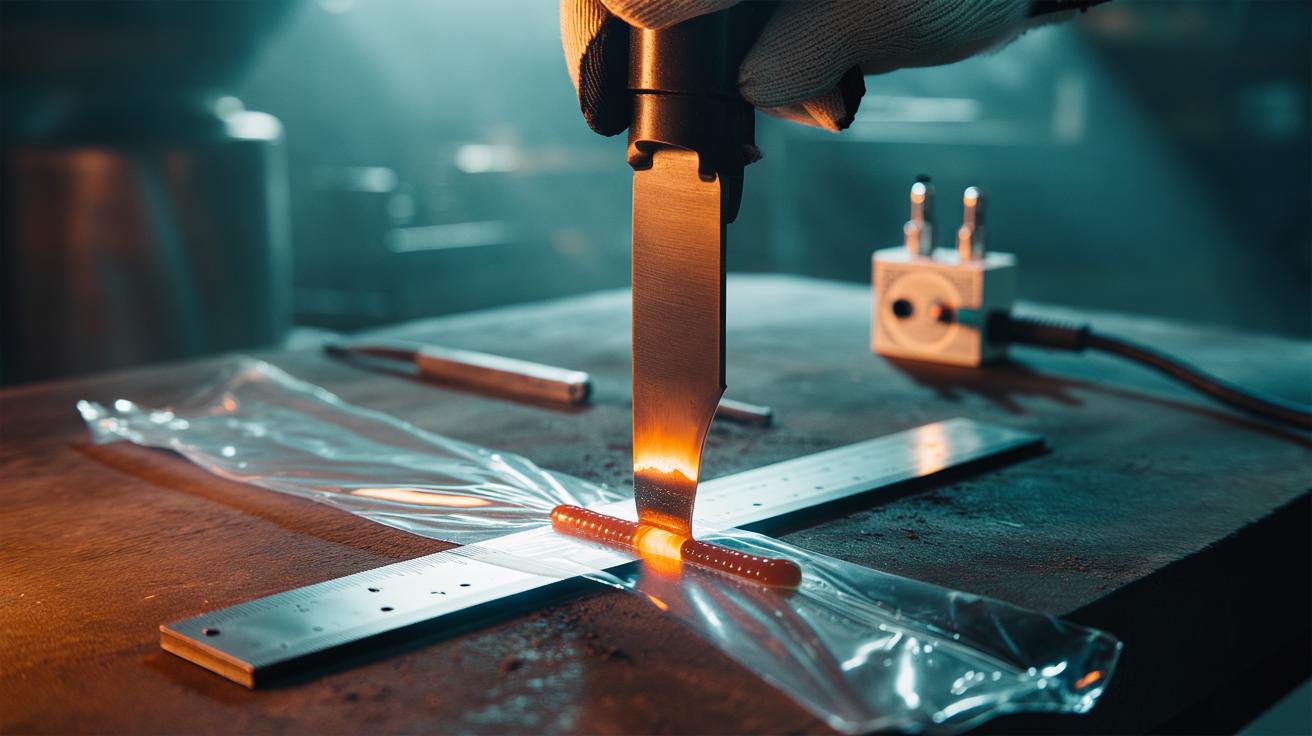
For precision, add a simple jig: a metal ruler as a guide, a PTFE strip underneath, and a light clamping bar to hold the bag square. A “chill bar” (aluminium flat stock) pressed gently over the seam for one to two seconds improves crystallisation and reduces warping. These small aids turn a hobby tool into a repeatable micro-production setup.
Sealing extends the life of bags and reduces single-use waste by enabling tidy reseals. Choose recyclable films—clearly marked LDPE or PP—so the pack remains in the circular stream. Keep seals narrow and clean to minimise material distortion, and avoid charring, which can weaken the join and complicate recycling.
Step-by-Step Method for Crisp, Clean Seals
1. Prepare: Square the bag mouth and remove dust or crumbs; contamination weakens fusion. Set your hot knife to a target temperature from previous tests, then allow full preheat. Place a PTFE strip or glass on the bench as a low-friction, heat-tolerant base.
2. Align: Lay the bag so both plies are flat, with no wrinkles where the seam will land. If possible, add a light clamp or a straightedge guide. A wrinkle-free path delivers a stronger, neater seam.
3. Seal: Draw the hot knife steadily across the mouth, applying minimal downward pressure. Aim for a continuous pass—no stops that create hot spots. For thicker film, count a short dwell (one to two seconds) or make a second, lighter pass rather than increasing temperature dramatically.
4. Set: Immediately press a cool, smooth bar over the seam for a breath to lock the polymer chains. Inspect: a slight gloss and uniform bead indicate good fusion. Perform a gentle peel test and, if needed, a brief water or vacuum check for leaks. Record the settings for your next run, tightening your process with each iteration.
A hot knife offers a compact, affordable path to professional-looking heat seals on everyday bags, sample pouches, and short-run packaging. By dialling in temperature, speed, and pressure—and by working clean—you can produce seams that are strong, tidy, and repeatable. The technique rewards attention to detail: a stable guide, a clean tip, and sensible safety habits elevate results from adequate to excellent. The simple equation is clear: controlled heat makes perfect seams possible. Which plastic types, tip profiles, or temperature recipes are you most keen to test on your next sealing project?
Did you like it?4.4/5 (24)