In a nutshell
- 🧪 Explains the science of adsorption (not absorption): activated carbon with vast surface area traps VOCs via van der Waals forces, delivering truly neutral air without masking fragrances.
- 💧 Shows how charcoal moderates humidity in confined spaces, curbing mustiness and mould risk, and why you should recharge in sunlight to clear pores of moisture and odours.
- 👗 Highlights closet-specific gains: in enclosed wardrobes, odours accumulate and are efficiently captured; hang pouches at shoulder height and combine with good habits like drying clothes and allowing airflow.
- 🛍️ Offers a buyer’s guide: choose bamboo or coconut shell carbon, breathable linen/cotton bags, around 200–300 g per small section; refresh monthly and replace after 18–24 months; don’t wash—reuse spent carbon in soil.
- 🌍 Covers safety and sustainability: passive, fragrance-free, low-risk operation, compost-friendly disposal, and the advice to pair bags with ventilation or dehumidifiers for a more sustainable damp-control strategy.
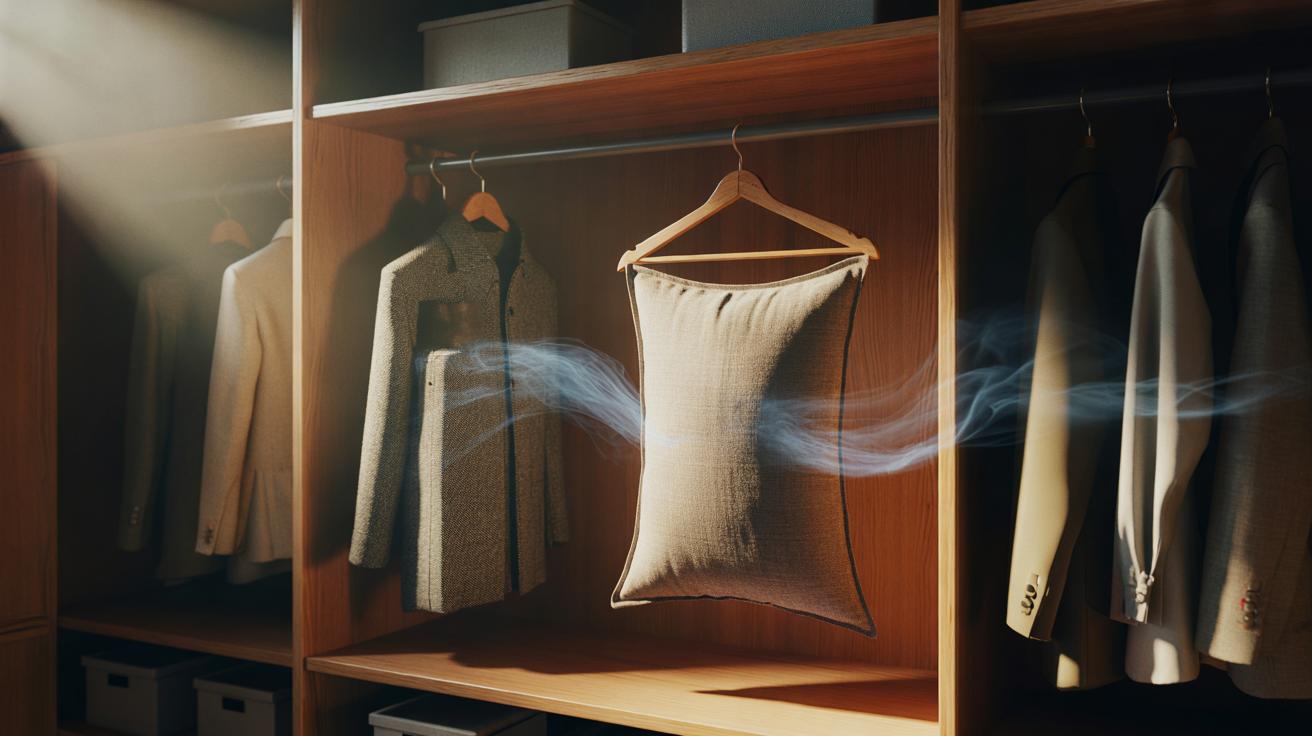
Open a wardrobe that’s been shut for weeks and you’ll often meet a stale fug, a hint of damp, perhaps a whisper of last night’s dinner lingering in a wool coat. Charcoal bags, filled with activated carbon, promise an elegant, low-tech fix. They work without fragrance, power, or plastic cartridges, relying on a labyrinth of microscopic pores to tidy up what the eye can’t see. The appeal is simple: trap the bad, leave nothing behind. In UK homes where space is tight and humidity fluctuates, these pocket-sized purifiers keep textiles fresher, extend garment life, and help cupboards feel truly clean rather than perfumed.
What Makes Activated Carbon a Closet Essential
Activated carbon starts life as bamboo, coconut shell, or wood, then undergoes steam or chemical activation to carve out a colossal internal surface area—often exceeding 1,000 m² per gram. This honeycomb of micro-, meso-, and macropores creates countless landing spots for odour molecules and airborne pollutants. Unlike scented sachets, which mask smells, charcoal bags quietly remove the source. That’s why a small pouch can outperform a bottle of spray in a closed wardrobe. They’re passive, recyclable, and require no plugs or batteries, suiting renters and homeowners mindful of both bills and clutter.
Their effectiveness in closets comes down to concentration. Wardrobes are confined spaces where volatile organic compounds (VOCs), sweat acids, and food aromas accumulate. Charcoal’s porous architecture captures many of these, while also moderating humidity peaks that encourage mustiness. In a still, enclosed volume, adsorption has time to do its work, making a simple linen bag of carbon a practical staple alongside cedar blocks and careful ventilation.
The Science of Adsorption: How Odours Stick to Carbon
Charcoal bags don’t “absorb” in the sponge sense; they adsorb. Molecules adhere to the carbon surface via weak intermolecular forces known as van der Waals interactions. Picture magnets for smells: as air circulates through the bag’s fibres, odour molecules settle into pores where they’re held in place. Some compounds bind via mild chemisorption, but in closets, physisorption dominates—efficient and reversible, which is why you can “recharge” the bags in sunlight. Heat drives off trapped molecules, freeing up pore sites for another tour of duty.
Different pore sizes target different culprits. Micropores catch small gases, while larger mesopores host bulkier organics from perfumes, smoke, or cooking residues. The process is dynamic; a molecule may hop between sites until it finds a snug fit. Importantly, no fragrance is added; you’re left with neutral air, not a cover-up. In closets, this neutrality protects delicate fabrics, as strong perfumes can cling to fibres and clash with wool or silk’s natural scent profile.
Moisture Management: Balancing Humidity in Confined Spaces
Mustiness is a humidity story as much as an odour one. Activated carbon also adsorbs water vapour, smoothing peaks when relative humidity rises after showers, wet brollies, or damp coats. By reducing free moisture, charcoal bags starve mould spores of their favourite conditions and slow the microbial chemistry that creates that tell-tale “cupboard” smell. Keeping humidity in check keeps odours in check. This isn’t dehumidification on an appliance scale, but it’s often enough for a small wardrobe, shoe cabinet, or linen cupboard.
There is a sweet spot. If ambient humidity stays very high, pores can be crowded with water, leaving fewer sites for VOCs. That’s why recharging matters: a few hours in direct sun or on a bright windowsill will purge excess moisture and odours. Pairing charcoal bags with basic hygiene—fully drying clothes before storing, leaving door slats for airflow—compounds the benefits. Good storage habits plus carbon beats either method alone.
Choosing and Using Charcoal Bags: A Practical Buyer’s Guide
Not all charcoal bags are equal. Look for activated bamboo or coconut shell carbon, breathable outer fabrics, and clear guidance on coverage. A single 200 g pouch typically suits a standard wardrobe compartment; larger spaces need two. Refreshing frequency varies, but a monthly sun-bath is a safe rule. If the bag stops neutralising smells, it’s telling you its pores need clearing. Replace every 18–24 months, sooner in heavy-use homes with pets, smokers, or damp-prone rooms.
| Feature | Why It Matters | What to Look For |
|---|---|---|
| Carbon Source | Influences pore structure and performance | Bamboo or coconut shell activated carbon |
| Bag Fabric | Controls airflow into the carbon bed | Breathable linen/cotton, not plastic-lined |
| Weight | More carbon equals more surface area | 200–300 g per small wardrobe section |
| Regeneration | Extends service life and efficacy | Sunlight refresh instructions on label |
Hang bags at shoulder height where air moves as doors open and close. Keep them away from direct damp patches. Do not wash; water clogs pores. When spent, cut them open and mix the carbon into soil—spent carbon helps improve aeration around plant roots.
Safety, Sustainability, and End-of-Life Uses
Charcoal bags are low-risk around children and pets because they operate passively and contain no added fragrance oils. Still, keep them intact and out of reach to prevent ingestion. Always retire a torn bag. Sustainability hinges on the carbon source and the ability to regenerate in sunlight, which reduces waste and cost over time. Many producers use renewable bamboo, harvested on short cycles, and pack in reusable linen.
Disposal is unusually virtuous: spent carbon can go to garden beds, potted plants, or compost, where it acts as a mild soil conditioner. Life cycle impacts compare favourably with plug-in air fresheners and aerosol sprays that rely on plastics, propellants, and ongoing refills. For homes tackling persistent damp, combine charcoal bags with structural fixes—trickle vents, dehumidifiers, or improved insulation—so the bags polish the air rather than fight a losing battle. Treat the cause, let carbon handle the symptoms.
From cramped London wardrobes to country cloakrooms, charcoal bags deliver quiet housekeeping through science: adsorption for odours, gentle humidity smoothing, and fragrance-free freshness that respects your clothes. Their appeal is practical and economical, and they align with a less-wasteful routine. If you’ve relied on sprays or perfumed sachets, a month with activated carbon can recalibrate your sense of what “clean” smells like: often, it smells like nothing at all. Will your next step be to hang a pouch and track the difference on your own nose, or to pair it with better ventilation and see how far a simple bag of carbon can go?
Did you like it?4.5/5 (27)