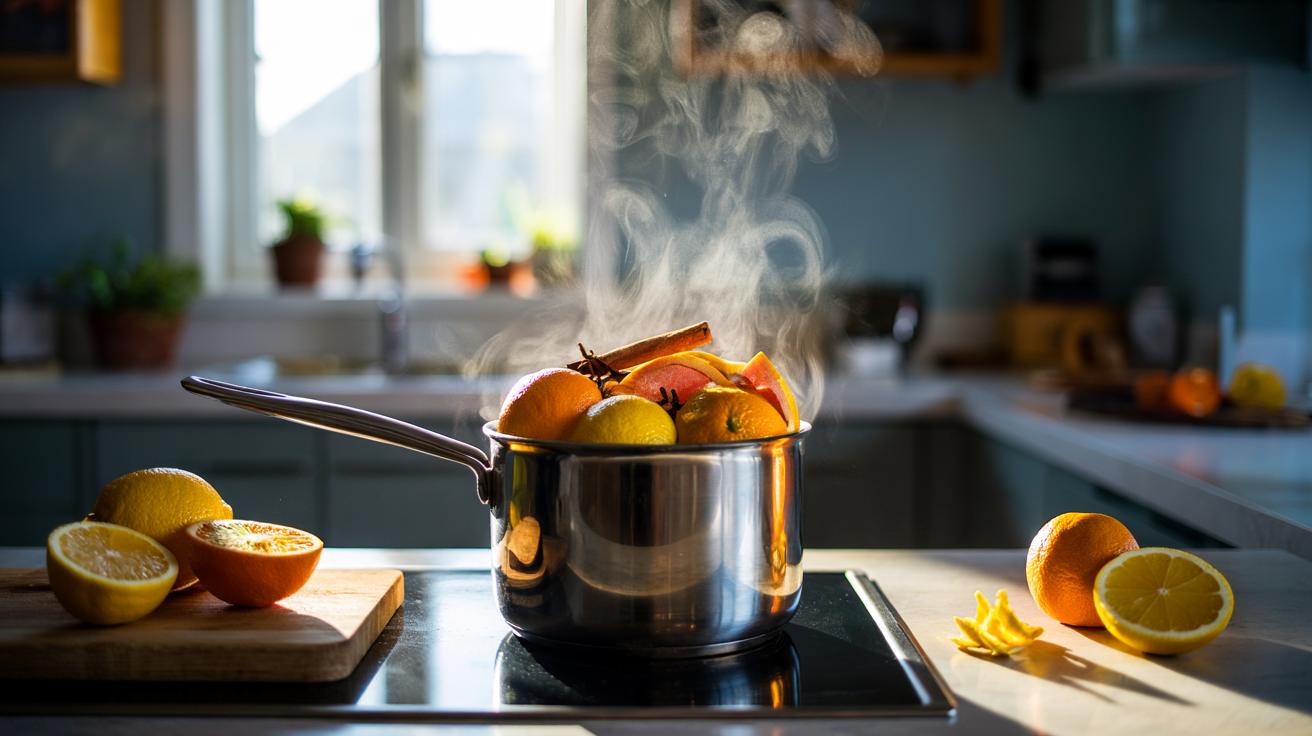
In a nutshell
- 🍊 A citrus-peel simmer releases terpenes like limonene that neutralise volatile compounds from cooking, replacing odours with a clean, zesty scent carried by steam.
- 🧪 How-to: simmer 750 ml–1 litre of water with peels from 2–3 citrus fruits; keep the surface gently trembling, crush peels for more oils, and boost with white vinegar or whole spices.
- 🌿 Smart variations: lemon + bay for fish, orange + cinnamon for smoky fry-ups, grapefruit + star anise for spice-heavy meals—use few add-ins so citrus stays dominant; peels can be reused once.
- 🛟 Safety and Sustainability: never leave unattended, top up water, consider a slow cooker or kettle method; rinse or choose organic peels, freeze a stash, compost leftovers, and ventilate for pets.
- 🕯️ Versus candles and sprays: avoids soot and VOCs, works fast, and pairs well with extractor fans or a HEPA purifier—delivering fresh air at low cost with minimal residue.
The quickest way to reclaim a fresh kitchen after frying fish or searing steak is deceptively simple: a pan of gently simmering citrus peels. As the water trembles, the peels release terpenes such as limonene, a natural solvent and odour neutraliser that disperses through steam. Unlike heavy sprays that mask smells, a citrus-peel simmer works with heat and humidity to break down stubborn volatile compounds left by cooking. In a few minutes, the room starts to smell clean rather than perfumed, and the effect lingers long after the hob is off. This low-cost method uses scraps you might otherwise bin, turning a zestful by-product into a quietly effective home remedy.
Why Citrus Works Against Kitchen Odours
When garlic, onion, and fish hit hot oil, they release sulphur- and amine-based molecules that cling to fabrics and paint. Citrus peels counter this with limonene, citral, and mild acids. These compounds volatilise in steam, where they interact with airborne odour molecules, helping to neutralise and dilute them. Steam acts as a vehicle, carrying active aroma compounds that replace malodours with a clean, zesty profile. Because limonene is lipophilic, it’s especially good at tackling greasy notes from frying, while the gentle acidity helps freshen the air without harsh chemicals.
Humidity also plays a role. A light simmer adds moisture that helps odours settle out of the air, while warmth accelerates diffusion. Unlike candles and sprays that can add smoke or synthetic VOCs, a citrus simmer produces only water vapour and plant aromatics. The result is a more natural, breathable atmosphere that fades gracefully. Orange, lemon, and grapefruit peels each bring a distinct brightness, and all perform well against persistent cooking smells.
How to Make a Citrus-Peel Simmer
Fill a medium saucepan with 750 ml to 1 litre of water and add the peels of two to three oranges, lemons, or a mix. Bring to a boil, then immediately reduce to the gentlest simmer. Keep the surface just trembling, not rolling, so the fragrance releases slowly rather than flashing off. Within five minutes, you’ll notice the air smell sharper and cleaner; within 15 minutes, the lingering notes of last night’s dinner typically recede. For speed, crush the peels lightly first to express more oils.
Enhance the base with a teaspoon of whole spices such as cloves or allspice, a stick of cinnamon, or a sprig of rosemary for a resinous edge. A splash (1–2 tbsp) of white vinegar boosts deodorising power without a vinegary final scent, as the citrus quickly dominates. Top up the water as it drops to maintain a safe level, and crack a window to vent saturated air for faster clearing.
Smart Variations and Add-ins
Every kitchen has different odour challenges; tweak the simmer to suit. For fishy or brassica-heavy meals, combine lemon peel with a bay leaf for a crisp, herbaceous finish. For smoky fry-ups, add orange peel and cinnamon to soften harsh edges. If you’ve cooked with chilli, pair grapefruit peel with star anise for a cooling lift. Use only a few add-ins at once so citrus remains the star. If you prefer subtler results, simmer covered for two minutes, then uncover to release aroma gradually. Leftover peels can be refrigerated and reused once the same day, though they’ll be weaker on the second round.
| Ingredient | Main Compound/Aroma | Best For | Notes |
|---|---|---|---|
| Orange peel | Limonene (sweet, sunny) | Greasy fry smells | Comforting, broad appeal |
| Lemon peel | Citral (sharp, clean) | Fish and onion | Most “cleaning-like” freshness |
| Grapefruit peel | Nootkatone (bitter-citrus) | Spice-heavy dishes | Elegant, modern profile |
| Cloves | Eugenol (warm spice) | Smoky residue | Use sparingly; potent |
| White vinegar | Acetic acid (neutralising) | Pervasive odours | Smell fades under citrus |
Safety, Sourcing, and Sustainability
Never leave a pan simmering unattended. Check water levels every 10–15 minutes and top up before they run low; a dry pan can scorch peels and create new smells. Use a low flame or induction setting to keep a gentle simmer and save energy. If you’d rather not use the hob, a small slow cooker set to low works well, as does a heat-safe bowl of just-boiled kettle water refreshed every 20 minutes for a quick burst.
Rinse peels thoroughly to remove waxes; organic fruit is ideal if you have it. Store peels in a freezer bag so you’ve always got a stash. After simmering, cool and compost the spent peels, or use the fragrant water (once cooled) to wipe down bins. Waste nothing: this ritual turns scraps into a home-care tool. Keep pets in mind—strong aromas can bother them—so ventilate lightly and avoid overloading the pan with spices.
How It Compares to Candles and Sprays
Scented candles deliver ambience but can add soot and synthetic fragrance that mixes oddly with savoury air. Aerosol sprays overwhelm quickly and often mask rather than fix the source; they also add VOCs that some households prefer to minimise. Baking soda passively absorbs odours in enclosed spaces but struggles in open-plan kitchens. A citrus-peel simmer offers immediate, active deodorising without heavy residues. It’s a clean-smelling intervention, not a cover-up. For persistent issues—like lingering curry or smoke—combine methods: crack a window, run the extractor, and simmer citrus for 20–30 minutes. A HEPA purifier tackles particles; the citrus takes care of the nose.
Cost matters too. Peels are usually free, energy use is modest on a low setting, and the effect is fast. The fragrance is customisable, the ingredients are recognisable, and there’s nothing to spray on fabrics or skin. It’s hard-working, humble, and reliably pleasant.
A pot of simmering peels is a tiny act of domestic alchemy: scraps become a tonic that restores freshness without fuss. Whether you’re clearing last night’s frying session or setting a welcoming tone for guests, citrus offers a bright, breathable reset. Keep a freezer stash, a favourite pairing, and a pan you trust, and you’ll never be more than minutes from a fresher kitchen. Simple, economical, and satisfying, this is a habit worth adopting year-round. Which citrus blend—and which add-in—will become your signature house scent?
Did you like it?4.6/5 (22)