In a nutshell
- ☕️ Coffee grounds work via adsorption, not absorption: their porous carbon and nitrogen-containing functional groups (melanoidins, amines) trap volatile odour molecules from onions, fish, and sour dairy.
- 🧪 Nitrogen plays the fixer: Lewis-basic sites (amide/amine/pyridinic N) form strong interactions and chemisorb acidic volatiles, while oxygen groups capture basic amines—broadening deodorising power.
- 🧰 For best results use dry used coffee grounds in a shallow dish (about 60–100 g), place at the back of the fridge, re-dry to refresh once or twice, and compost when spent; avoid wet grounds to prevent mould.
- ⚖️ Compared with rivals: coffee is fast and low-cost for sulfurous/acidic smells; baking soda neutralises acids moderately; activated charcoal offers high-capacity adsorption; silica gel mainly controls moisture.
- 🧹 Treat grounds as a finishing step: clean spills and remove spoiled food first so the active sites can neutralise lingering odours efficiently without masking underlying problems.
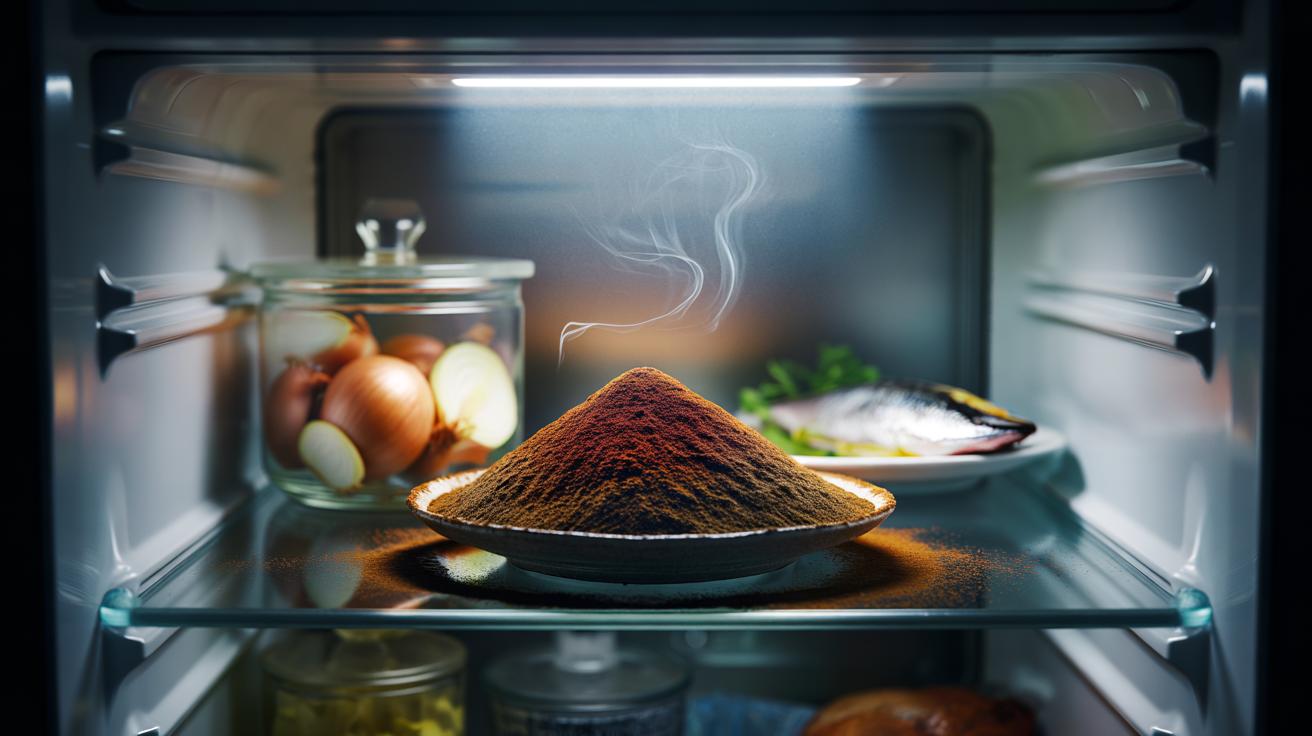
Few kitchen fixes feel as satisfyingly simple as sliding a bowl of coffee grounds into a smelly fridge and waking to crisp, neutral air. The trick works because roasted coffee is rich in porous carbon and nitrogen-containing compounds that lock away the molecules responsible for stale dairy notes, onion tang, or fishy whiffs. The effect is not magic but chemistry: volatile organic compounds cling to reactive sites on the coffee’s surface instead of floating in the air you breathe. Understanding the difference between surface adsorption and liquid absorption explains why a dry, aromatic by-product can outperform pricey gels. Here’s how nitrogen helps, how to use grounds well, and when to choose another deodoriser.
The Chemistry Behind Coffee Grounds
Roasted and brewed coffee grounds are a web of micro-porous carbon, plant fibers, oils, and complex polymers called melanoidins formed during the Maillard reaction. This network presents a large surface area peppered with chemical “landing pads,” including oxygen- and nitrogen-bearing functional groups. Odor molecules collide with these sites and stick—an interface-driven process called adsorption. That’s why dry grounds work better than wet ones: moisture competes for the same sites and slows the capture of volatiles. What your nose reads as “smell” are small, reactive molecules; give them a more attractive surface and they abandon the air. Used grounds are convenient and, once dried, still hold plenty of reactive sites. Fresh grounds can adsorb faster initially, but their aroma may add a coffee note to the fridge, which not everyone wants clinging to leftovers.
Crucially, coffee’s melanoidins and residual proteins carry a mix of acidic and basic sites. That diversity matters because kitchen odors vary—from sulfur compounds in onions to short-chain fatty acids from spilled milk. Coffee provides multiple ways to dock them.
How Nitrogen Captures Odors
When people say “nitrogen absorbs smells,” they don’t mean nitrogen gas in the air. They mean nitrogen-containing sites embedded in the coffee matrix. These sites—think amide, amine, or “pyridinic” nitrogen in melanoidin rings—carry lone electron pairs that behave as Lewis bases. Acidic odor molecules, including hydrogen sulfide (H₂S), mercaptans from alliums and fish, and lactic or butyric acid traces, are attracted to those basic sites and become chemisorbed or strongly held by electrostatic interactions and hydrogen bonding. Nitrogen doesn’t mask odors; it helps immobilise them by creating specific interactions that outcompete the surrounding air.
Coffee also hosts oxygen-bearing groups (carboxyls and phenolics) that can interact with basic odors such as amines from aging meat. That duality—basic nitrogen for acidic volatiles, acidic oxygen for basic volatiles—broadens its deodorising reach. Porosity matters too: the more open the structure, the more collisions and the faster the cleanup. Drying used grounds increases effective surface area and prevents water from blocking those active sites. The result is a low-cost, nitrogen-assisted odor trap that’s surprisingly versatile inside a chilled, low-humidity environment.
Practical Tips for Using Grounds in the Fridge
Spread used coffee grounds thinly on a tray and air-dry overnight, or place them in a low oven (90–100°C) for 30–45 minutes to drive off moisture. Cool completely, then tip into a shallow, open dish to maximise the exposed surface. Always dry the grounds thoroughly before placing them in the fridge to avoid mould and to keep adsorption sites free. A ramekin with 60–100 g suits a typical UK family fridge; scale up with two dishes for American-style units. Tuck the dish near the back, away from vents that might blow grounds about, and replace weekly or when you notice aromas returning.
If you prefer no coffee scent at all, choose well-rinsed, fully dried used grounds—they’re far subtler than fresh. To “refresh,” re-dry in the oven to purge adsorbed volatiles, then cool and reuse once or twice. Keep grounds out of uncovered butter or cream, which can pick up flavors. When spent, add them to compost—a tidy, circular end to a household fix. A little maintenance keeps this zero-waste deodoriser effective for months.
How Coffee Grounds Compare With Other Deodorizers
Different smells demand different tools. Coffee grounds shine against sulfurous and sour notes thanks to their nitrogen sites and broad surface chemistry. Baking soda neutralises acids well but struggles with neutral, oily volatiles. Activated charcoal is the heavyweight for total surface area, though it costs more and can over-dry small compartments. Use the table below to pick the right match for your fridge problem.
| Deodorizer | Main Mechanism | Speed | Reusability | Typical Cost |
|---|---|---|---|---|
| Coffee Grounds | Nitrogen-assisted adsorption of acidic VOCs; mixed sites for varied odors | Fast for sulfur/acidic notes | Yes (re-dry 1–2 times) | Very low (upcycled) |
| Baking Soda | Acid–base neutralisation; limited physical adsorption | Moderate | Limited (replace monthly) | Low |
| Activated Charcoal | High-surface-area physical adsorption of many VOCs | Fast | Sometimes (can be reactivated by heating) | Medium |
| Silica Gel | Moisture control; indirect odor reduction | Variable | Yes (oven-dry) | Medium |
Match the deodoriser to the dominant odor and your reuse goals for the most efficient result. For onion or fish residues, coffee or charcoal excel; for sour milk, coffee or baking soda are both strong. If condensation is the culprit, moisture management via silica gel or better airflow might solve the smell at its source.
Used smartly, coffee grounds offer a scientifically credible, circular answer to a common domestic gripe. Their porous carbon and nitrogen-rich surfaces seize volatile troublemakers before they reach your nose, while drying and occasional “refreshes” keep performance high. If the smell lingers after a day, look for the source—spills and aging produce defeat any passive remedy. Think of grounds as a tidy finishing step once you’ve cleaned, aired, and organised the fridge. What mix of deodorisers, placement, and routine cleaning would best suit your household’s eating habits and the kinds of smells you battle most often?
Did you like it?4.4/5 (26)