In a nutshell
- 🧲 Blinds accumulate dust through static electricity driven by the triboelectric effect; fabric softener sheets both attract particles and reduce future cling.
- 🧴 They work via cationic surfactants, fatty compounds, and an antistatic coating that loosens grime, captures dust in fibres, and slows re-soiling.
- 🛠️ Cleaning method: close and tilt slats, wipe with a light touch from top to bottom, refold to fresh sections, flip slats, then vacuum the sill; tackle grime with a damp microfibre and finish with a sheet; suggested frequency: weekly to fortnightly.
- ⚠️ Limitations: test on unfinished wood and high-gloss surfaces, avoid screens and food-contact areas, and choose fragrance-free options for sensitivities; high humidity already reduces static.
- 🌱 Eco-savvy choices: use a reusable microfibre cloth with antistatic spray (applied to the cloth), reuse spent sheets, or opt for plant-based variants; dispose according to brand guidance.
Few household jobs gather dust as quickly as blinds. Slats attract fluff, pollen, and pet dander until daylight looks drab and rooms feel stale. One deceptively simple solution sits in countless laundry cupboards: the humble fabric softener sheet. It doubles as a static-taming duster that whisks away particles and slows their return. The trick lies in a blend of electrostatic forces and a whisper-thin coating the sheet leaves behind. Used correctly, a single sheet can revive dull blinds in minutes and keep them cleaner for longer. Here’s why the method works, when to use it, and how to get a streak-free finish without fuss.
The Science of Static and Dust
Dust is not inert. Skin flakes, textile fibres, soot, and pollen often carry tiny electrical charges. Blinds build up surface charge through the triboelectric effect—friction from raising and lowering, and air moving across slats. Opposite charges attract, so a charged slat acts like a magnet for airborne particles. Static electricity makes dust cling firmly enough that a dry cloth can push it around rather than lift it away. The result is a grey film that returns quickly, especially on plastic and aluminium slats that are good electrical insulators.
Humidity changes the picture. In damp air, surfaces dissipate charge faster, so dust sticks less stubbornly. In centrally heated rooms with low humidity, though, blinds hold charge for longer. That is why the first pass with a plain feather duster often disappoints. What you need is a tool that can both pick up dust electrostatically and reduce future charge build-up. Fabric softener sheets do both jobs at once, turning a static problem into an easy win.
Why Fabric Softener Sheets Work on Blinds
Fresh or gently used sheets contain cationic surfactants—often quaternary ammonium compounds—alongside fatty molecules and a light fragrance. When you wipe a slat, the nonwoven sheet generates a mild charge that helps attract particles. Crucially, it also deposits a microscopic, antistatic coating that makes the surface slightly more conductive and slippery. That coating prevents charge from accumulating, so the next wave of airborne dust is less inclined to stick. This dual action—immediate pickup plus future resistance—is why the method feels instantly effective and stays effective for days.
The sheet’s fibres have a gentle “grab,” so particles nestle into the web rather than becoming airborne again. On smooth PVC or aluminium, that texture matters. It leaves fewer streaks than a wet wipe and avoids grinding grit into the surface. For stubborn grime, the surfactants help loosen oily residues from kitchen vapours. Used sparingly, the result is a cleaner finish with noticeably slower re-soiling.
| Component | Function on Blinds |
|---|---|
| Nonwoven substrate | Captures particles within fibres |
| Cationic surfactants | Reduce static; loosen oily films |
| Fatty compounds | Provide slip; minimise streaking |
| Fragrance | Masks odours (optional, not essential) |
| Antistatic agents | Limit future charge build-up |
Step-by-Step Method for Dusting Blinds With Sheets
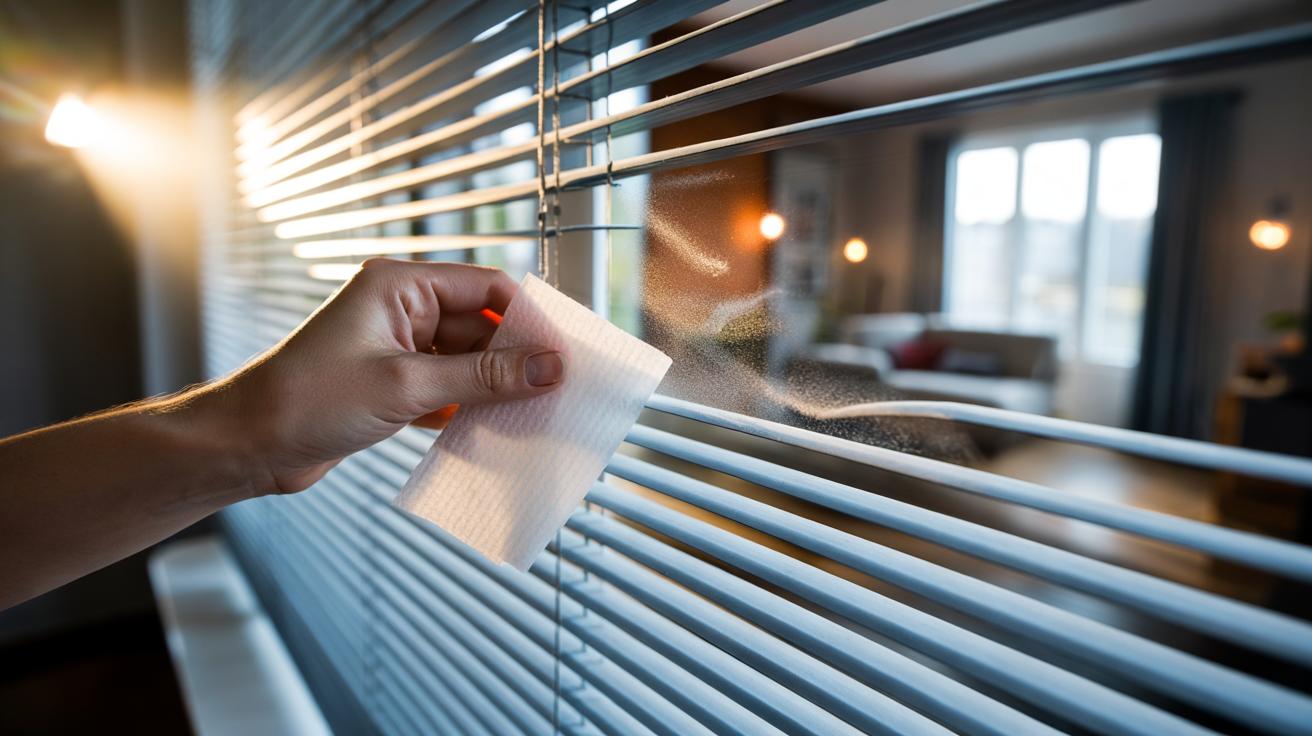
Start by shutting windows and switching off fans so you’re not chasing moving dust. Close the blinds. For horizontal blinds, tilt slats downwards; for vertical, align them edge-on. Use a light touch: pinch a slat between folded sheet and fingers, drawing the sheet from one end to the other. Work top to bottom to avoid re-depositing dust. If the sheet glides too easily, refold to a fresh section so fibres keep their grab. For a quick clean, a single pass often suffices; for stickier grime, follow with a barely damp microfibre, then a dry sheet to restore antistatic protection.
Flip the slats and repeat. Edges trap fluff; run the sheet along them in one smooth stroke. On vertical blinds, stabilise the vane at the base and wipe downward to avoid stressing the fixing. Finish by vacuuming the sill and floor to remove any strays. Frequency: every fortnight in living spaces, weekly in kitchens. Store a spent dryer sheet in the utility room—slightly used sheets are excellent for maintenance wipes.
Limitations, Safety, and Eco-Savvy Alternatives
Not every surface suits fabric softener residues. On unfinished wood or specialty coatings, test a discreet spot first. The light film can dull high-gloss piano finishes or attract smears on glass. People sensitive to fragrance should choose fragrance-free sheets or switch to a reusable antistatic cloth. Keep sheets away from infants’ hands and pet-chew zones, and never use them on food-contact surfaces. Avoid over-rubbing TV or monitor screens; use a purpose-made antistatic screen cloth instead. In very humid rooms, static is already low, so a dry microfibre may be just as effective.
If sustainability is paramount, try a reusable microfibre cloth slightly dampened with water and a drop of mild detergent, then finish with an antistatic spray designed for electronics, applied to the cloth—not directly on blinds. Paper-based or plant-based dryer sheets reduce plastic content, and reusing a sheet from the tumble dryer gives it a second life. Dispose of used sheets with household waste unless the brand specifies compostability.
Fabric softener sheets tackle dusty blinds by blending physics with practicality: they attract today’s particles and curb tomorrow’s cling. The result is brighter light, cleaner air, and less time spent chasing fluff. Whether you prefer a fragrance-free sheet, a reusable antistatic cloth, or a classic microfibre, understanding static control helps you choose the right tool for the room and season. Once you experience how swiftly a single sheet restores tired slats, it’s hard to go back to feather dusters. What’s your go-to strategy for keeping window blinds spotless without spreading dust back into the room?
Did you like it?4.6/5 (24)