In a nutshell
- 🧪 The citric acid in lemon dissolves copper oxides while salt adds gentle abrasion, producing an even shine without harsh chemical polishes.
- 🧽 Simple method: halve a lemon, add coarse salt, rub in circles, wait 3–5 minutes on stubborn spots, then rinse, dry, and buff; optional thin beeswax coat slows re-tarnishing.
- ⚠️ Use on uncoated exteriors; avoid tin linings, non-stick interiors, and lacquered copper; test discreetly and limit contact time to protect finishes.
- 🌱 Low-cost, low-chemical routine—no harsh residues, compostable peel, greywater-friendly; keep juice off porous stone to prevent etching.
- ✨ Maintenance wins: quick, repeatable cleans reduce scrubbing marathons; dry immediately after washing and store away from damp to preserve the glow.
Copper has a way of turning a humble kitchen into a warm theatre of light, yet the glow fades when tarnish creeps in. Enter the old pub trick that’s trending again: a lemon half + salt scrub that wipes away the dullness with surprising ease. Instead of harsh chemicals, you’re harnessing a kitchen staple and a pinch of science. Rub, wait, rinse, dry—shine restored. The secret isn’t magic; it’s the natural acid in citrus dissolving the oxides that cloud copper, while granules of salt give just enough abrasion to lift residues. For busy cooks and design lovers, it’s fast, sustainable, and remarkably satisfying.
Why Lemon and Salt Work on Copper
The sparkle-stealing film on your pot is mostly copper oxide and carbonate formed from air, heat, and food residues. Cut a lemon, add salt, and you create a two-part cleaner. The lemon’s citric acid loosens and dissolves oxides by binding copper ions into water-soluble complexes. Meanwhile, the coarse salt acts as a gentle mechanical aid, dislodging softened tarnish without gouging the metal. As the rind flexes, it mirrors the curve of a pan, spreading pressure evenly and helping the acid sit where it’s needed most.
The chemistry is simple yet effective. Citric acid targets the dulling layer, and the saline slurry increases contact and glide. Unlike some aggressive polishes, this method keeps the metal surface intact and avoids fumes. Because you’re dissolving tarnish rather than grinding it away, the result looks brighter and more even. For everyday maintenance, it’s a balance of low effort and high reward, especially on frequently handled cookware and decorative pieces.
Step-by-Step: The Lemon Half + Salt Scrub
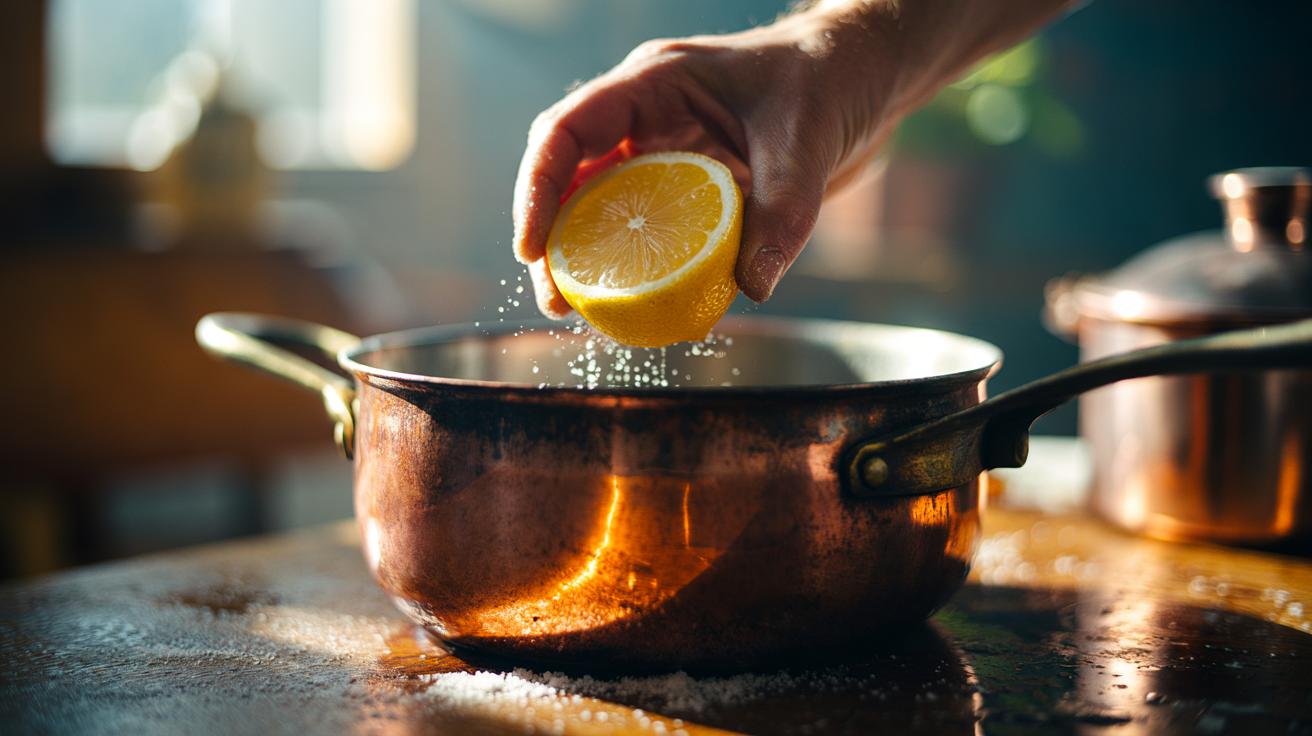
1) Halve a fresh lemon. Sprinkle the cut face with coarse sea salt or kosher salt. 2) Dampen the copper lightly so the slurry spreads. 3) Rub in small circles, reapplying salt as needed. Stubborn spots respond to a brief pause: let the lemon juice sit for 3–5 minutes to give the acid time to work. 4) Rinse with warm water and a drop of washing-up liquid to remove residues. 5) Dry immediately with a soft cloth, then buff. Do not leave copper wet—water spots etch fast. Optional: finish with a whisper of beeswax or food-safe mineral oil to slow re-tarnishing.
Never scrub the tin-lined interior of traditional copper pans; keep this routine to the exterior only. If your piece is lacquered, skip the lemon entirely or you’ll strip the coating. A soft-bristle brush can reach around handles and rivets, but avoid steel wool. For heavily blackened bases, repeat the cycle rather than pressing harder—pressure scratches, patience shines.
| Item | Quantity/Spec | Notes |
|---|---|---|
| Lemon | 1 half per medium pan | Fresh juice gives stronger citric acid action |
| Salt | Coarse pinch per pass | Gentle abrasion; reapply as it dissolves |
| Contact time | 3–5 minutes on stubborn tarnish | Do not exceed 10 minutes to avoid over-brightening |
| Finish | Dry and buff | Optional thin wax film for longer shine |
When to Use It—and When Not To
This scrub excels on everyday kitchen copper, uncoated decorative bowls, and the outer walls of saucepans. It restores a lively, mirror-like gleam quickly, which is ideal before guests arrive or after heavy cooking. It’s also handy for removing light heat bloom and greasy fingerprints. That said, some pieces demand restraint. Do not use on lacquered copper; the acid will cloud or lift the finish. Similarly, avoid the tin lining of traditional French pans and any interior non-stick surface.
Antique or museum-worthy patina tells a story that you may prefer to preserve. In that case, spot-clean only and consult a conservator. For deep sulphide staining from eggs or long, hard heat, consider a purpose-made copper cream or a brief citric-acid bath with careful monitoring. Always test a small area first, especially around solder joints and decorative inlays. If in doubt, choose the gentlest method and stop as soon as the metal brightens.
Beyond Shine: Cost, Safety, and Sustainability
A lemon and a handful of salt cost pennies and leave no harsh residues. Compared with solvent-heavy polishes, this method reduces synthetic chemicals in your home and rinses away cleanly. The peel can head to the compost, and the solution is greywater-friendly in small household quantities. For families and shared kitchens, fewer fumes and simpler ingredients are a practical win. On the safety side, rinse thoroughly and keep juice off porous stone worktops to avoid etching.
There’s a time dividend too. The routine takes minutes, and regular light cleans mean you avoid marathon scrubbing sessions. Protect the finish by drying pans after every wash and storing them away from damp. A micro-thin coat of beeswax once a month slows oxidation, cutting maintenance further. The result is a brighter kitchen, less waste, and a ritual that fits into real life without special gear or plastic bottles.
The lemon half + salt scrub proves that simple chemistry can cut through kitchen dullness without a cupboard of cleaners. By dissolving oxides with citric acid and sweeping them away with salt, you refresh copper in a few calm minutes and step off the treadmill of harsh polishes. Use it on uncoated exteriors, rinse well, and dry immediately, and you’ll keep the glow alive for longer between deeper cleans. Will you make this your Sunday reset, or adapt it into a quick weeknight ritual—and which copper piece will you rescue first?
Did you like it?4.3/5 (23)