In a nutshell
- 🍋 Citrus power: Natural compounds like limonene lift odours for a light, clean scent; use distilled water and always perform a patch test on fabrics.
- ⚗️ Safe ratios: For 250 ml, mix 240 ml water + 15 ml vodka/surgical spirit + 6–10 drops citrus essential oil; optional white vinegar boosts deodorising—make small, clearly labelled batches.
- 🧴 How-to: Create a peel infusion or pre-dilute oil in alcohol, bottle, then shake before use; mist from 20–30 cm with a fine spray and let textiles air-dry.
- 🛡️ Safety first: Avoid silk, leather, suede, and flame-retardant finishes; keep away from faces and pets; use distilled water to minimise marks.
- 🌱 Troubleshooting and sustainability: Reduce oil or add alcohol if cloudy, refine nozzle to prevent spots, respect shelf life (1–4 weeks), and reuse peels and a glass atomiser to cut plastic waste.
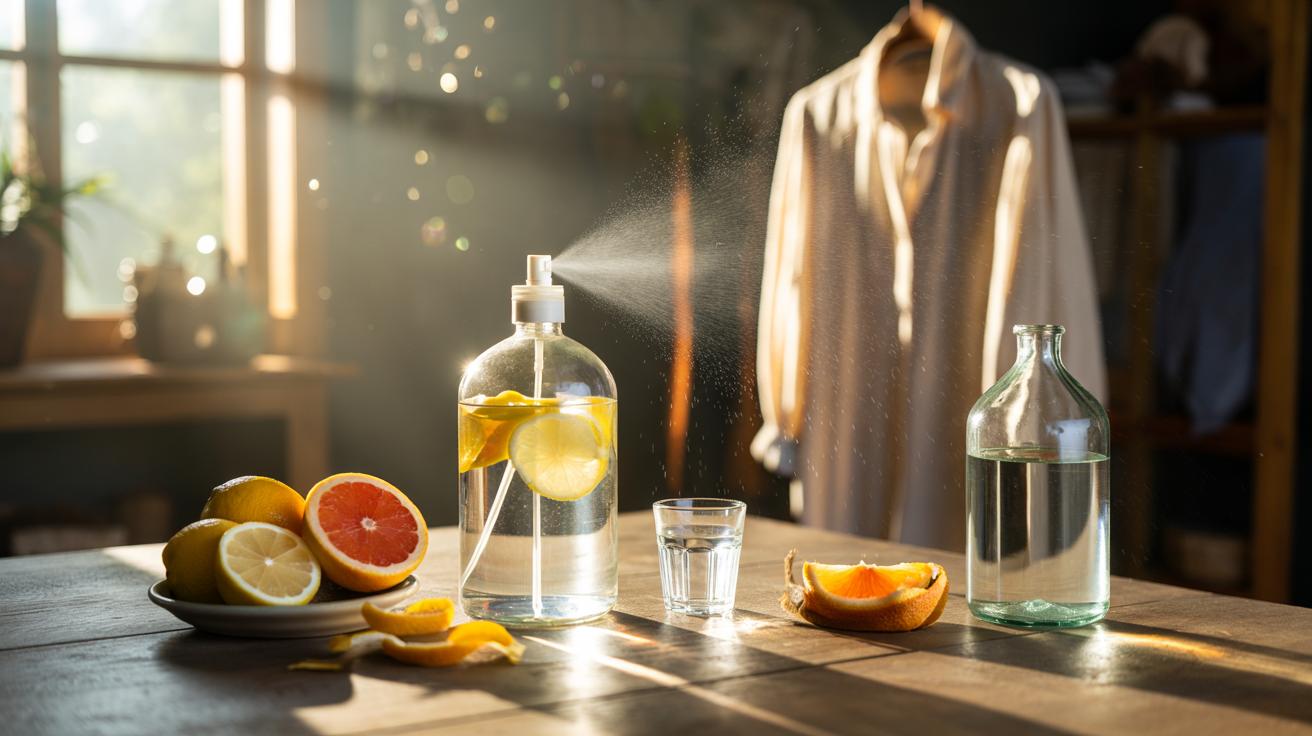
Shop-bought sprays promise instant freshness, yet many come loaded with synthetic fragrance and propellants. A homemade fabric refresher built from citrus and water delivers a bright, natural scent, trims plastic waste, and costs pennies per bottle. Using lemon, orange, or grapefruit alongside distilled water, you can mix a fine mist that revives clothes between washes, perks up curtains, and neutralises stale odours in shoes and upholstery. The method is simple and flexible, whether you steep peels or add a measured dash of essential oil. This guide explains how to choose ingredients, blend safe ratios, and apply the spray for crisp, clean results without masking agents.
Why Citrus Works for Freshening Fabrics
Fresh citrus peel and oils are rich in aromatic compounds such as limonene, valued for cutting through lingering odours and lending a sparkling, “just-washed” impression. When dispersed in water and misted lightly onto fibres, these volatile notes flash off, lifting stale smells while leaving only a subtle trail. The effect suits garments between washes, soft furnishings that can’t be laundered often, and travel wardrobes. A well-balanced citrus blend smells clean, not perfumey, and it won’t cling heavily to fabric. The secret is low concentration and fine, even application.
There are two reliable scent sources. A peel infusion offers a gentle, pith-free aroma with minimal risk of staining, while a citrus essential oil brings stronger lift in tiny doses. Either way, water quality matters: distilled water helps prevent cloudiness and mineral rings on dark fabrics. Always carry out a patch test on an inconspicuous area and avoid silk, leather, suede, and acetate blends, which can mark with any water-based spray.
Essential Ingredients and Safe Ratios
The base is simple: distilled water plus your citrus scent source. If using essential oils, add a small amount of a dispersant such as vodka or UK surgical spirit to help the oil spread through the liquid and reduce spotting. A touch of white vinegar can aid deodorising on musty textiles; keep it modest so the tang flashes off. Small batches are safer because you’ll use them up before quality drifts. For families and shared homes, label the bottle clearly and keep it out of reach of children and pets.
As a starting point for 250 ml: combine 240 ml water with 15 ml vodka/surgical spirit and 6–10 drops citrus oil, or use a peel infusion topped up with water. Shake before every use because natural mixtures separate. If you prefer zero alcohol, swap to a stronger infusion and omit essential oil. Discard the mix if the scent turns, the liquid clouds, or you notice any colour change.
| Ingredient | Purpose | 250 ml Ratio | Notes |
|---|---|---|---|
| Distilled water | Base | 240–250 ml | Reduces mineral marks on fabric |
| Citrus essential oil (lemon, sweet orange, grapefruit) | Scent lift | 6–10 drops | Keep low to limit staining risk; always patch test |
| Citrus peel infusion | Gentle aroma | 60–100 ml infusion, then top up with water | Steep peels in hot water 12–24 hours; strain well |
| Vodka or surgical spirit | Dispersant; helps quick-dry | 15 ml (1 tbsp) | Improves clarity; optional but recommended with oils |
| White vinegar (optional) | Odour neutraliser | 0.5–1 tsp | Scent flashes off; avoid on delicate dyes |
Step-by-Step: Make and Use Your Citrus Refresher
For a peel infusion, pack a clean jar with fresh lemon or orange peels (avoid bitter white pith), pour over just-boiled water, cover, and steep 12–24 hours. Strain through fine cloth until clear. For an essential oil blend, add 6–10 drops to 15 ml vodka or surgical spirit and swirl to pre-dilute. Pour into a clean 300 ml spray bottle, add distilled water to 250 ml total, and include 0.5–1 tsp white vinegar if tackling musty wardrobes. Label the bottle with date and recipe so you can repeat your favourite version.
To use, shake well, then mist from 20–30 cm away, targeting the air just above the fabric so droplets settle lightly. Allow to air-dry before wearing or sitting. For cushions and curtains, treat one panel first to confirm no spotting. On trainers, remove insoles and mist lightly; let them dry thoroughly. Less is more: a fine veil refreshes without leaving residue, and reapplication is easier than fixing over-saturation.
Troubleshooting, Safety, and Sustainability
If the blend looks cloudy or separates quickly, reduce oil to 6 drops or add 5 ml more alcohol. Spots on dark textiles often mean heavy droplets; adjust the nozzle to a finer mist and hold the bottle further back. Vinegar sharpness lingering? Halve the dose or skip it for lightly worn garments. Never spray on silk, leather, suede, or flame-retardant finishes. Keep away from faces and avoid direct use around pets, especially cats, which can be sensitive to essential oils. Store your bottle in a cool, dark place and make new batches regularly.
Infusions last about one to two weeks in the fridge; alcohol-based mixes can stretch to four weeks, though they’re not truly preserved. Discard at the first sign of a sour note. For a lower-waste approach, use peels from fruit you’ve already eaten, dry leftover peels for later infusions, and refill a glass atomiser rather than buying new plastic. With a few mindful tweaks, a citrus-and-water refresher becomes a cleaner, greener everyday habit.
With a little care over ratios and fabrics, a citrus spray can revive wardrobes, soft furnishings, and travel kits in minutes, without the cloying residue of conventional aerosols. Start with small batches, keep your patch test routine, and log your favourite peel varieties and oil combinations so you can dial the scent for seasons and rooms. From zingy lemon for gym gear to mellow sweet orange for bedding, the palette is wide open. How will you customise your next bottle—peel infusion, essential oil, or a clever blend designed for a specific space in your home?
Did you like it?4.4/5 (25)