In a nutshell
- 🔥 Steam’s power: Uses latent heat to soften baked-on grime, penetrates crevices, protects coatings, and delivers a chemical-free deep clean.
- 🧪 Safety first: Use a microwave‑safe glass jug, 400–700 ml water, and a wooden stick to prevent superheating; avoid sealed containers and open the door away from your face.
- 🕒 Step-by-step: Heat 400–500 ml for 3–5 minutes, then a 5‑minute contact time; remove plate and ring, wipe top‑down, repeat a short cycle for stubborn spots—no abrasives needed.
- 🌬️ Deodorise & detail: Run a short steam pulse, wipe the vent cover, door mesh, and gasket; use a “steam poultice,” finish with a dry buff, and let the cavity breathe.
- 🗓️ Maintenance: Quick 90‑second steams after messy reheats, weekly mini‑steams, distilled water in hard‑water areas, and clear vents keep results crisp and odours down.
Your microwave takes daily abuse: soup eruptions, porridge boil-overs, last night’s curry halo. The fastest way to reset it to spotless is also the gentlest. Use steam. No fragrances, no surfactants, no scrubbing that risks the coating. Just water, heat, and five patient minutes while vapour does the heavy lifting. Always switch off at the mains if accessible and let the cavity cool before you begin. Done right, this method is food‑safe, low-cost, and kind to enamel and stainless interiors. It works on week-old splatters and fresh spills alike, reaching seams a cloth can’t touch and lifting grease so it wipes away in a single pass.
Why Steam Works on Stubborn Microwave Grime
The secret is physics. When water boils, steam fills the cavity, carrying heat evenly onto walls, roof, and door glass. As it condenses, it releases latent heat—think a warm rain inside your oven—softening baked-on sugars, starches, and fats. That phase change delivers energy exactly where grime clings, so residues swell and detach without abrasion. Steam penetrates crevices that sprays and pads often miss, flooding the channels around the door seal and the lip beneath the turntable ring, areas that trap smells and splatters.
Because vapour wraps around corners, it tackles the awkward ceiling and the perforated cover over the magnetron vents, loosening the thin, sticky film that dulls the interior. There’s minimal thermal shock, yet enough humidity to soften carbonised edges that usually defeat a wipe. The result is a thermal lift rather than a chemical strip, preserving interior coatings and keeping plastics from clouding. Your cloth then becomes the finisher, not the main event.
What You Need and Safety Checks
You need very little to do a proper deep clean. Choose a microwave‑safe glass jug or ceramic bowl with a flat base, fill it with water, and drop in a wooden cocktail stick to tame superheating. Add a clean microfibre cloth for the wipe-down and a tea towel or oven glove to handle hot glass. Never use sealed containers, cling film lids, or anything that could trap pressure. The gear below is simple, reliable, and in most kitchens already.
| Item | Why It Helps |
|---|---|
| Heatproof glass jug/bowl (500–700 ml) | Stable, visible boil; safe, even heating |
| Water (tap or distilled) | Distilled reduces limescale spotting |
| Wooden stir stick/toothpick | Reduces risk of superheating eruptions |
| Microfibre cloth or sponge | Grabs loosened film without scratching |
| Oven gloves/tea towel | Safe handling of hot vessels and plate |
Do quick checks before you start. Inspect the turntable and ring for cracks; remove if damaged. Ensure vents aren’t blocked and the interior light cover is intact. Do not run the microwave empty; always heat the bowl of water. If your unit is integrated, ensure there’s space for steam to vent when you open the door; crack it slowly to avoid a faceful of hot vapour.
Step by Step: The Steam-Only Deep Clean
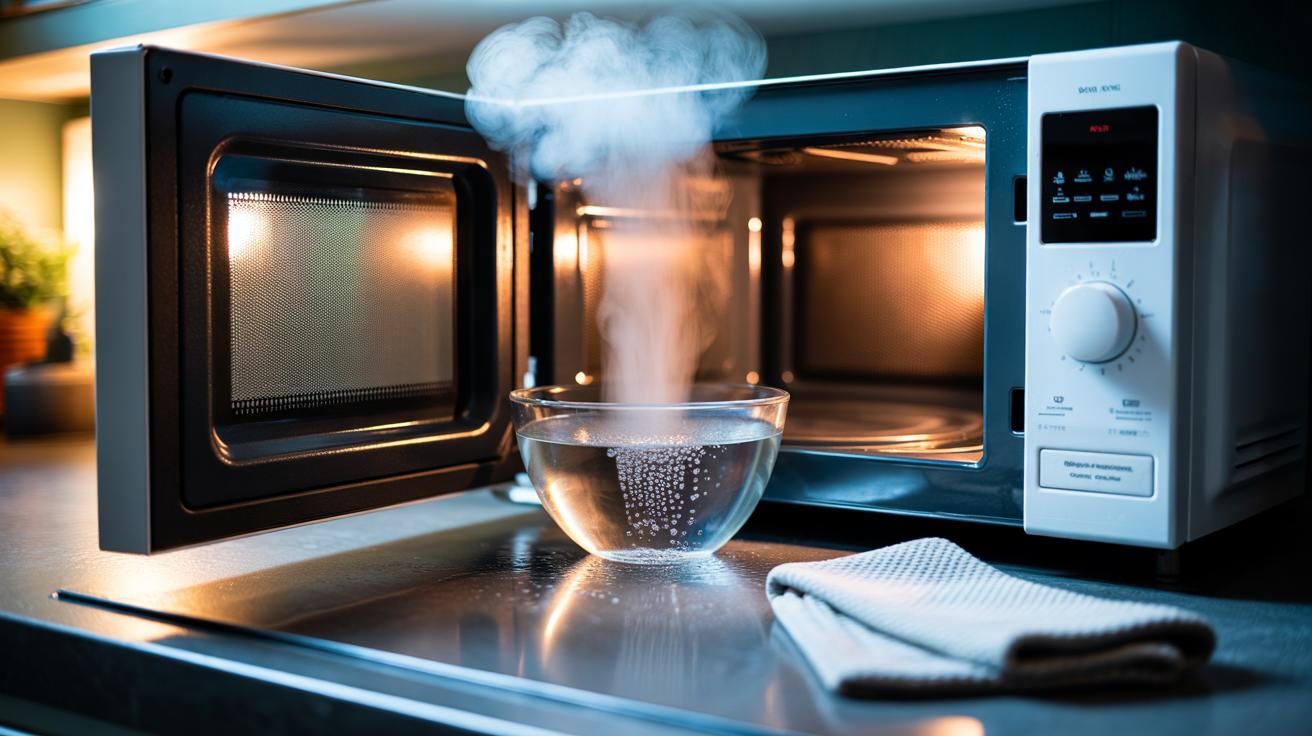
Half-fill your jug or bowl (roughly 400–500 ml), add the wooden stick, and place it centrally on the turntable. Set full power. Three to five minutes suits most 700–1000 W units; you want a vigorous boil and a misted interior. When the timer stops, leave the door closed for another five minutes. This dwell is critical. It’s the contact time that softens stubborn rings and lifts the protein glaze on the ceiling.
Open the door away from your face. Carefully remove the plate and ring and set them near the hot bowl; the residual vapour keeps them warm and easy to clean. Use your cloth to draw down the condensate, wiping the roof first so drips don’t spoil clean walls. Pay attention to the door seal and the fine mesh on the door’s inner glass—both trap odour. For edges, fold the cloth to a firm point and run it along seams. Replace the ring and plate after drying them thoroughly.
Battling heavy build-up? Run a shorter second cycle—two to three minutes—and repeat the dwell. Press a hot, well-wrung cloth against any remaining spots for 30 seconds to coax them free. No knives, no scourers. If it doesn’t wipe, it hasn’t soaked long enough. Finish with a dry polish to banish bead marks, then leave the door ajar for ten minutes to let warmth chase out residual moisture.
Deodorise and Detail Using Steam Alone
Lingering odours usually live where grime hides. After the main clean, run a two-minute steam pulse with fresh water. Let it sit for three minutes, then wipe the cavity roof and the perforated vent cover again; these areas carry the ghost of popcorn and curry. Clean the turntable rollers and the circular track under the plate—odour reservoirs you rarely see. Odour control comes from heat, humidity, and airflow, not perfume. Let the cavity breathe by leaving the door open briefly after each wipe-down.
Detail the door. Use the hot condensate to moisten the gasket, then pinch-wipe along its folds to lift hidden film. For the inner glass, a final warm pass removes streaks the first wipe missed. Try a “steam poultice”: dip a cloth corner in the hot bowl, squeeze, press it on the greasiest patch of ceiling for 20 seconds, then swipe clean. This targeted heat draws residue into the fabric. A last dry buff leaves the interior bright, clean-smelling, and ready for tonight’s reheat.
Maintenance: Keep It Fresh With Weekly Steam Bursts
Prevention is quicker than penance. After a messy reheat, do a 90‑second steam while you plate up, then a 60‑second dwell and a ten-second wipe. That’s it. Cover splatter-prone foods to reduce mess at source. Use distilled water for your steam cycles in hard‑water areas to limit limescale freckles. Preventive care turns deep cleans into quick refreshes, and your microwave will look new for years. Small, regular steams beat big scrubs, every time.
Build a rhythm. A weekly mini-steam, a monthly deep dwell, and daily door‑ajar drying for a minute after heavy use. If you notice slow turntable rotation, a burnt smell, or peeling interior coating, pause and check your manual or a professional—steam is gentle, but hardware faults need attention. Keep exterior vents dust-free so moisture escapes, and finish with a dry cloth to stop water spots. Simple habits. Reliable results. A clean oven without a drop of detergent.
With nothing more than water and heat, you can reset a grimy microwave to gleaming in under ten minutes, avoiding harsh chemicals and elbow grease. The key is patience during the dwell, careful handling of hot glass, and a final dry buff so the shine lasts. Your kitchen will smell neutral again, and leftovers won’t inherit yesterday’s aromas. Ready to try a steam‑only deep clean tonight—and what timing tweaks will you test to suit your microwave’s wattage and your routine?
Did you like it?4.6/5 (29)