In a nutshell
- 🧪 Science: Sodium bicarbonate adsorbs odours, lifts light soils, and its gentle pH refreshes upholstery without masking scents.
- 🛠️ Prep & safety: Vacuum first, use a sieve and soft brush, ensure airflow, and patch test for colour fastness—shorten dwell time on velvet/viscose/wool blends.
- 📋 Method: Dust a light, even coat, do not wet, allow 20–60 minutes, then make slow, crosshatch vacuum passes; light layers outperform heavy piles.
- 🧴 Odours & stains: Repeat on consecutive days, control humidity, blot not rub; avoid enzyme cleaners on wool/silk, and consider cushion-core issues if smells persist.
- 🧵 Fabric-specific guidance: Follow recommended dwell times and vacuum settings; leather/faux leather aren’t suitable—use manufacturer-approved cleaners instead.
When upholstered chairs and sofas begin to smell tired or look a little dull, a low-cost pantry staple can deliver a quiet miracle. A simple treatment with baking soda lifts trapped odours, loosens surface grime, and leaves fibres feeling fresher underhand. This gentle powder is safe for most fabrics and requires no complicated kit—just a sieve and a reliable vacuum. Always patch test in a hidden spot before treating the whole piece. With the right technique, you can revive upholstery between deep cleans, extend the life of beloved furniture, and avoid harsh chemical fragrances that only mask problems. Here’s how to get results that feel professional, without professional prices.
Why Baking Soda Works on Upholstery
At the heart of this method is sodium bicarbonate, a mild alkali with a knack for capturing volatile molecules. It doesn’t perfume the fabric; it adsorbs odours, clinging to the compounds responsible for musty or pet-related smells. Its microscopic particles also help dislodge light soils from fibre surfaces, especially in high-contact zones like armrests and headrests. It refreshes without masking scents, which is why results last longer than a quick spritz of room spray.
Baking soda’s gentle pH means it won’t strip colour from most textiles, and it wicks minor moisture, helping fabrics feel crisper once vacuumed away. Because it’s non-abrasive, it suits everyday maintenance on cotton, synthetic blends, and durable weaves. Some sensitive materials—velvet, wool blends, and rayon/viscose—demand careful testing and shorter dwell times. Never combine baking soda with vinegar on textiles: the fizzing neutralises cleaning power and can create residue that attracts new dirt. With the science on your side, the results are clean, calm, and quietly effective.
Preparation: Tools, Safety, and Patch Testing
Clear crumbs and loose debris first with a vacuum fitted with a soft upholstery attachment. Gather a fine-mesh sieve, a clean soft brush, and a timer. If pet hair is an issue, a rubber grooming brush can lift fur before you begin. Open windows for light airflow so any lifted odours dissipate. Keep drinks away from the work area and remove scatter cushions to treat covers and bases separately. Less is more—apply a light, even layer rather than a heavy mound.
Conduct a patch test where the fabric is hidden—behind a cushion, under a skirt, or along the rear seam. Sprinkle a small amount, leave for 15 minutes, and vacuum. Check for colour fastness, texture changes, or residue. For delicate fibres like velvet or viscose, shorten contact time and vacuum with reduced suction to protect the nap. If you use a HEPA-filter vacuum, you’ll capture fine powder more efficiently and minimise re-depositing dust in the room. If any dye transfer appears, stop and consult the furniture care label or a professional cleaner.
Step-by-Step: The Baking Soda Refresh Method
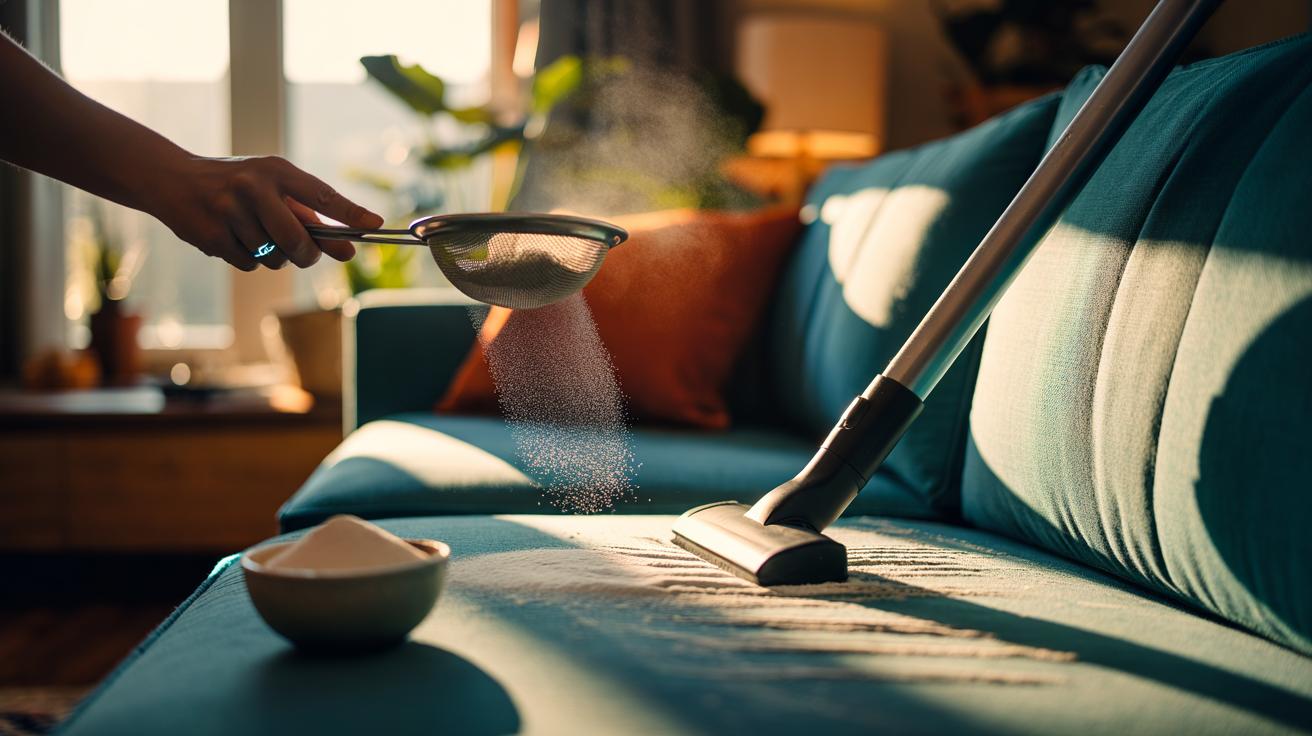
Vacuum the upholstery methodically, working from top to bottom and front to back. Load baking soda into a sieve and dust a thin, even coat across the surface. Use a soft brush to distribute powder along the grain of the fabric, paying attention to high-traffic zones. For odour-prone areas, add a fractionally heavier sprinkle without creating clumps. Set a timer: 20–30 minutes is enough for routine freshening, while deeper odours may benefit from up to 60 minutes. Do not overwet fabric to “activate” the powder—this treatment is intended to stay dry.
When time is up, vacuum slowly using overlapping passes. Work in crosshatch lines to lift particles from seams and tufting. Tap cushions to release powder from creases, then vacuum again. If you enjoy fragrance, deposit one drop of skin-safe essential oil on a cotton pad and store it near—not on—the sofa to scent the room without coating fibres. Re-fluff cushions, smooth the nap with your hand or a clothes brush, and let the fabric breathe for 10 minutes. A meticulous vacuum is the difference between “better” and “brilliant”.
Tackling Odours and Stains the Smart Way
For stubborn smells—pets, damp, or smoke—repeat the treatment over consecutive days, keeping layers light. Pair the refresh with simple ventilation and a dry indoor environment; odours cling in humidity. When mild spots appear, first try the baking soda step to lift surface oils. If a distinct stain remains, blot (never rub) with a barely damp, colourfast cloth, then allow to dry completely before another powder pass. Avoid enzyme cleaners on wool and silk blends unless the label confirms compatibility. Use the guide below to tailor dwell times and technique to your fabric.
| Fabric Type | Patch Test | Recommended Dwell Time | Vacuum Setting | Notes |
|---|---|---|---|---|
| Cotton/Linen | Yes | 30–45 minutes | Medium | Brush gently along weave to distribute powder. |
| Polyester/Microfibre | Yes | 30–60 minutes | Medium–High | Work in crosshatch passes for deep pile. |
| Wool Blends | Yes | 15–30 minutes | Low–Medium | Shorter time protects delicate fibres. |
| Velvet/Viscose | Yes | 10–20 minutes | Low | Vacuum with nap; avoid heavy brushing. |
| Leather/Faux Leather | Yes | Not advised | Low | Wipe with manufacturer-approved cleaner instead. |
Never saturate upholstery attempting to rinse out baking soda; it is designed to be vacuumed away. If odours persist after two or three cycles, the issue may be inside cushion cores or batting, which may require professional attention or replacement.
With a sieve, a vacuum, and a mindful touch, baking soda returns sofas and chairs to their best behaviour—fresher to sit on, cleaner to look at, and kinder to the nose. This low-impact routine suits busy homes, rented flats, and heritage pieces that can’t be doused in detergents. Build it into your monthly rhythm, and you’ll stretch the time between deep cleans while protecting fabric integrity. The key is restraint: light layers, patient dwell time, and thorough vacuuming. Which piece of upholstery in your home is calling out for a calm, soda-powered reset—and what result are you hoping to achieve first?
Did you like it?4.4/5 (29)