In a nutshell
- 🧺 The essential oil cloth trick delivers slow-release freshness in drawers by infusing a small natural-fibre cloth with oils, avoiding synthetic sprays and reducing mustiness without overpowering clothes.
- 🧩 Step-by-step: use unbleached cotton/linen/bamboo, optionally prime with a carrier oil, add 6–10 drops of your blend, fold, pouch it, let it rest 5 minutes, then place away from delicate fabrics; refresh every 2–4 weeks and label blends.
- 🌿 Smart choices: pair a base (cedarwood), heart (lavender), and top (lemon) note for balance; stick to natural fibres for even diffusion and avoid heavily dyed cloths that may bleed.
- ⚠️ Safety first: use the minimum effective drops, keep pouches from children and pets, choose gentler oils during pregnancy or with asthma, and protect silk, leather, and wood from direct oil contact.
- ♻️ Sustainability wins: rewash and reuse cloths, upcycle fabric offcuts, choose responsibly sourced oils, complement with cedar blocks or a mild bicarbonate-herb sachet, and refresh little and often to cut waste.
Stale drawers can turn clean laundry into a let-down, yet a simple domestic hack brings back a crisp, natural scent without aerosols or synthetic plugs. The essential oil cloth trick relies on a small square of fabric infused with fragrant oils to deodorise confined spaces gently and continuously. It’s inexpensive, low-tech, and adaptable to any aesthetic, from rustic linen to sleek bamboo. Unlike spray-and-hope fixes, this method lasts for weeks, not minutes. With a careful choice of oils and a measured application, you can banish mustiness, deter moths, and create a signature aroma that whispers “fresh” each time the drawer opens.
How the Essential Oil Cloth Trick Works
At its core, the technique uses a breathable textile as a controlled reservoir for volatile aromatic compounds. When a few drops of essential oil hit cotton or linen, the fibres hold the fragrance, then release it as molecules evaporate at room temperature. Drawers provide a microclimate where scents diffuse slowly, meaning you enjoy steady freshness rather than a fleeting blast. This slow-release effect is the secret to consistent, low-level deodorising that doesn’t overwhelm your clothes. It’s also kinder to fabrics than direct oiling, which can stain or over-scent garments.
The cloth acts a bit like a reed diffuser in miniature. Add a light touch of carrier oil—such as fractionated coconut—to moderate evaporation and extend the scent’s lifespan. Natural fibres excel because their capillary structure retains oils evenly; synthetic microfibre tends to trap scent in patches. Tuck the square inside a breathable pouch or fold it into a corner of the drawer. Position the cloth so it never sits directly against delicate textiles, especially silks and starched collars, to avoid marks and preserve crispness.
Step-by-Step: Making a Long-Lasting Drawer Freshener
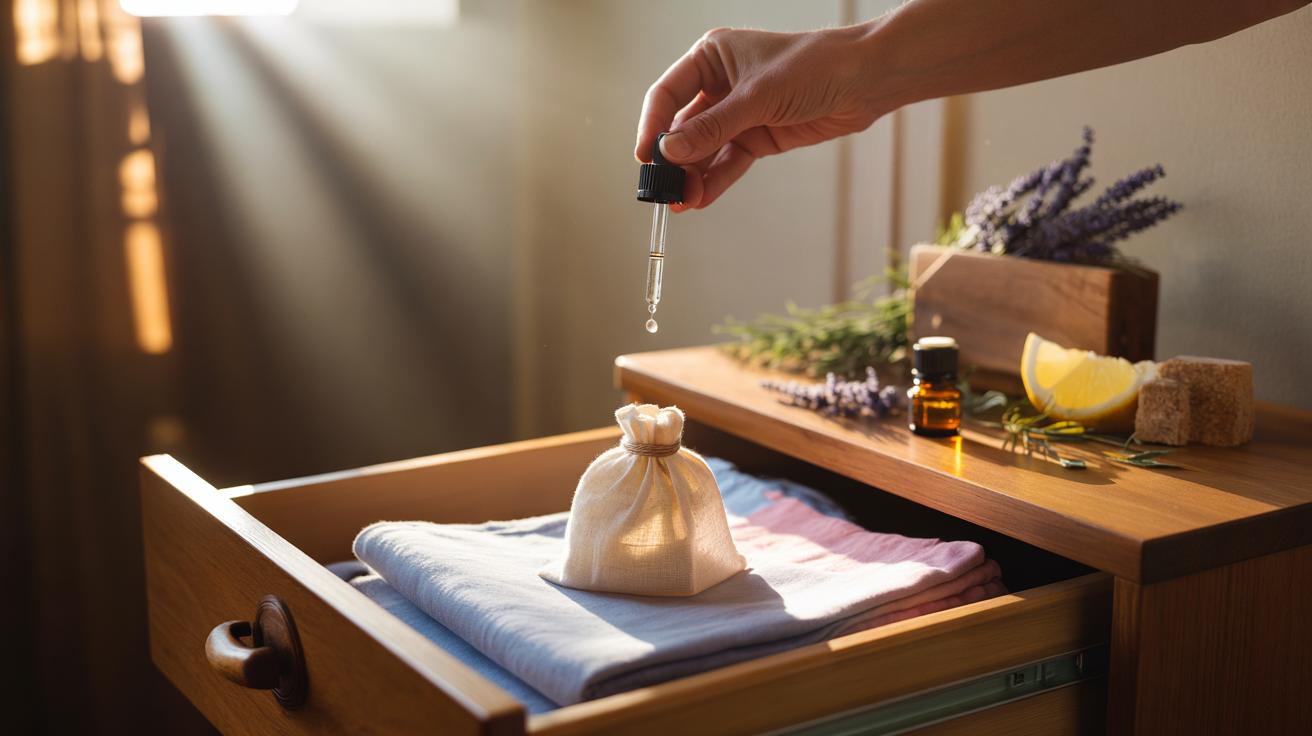
Start with a palm-sized piece of unbleached cotton, linen, or bamboo cloth. If longevity matters, lightly moisten the fabric with half a teaspoon of carrier oil. Then add 6–10 drops of essential oil in your preferred blend—think 6 drops lavender, 2 cedarwood, 2 lemon for a calm-but-bright profile. Fold the cloth twice to distribute the liquid, then place it inside a small muslin bag or an envelope sewn from scrap fabric. Allow the cloth to rest for five minutes before putting it in the drawer so the oils settle into the fibres.
Slide the pouch towards the rear or side of the space, leaving airflow around it. For a standard chest of drawers, one pouch per drawer suffices; for larger wardrobes, use two. Refresh every two to four weeks: add 3–4 new drops, rotating scents to prevent “nose fatigue.” If you notice any damp, remove the pouch until conditions dry out. Always label your blends and record drop counts for consistent results next time. Spotted a faint oil mark? Wash the cloth in hot, soapy water and re-prime once dry.
Choosing the Right Essential Oils and Fabrics
Different oils bring distinct benefits. Lavender calms and softens musty notes; cedarwood hints at pencil shavings and can discourage moths; lemon delivers an airy “laundry day” lift; eucalyptus cuts through stale odours with spa-like clarity; and tea tree adds a crisp, clean edge. Blend with intent: pair a base note (cedarwood) with a heart (lavender) and a top (lemon) for balanced diffusion. For the cloth, stick to natural fibres—cotton holds scent evenly, linen releases aroma briskly, bamboo offers softness and absorption. Avoid heavily dyed textiles that may leach colour in humid drawers.
| Essential Oil | Scent Profile | Drawer Benefit | Caution |
|---|---|---|---|
| Lavender | Floral, herbal | Soothes, balances mustiness | May feel powdery if overused |
| Cedarwood | Woody, resinous | Moth-deterring aroma | Strong; keep to low drops |
| Lemon | Bright, zesty | Fresh “clean” lift | Oxidises quickly; refresh often |
| Eucalyptus | Camphoraceous | Sharpens air, clears stale notes | Not ideal near infant clothing |
| Tea Tree | Medicinal, crisp | Clean, cool edge | Keep away from cats |
Prefer a subtle finish? Blend 3 lavender, 2 lemon, 1 cedarwood. For breezy linens, try 4 lemon, 2 eucalyptus. Always store oils in amber bottles away from heat to preserve potency. If you’re fragrance-sensitive, stick to a single gentle oil and halve the drop count. Swap in dried botanicals—like English lavender buds—inside the pouch for an extra layer of texture and mild scent synergy with your chosen oil.
Safety, Allergies, and Sustainability Tips
Essential oils are potent. Use the smallest amount that achieves freshness. Keep pouches out of reach of children and pets; some oils, including tea tree and eucalyptus, are unsafe if ingested and problematic for cats. During pregnancy or for those with asthma, choose milder options such as sweet orange or low-dose lavender, and test sensitivity first. Protect delicate garments by ensuring the pouch never touches lace, silk, or leather. Avoid placing oil-soaked cloths against varnished wood; a small ceramic dish or saucer underneath prevents finish damage and ring marks.
On sustainability, rewash and reuse the same cloths for months. Upcycle fabric offcuts or retired cotton napkins, and choose responsibly sourced oils—look for clear supply chains and minimal packaging. Cedar blocks can accompany the pouch for a natural moth deterrent, refreshed with a single droplet every few months. If you prefer zero essential oils, try a sachet mixing bicarbonate of soda with dried herbs, then add one understated oil droplet to lift the blend. Refreshing little and often reduces waste and keeps the scent balanced.
The essential oil cloth trick transforms closed drawers into subtly perfumed spaces with almost no kit, little cost, and a gratifyingly artisanal feel. It respects fabrics, curbs mustiness, and lets you curate a signature aroma—be it hotel-crisp citrus or cottage-garden lavender. Keep notes on your favourite ratios, mark refresh dates, and rotate blends seasonally for a fresh reveal each time you open a drawer. A few mindful drops can make storage feel like self-care. Which blend will you try first, and where will you tuck your fragrant cloth to make opening that drawer a small daily pleasure?
Did you like it?4.4/5 (27)