In a nutshell
- 🧪 Explains how white vinegar dissolves limescale (calcium carbonate) via acetic acid, with emphasis on keeping vinegar in contact for effective softening.
- 🧴 Provides a clear, step-by-step method: wrap soaked cloths for 30–45 minutes, gently scrub, rinse, and buff; avoid abrasive pads and use neat vinegar for heavy deposits.
- 🛠️ Tackles stubborn buildup: remove and soak the aerator, use soft tools, make a vinegar–bicarbonate paste for cling, and never mix vinegar with bleach.
- ♻️ Covers safety and finishes: test delicate coatings, avoid natural stone, rinse rubber seals; vinegar is eco-friendly and suits chrome and stainless steel with brief contact.
- 💡 Shares prevention tips: weekly 1:1 vinegar spritz, dry taps after use, and periodic aerator soaks to maintain strong flow and long-lasting shine in hard-water homes.
Hard water can leave a chalky, stubborn crust on taps that makes even the cleanest bathroom look neglected. The simplest fix hides in plain sight: white vinegar. This everyday kitchen staple cuts through limescale quickly, safely, and cheaply, sparing you harsh chemicals and long scrubbing sessions. In households across the UK, where hard water is common, vinegar’s quiet efficiency is a small domestic miracle. Because it dissolves mineral deposits rather than just shifting them around, vinegar produces a brighter finish and a longer-lasting clean. With a few household items and a little patience, you can restore the shine to chrome, stainless steel and brushed finishes, and keep taps running smoothly without calling in a professional.
Why Vinegar Works on Limescale
Limescale is largely calcium carbonate, a chalky residue left behind as hard water evaporates. White vinegar contains acetic acid, a weak acid that reacts with calcium carbonate, breaking it apart into soluble salts and releasing tiny bubbles of carbon dioxide. That fizz is your proof the chemistry is doing the heavy lifting. This isn’t just cosmetic cleaning: vinegar truly dissolves the mineral build-up, which helps prevent rapid re-depositing. Because vinegar is mild compared with proprietary acid descalers, it offers a gentler route to a high shine, especially on everyday plumbing fixtures and finishes found in UK homes.
Another advantage is control. You can adjust contact time and strength, applying vinegar precisely where it’s needed—around the base of a tap, the spout, or inside an aerator. Used correctly, it reaches into thread lines and crevices where flakes of scale weaken water flow. For best results, keep the vinegar in constant contact with the limescale until it softens—they separate far more easily once chemically loosened.
Step-by-Step: The Vinegar Method for Taps
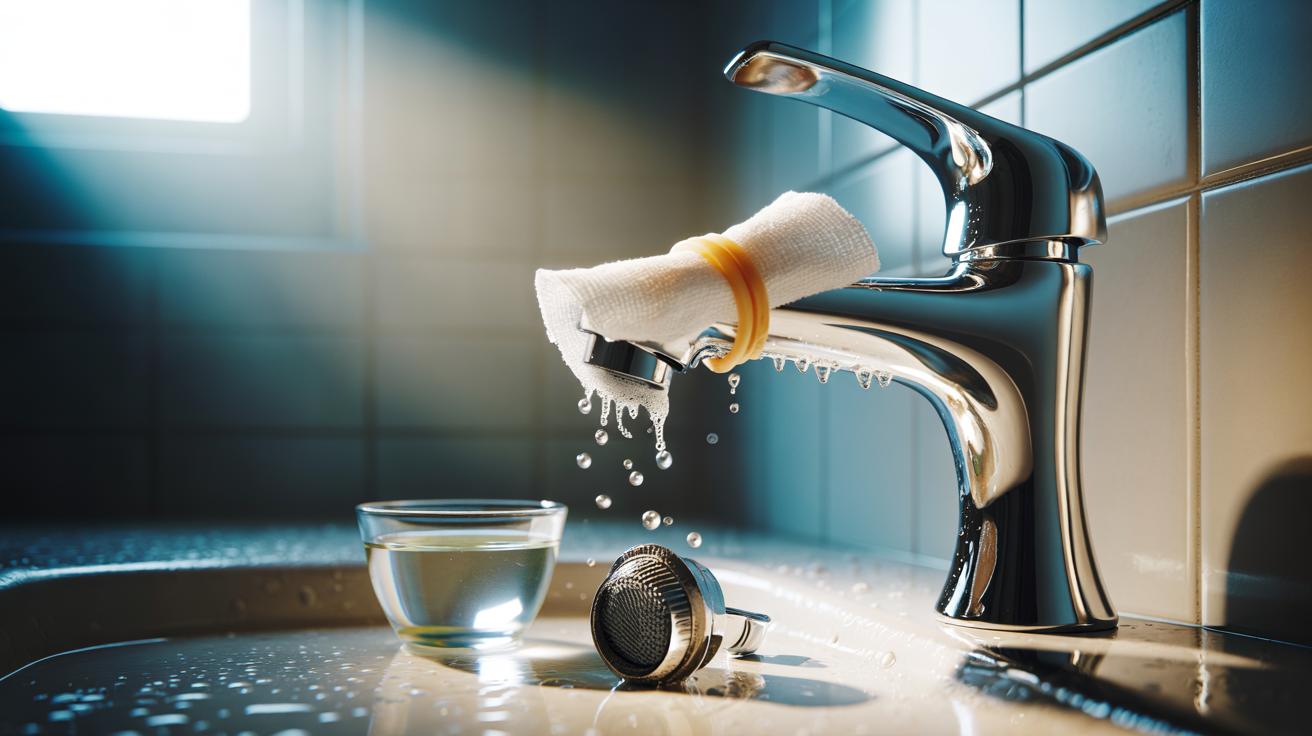
Start with distilled white vinegar and a soft cloth or paper towels. Soak the cloth in vinegar and wrap it snugly around the scaled areas of the tap, especially the spout and joints. Leave it in place for 30–45 minutes, topping up with more vinegar if it dries out. When you remove the wrap, gently scrub with a soft toothbrush or non-scratch sponge to lift the softened scale. Rinse thoroughly with warm water, then dry and buff with a microfibre cloth to prevent new marks. Never use abrasive pads: they scratch finishes and invite faster re-scaling.
| Task | Vinegar Ratio | Contact Time | Tools |
|---|---|---|---|
| General tap exterior | Neat vinegar | 30–45 minutes | Cloth wrap, soft brush |
| Heavy crust on spout | Neat or 2:1 vinegar:water | 45–60 minutes | Elastic band + soaked towel |
| Regular maintenance | 1:1 vinegar:water | 10–15 minutes | Spray bottle, microfibre |
For awkward shapes, pour vinegar into a small food bag, position it over the spout, and secure with a rubber band so the end is submerged. After soaking, a gentle wipe should lift residue. Always rinse and dry fully—evaporating tap water leaves minerals that restart the problem. A tiny drop of washing-up liquid in your final wipe helps repel water beads.
Dealing With Stubborn Buildup and Aerators
When scale is thick or flaky, focus on the aerator—the small mesh at the spout tip that conditions the stream. Unscrew it carefully (use a cloth to protect the finish) and note the order of parts: casing, mesh, and rubber washer. Soak the pieces in warm vinegar for 30 minutes. Use a soft brush or wooden cocktail stick to clear the mesh, avoiding metal picks that can tear the screen. Rinse well and reassemble. Restoring the aerator often transforms weak, spluttering flow into a smooth, efficient stream.
For stuck-on crusts around bases and seams, apply a vinegar-soaked cotton pad and press it into the joint line with a plastic card. After 45–60 minutes, the deposit should scrape away with a fingernail or plastic scraper. You can thicken vinegar with a little bicarbonate of soda to make a clingy paste; it won’t increase acidity, but it holds vinegar in place on vertical surfaces. Do not mix vinegar with bleach or bleach-based bathroom sprays—dangerous fumes can result.
Safety, Finishes, and Eco Credentials
Vinegar is kinder to the home and environment than many descalers, cutting carbon-heavy manufacturing and packaging. It’s inexpensive, widely available, and biodegradable. That said, finishes vary. Test a hidden spot first on plated, antique, gold-toned or oil-rubbed fixtures, and avoid vinegar on natural stone (marble, limestone) where acid can etch. On standard chrome and stainless steel, vinegar is ideal when used briefly and rinsed thoroughly. Keep contact time conservative on brushed finishes to preserve their uniform sheen.
Protect rubber seals by rinsing promptly; vinegar’s mild acidity is fine for short soaks but prolonged exposure can dry some elastomers. Ventilate the bathroom and consider light gloves if you have sensitive skin. For prevention, wipe taps dry after use and, in hard-water regions, adopt a weekly 1:1 vinegar spritz followed by a quick buff. Little-and-often maintenance is the easiest way to keep limescale from taking hold, saving you time and preserving that just-polished glow.
With a bottle of white vinegar, a cloth and a spare hour, your taps can regain their showroom sparkle without harsh chemicals or pricey products. By dissolving the problem rather than disguising it, you keep water flowing freely and fixtures looking newer for longer. A few habits—regular drying, occasional aerator soaks, and quick vinegar spritzes—will stretch results between deep cleans. Consistent, gentle care always outperforms last-minute scrubbing. What’s your toughest tap trouble spot at home, and how will you adapt the vinegar method to conquer it this week?
Did you like it?4.6/5 (26)