In a nutshell
- 🧪 Vinegar steam neutralises odours via mild acetic acid, reaching fibres without soaking and easing wrinkles for a neater drape.
- 🧰 Follow a simple step-by-step: dust, spot-test, use a 1:4–1:5 vinegar-to-water mix, and steam steadily with a garment steamer, kettle bowl, or shower setup.
- ⚖️ Adjust ratios and setup to fabric and odour strength; start mild for silks/viscose and use stronger dilutions briefly for heavy curtains or persistent smells.
- 🚫 Prioritise safety: test colourfastness, avoid foam-backed blackout linings and glued trims, ventilate well, and never mix vinegar with bleach or ammonia.
- 🏠 Expect quick results: fresher curtains in under an hour, reduced dry-clean costs, minimal drying time, and a softer, cleaner hang with proper airing.
Freshening curtains without wrestling them off the pole or paying for a dry-clean can be simpler than you think. Harnessing vinegar steam is a low-cost, low-effort method that neutralises odours, lifts light grime, and softens creases, all while keeping fabric fibres out of the wash. Using steam infused with distilled white vinegar lets you deodorise in situ, ideal for big bay windows or tall drops that are tricky to launder. Because the fabric is never saturated, drying times are minimal and colour risk is reduced. With a kettle, shower, or garment steamer, you can refresh living spaces in under an hour and restore that just-clean crispness.
Why Vinegar Steam Works on Curtains
At the heart of this method is acetic acid, the mild acid in vinegar that bonds with alkaline odour molecules from cooking, smoke, or pets and neutralises them. When carried by warm vapour, vinegar’s tiny molecules reach fibres more effectively than a surface spritz would, loosening light dust and stale smells without drenching headings or hems. That makes vinegar steam particularly useful for lined or heavy curtains that are cumbersome to wash. The gentle heat also eases wrinkles, helping drapes fall more neatly while reducing the “flat” look caused by long hang times.
Unlike perfumed sprays that mask smells, vinegar steam targets the source and evaporates cleanly, leaving little trace once the room has aired. Its eco-friendly profile appeals to households looking to use fewer synthetics. For best results, use distilled white vinegar, which is clear and less likely to introduce residue or colour. Combined with proper ventilation, it’s a practical middle ground between daily dusting and an annual deep-clean.
Step-by-Step: Freshening Curtains With Vinegar Steam
Start by dusting. Close windows, draw the curtains fully, then give both faces a gentle shake and a quick pass with a microfibre cloth or upholstery brush to remove loose dust. Always spot-test on a hidden hem with a diluted vinegar solution first to check colourfastness. Mix your solution: 1 part white vinegar to 4 parts hot water. For a typical sitting room, 250 ml vinegar in 1 litre of water is sufficient.
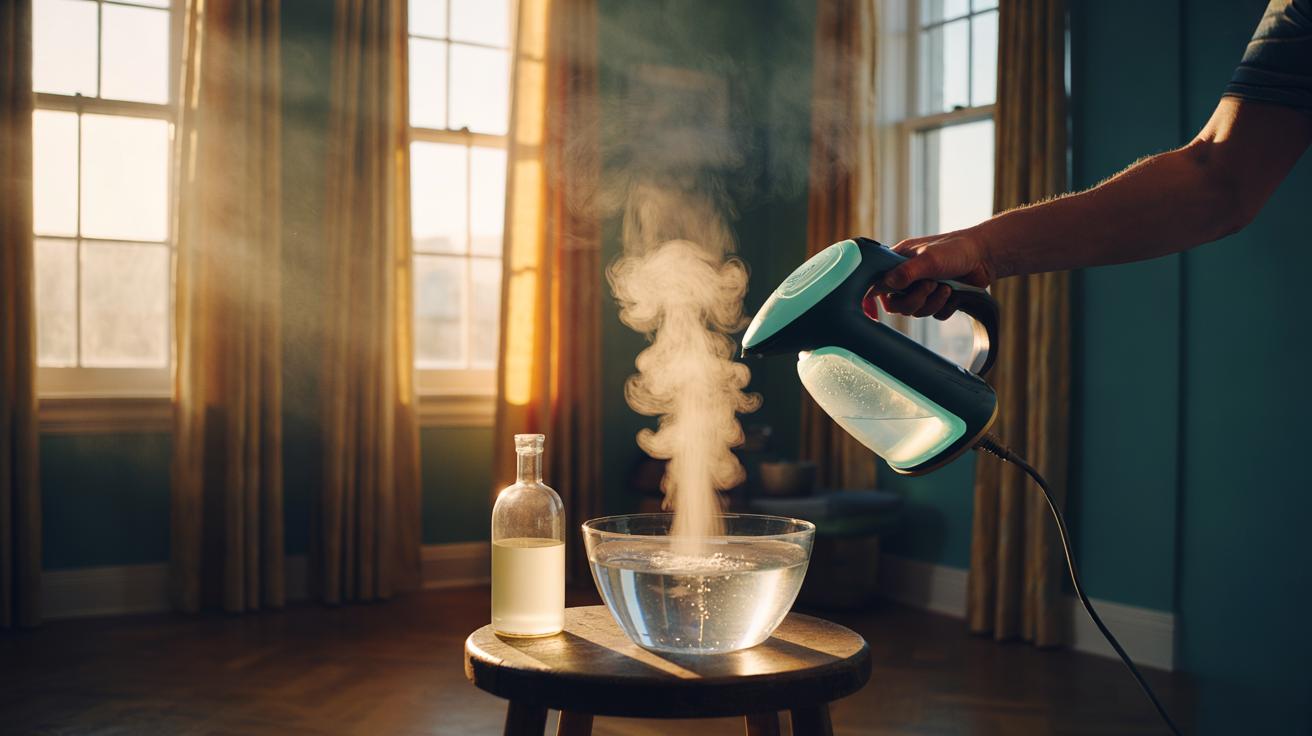
Choose your steam source. With a garment steamer, fill the tank with the diluted solution and glide the head down the hanging fabric, keeping a few centimetres distance and moving steadily. If using a kettle or pot, pour the hot mixture into a heatproof bowl placed safely beneath the hanging curtains; let the vapour rise and gently waft the fabric to expose fresh sections to the steam column.
For a shower method, place the bowl in the bathroom, hang the curtains in the doorway or on the rail nearby, and run a hot shower briefly to boost humidity. Ventilate for 20–30 minutes afterwards. The aim is to lightly bathe fibres in warm, vinegar-laced vapour—not to soak them. Finish with a cool pass of the steamer or a fan to speed drying and set the drape.
Choosing the Right Vinegar-to-Water Ratio and Setup
The ideal dilution hinges on fabric type, odour strength, and your steaming tool. Robust cottons, polyesters, and blends tolerate a stronger mix; delicate silks or viscose prefer a gentler solution and shorter exposure. Begin mild, then increase strength only if odours persist. Ensure rooms are aired yet not draughty, so steam has time to work before dispersing. Keep the steamer head moving and avoid lingering at seams or trims.
For household convenience, most UK homes will find a kettle-and-bowl or garment steamer works best, but the shower-bathroom trick is handy for renters lacking tools. Below is a quick guide to ratios and setups. Adjust times based on ceiling height and curtain thickness. Never mix vinegar with bleach or chlorine-based cleaners.
| Fabric/Goal | Vinegar:Water | Setup | Time Guide |
|---|---|---|---|
| Light cotton/poly, routine refresh | 1:5 | Garment steamer or kettle bowl | 8–12 minutes per panel |
| Heavy lined curtains, strong odour | 1:4 | Kettle bowl plus wafting | 12–18 minutes per panel |
| Silk/viscose, delicate | 1:8 | Shower steam nearby | 5–7 minutes per panel |
| After-party smoke or curry | 1:3 (short bursts) | Garment steamer, quick passes | 2 rounds, 10 minutes apart |
Safety, Fabric Considerations, and Common Mistakes
Most modern drapes are polyester or cotton blends and accept vinegar steam well, but caution is wise. Test for colourfastness on an inside seam before full treatment. Avoid prolonged steaming on acetate, delicate silk dupion, hand-painted prints, or blackout linings with foam coatings that can soften under heat. Keep the head away from glued trims and weighted hems. If your curtain has metal grommets, don’t let condensed droplets sit on them—wipe dry to prevent tarnish.
Common pitfalls include over-strength solutions, holding steam too close, and poor ventilation. A room that fails to air may trap the faint vinegar note longer than necessary; counter this with a cross-breeze for 20 minutes. Do not add essential oils to a steamer tank—many units dislike oils; instead, place a few drops in the bowl beside the hot water. Crucially, never combine vinegar with bleach or ammonia-based products due to hazardous fumes.
Used wisely, vinegar steam is a nimble maintenance trick that revives curtains between deep cleans, trims dry-clean bills, and keeps living spaces smelling calm and clean. It respects fabric structure, works around busy schedules, and suits UK homes where radiators, pets, and cooking can quickly dull textiles. With mindful ratios, steady technique, and honest ventilation, you’ll see fresher drape and softer hang in under an hour. Will you build a quick steaming ritual into your weekly reset, or save it as your secret weapon after a dinner party?
Did you like it?4.6/5 (27)