In a nutshell
- 🍋 Use lemon juice to disrupt ant pheromone trails; its citric acid and peel oils like limonene mask food scents and create a deterrent barrier.
- 🧴 Mix an effective spray at 1:1 (lemon:water), steep zest for extra punch, use neat juice on non-porous areas, and store fresh (remake every 3–5 days) for reliable results.
- 🧼 Clean first, then defend: wipe trails with soapy water, apply lemon along entry points, refresh after mopping, and keep food in airtight containers; mop floors at 1:4 lemon solution for a background deterrent.
- ⚠️ Protect surfaces and health: avoid marble, limestone, terrazzo, unsealed grout, test hidden spots, keep away from electrics, and never mix lemon juice with bleach.
- 🛠️ If ants persist, layer tactics: try white vinegar, food‑grade diatomaceous earth, seal gaps, trim outdoor bridges, and consider professionals—lemon is a strong first line, not a cure-all.
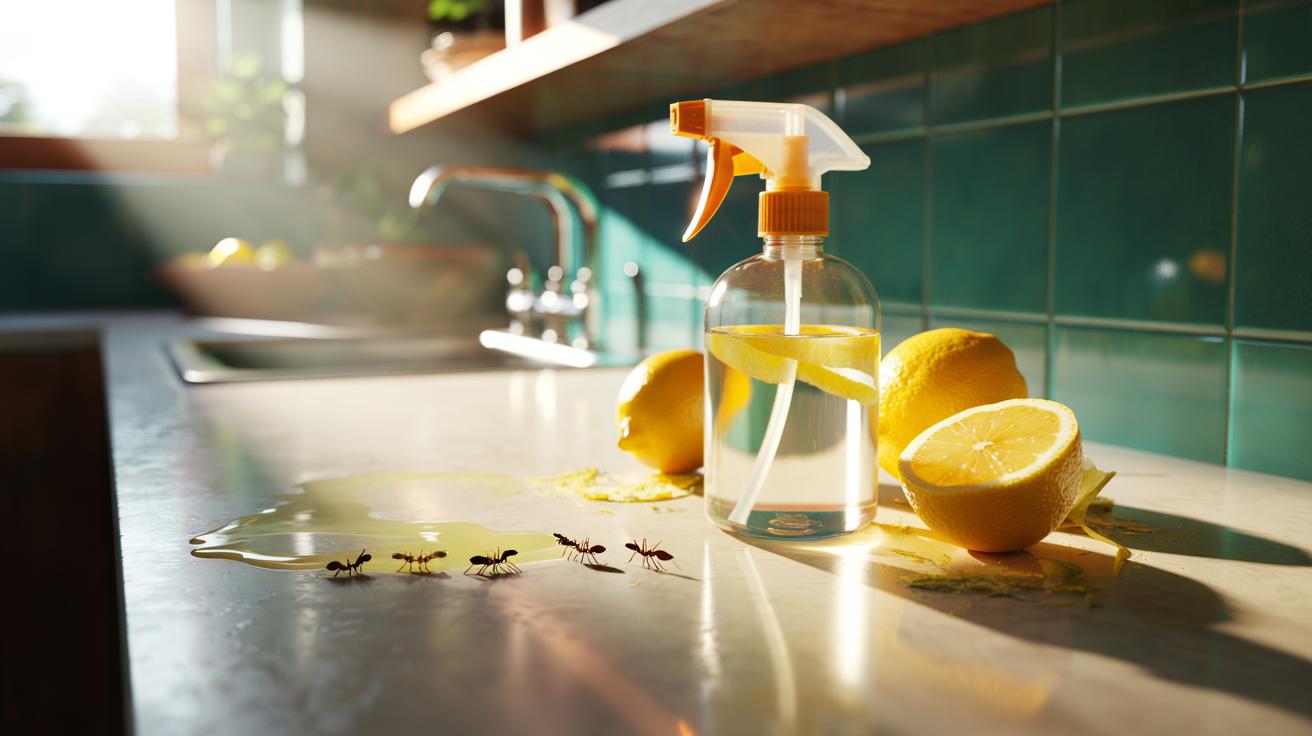
Your kitchen is the heart of the home, yet nothing spoils a calm morning like a column of ants streaming towards the sugar bowl. There’s a swift, low-cost fix already in your fruit bowl: lemon juice. Its bright scent, sharp acidity, and natural oils create a hostile environment for ant scouts, which means fewer recruits and less hassle. No harsh chemicals. No lingering stains. Just a clean, citrus defence. Used correctly, lemon juice can interrupt the ants’ traffic system and send them elsewhere. Here’s how to deploy it with confidence, protect surfaces, and keep food areas hygienic while you repel invaders the natural way.
Why Lemon Juice Repels Ants
Ants organise their world through pheromone trails. Those invisible chemical lines guide workers to crumbs, bins, and sticky spills. Break the trail, and you break the march. The citric acid in lemon juice scrambles these signals, while the fresh, dominant odour masks any edible clues you might have missed. On top of that, oils in the peel—especially limonene—act as a mild natural deterrent. Ants dislike crossing strongly acidic, fragrant zones. It’s a double whammy: disrupted communication and a barrier they’d rather avoid.
There’s practicality too. Lemon juice is inexpensive, easy to replenish, and safe around most food-prep spaces when properly diluted. It evaporates cleanly, leaving a zesty, hygienic feel. You’ll still need decent housekeeping, of course, because ants are relentless when they find a reliable food source. But with prompt cleaning and targeted lemon application, you turn your worktops into no-go territory. Cheap. Effective. Immediate. That’s what most households need when ants appear without warning.
How to Prepare an Effective Lemon Spray
For a standard repellent, mix freshly squeezed lemon juice with water 1:1 in a clean spray bottle. Shake well. For extra punch, add strips of zest and let them steep for 30 minutes before straining; this boosts citrus oils that ants dislike. Use undiluted juice on non-porous areas (tile, sealed laminate) for stubborn trails, then wipe dry. Always test a hidden patch first. Never spray acids on marble, limestone, or unsealed stone—etching is permanent. Label your bottle and make small batches; freshness matters. Store in the fridge and remake every three to five days.
| Method | Dilution | Where to Use | Refresh Rate | Notes |
|---|---|---|---|---|
| Everyday Spray | 1:1 (juice:water) | Sealed worktops, tiles, skirting | Daily or after cleaning | Wipe residue to avoid stickiness |
| Heavy-Trail Wipe | Neat | Non-porous, non-stone surfaces | Immediately, then again in 24 hrs | Test first; rinse if needed |
| Zest-Infused | 1:1 after steep | Door thresholds, windowsills | Every 1–2 days | Strain well to prevent clogging |
Apply along entry points, under appliances, around the bin rim, and across the base of cupboards. Reapply after mopping or any spill. Consistency keeps ants guessing, and it’s far safer than heavy-duty sprays where food is prepared.
Using Lemon Barriers and Cleaning Routines
Start by locating the line of march. Wipe it away with a cloth dipped in warm, soapy water, then follow with your lemon spray to erase lingering signals. Hit door thresholds, windowsills, and micro-gaps around pipes. For fiddly crevices, dampen cotton buds with lemon juice and dab generously. Place thin strips of fresh peel at recurring entry points for a day, then bin them—don’t leave peel to dry out or attract fruit flies. The scent barrier works best when refreshed regularly.
Next, strengthen the routine. Sweep crumbs, rinse sticky mugs, and decant sugar and cereal into airtight containers. Keep your bin closed and the rim wiped with diluted lemon. Mop the floor weekly with a mild lemon solution (1:4 juice to water) to maintain a background deterrent while keeping the kitchen smelling clean. Fix gaps with silicone, especially along skirting boards. Consistency beats intensity: small, repeat steps outsmart the colony over time. Within days, trails should dwindle—or vanish.
Safety, Surfaces, and When to Try Alternatives
Acid and stone are a bad mix. Avoid lemon juice on marble, limestone, terrazzo, and unsealed grout. It can etch, dull, or pit the surface. Test all finishes—painted wood, stainless steel, varnished cabinets—on a hidden patch. Wear gloves if you have sensitive skin, and keep sprays away from electrics. Never mix lemon juice with bleach or chlorine products—combining acids and bleach releases dangerous gases. If you’ve used bleach recently, let the area air thoroughly before any citrus cleaning.
If ants persist, you may be dealing with an established nest close by. Increase frequency for a week, then reassess. Try complementary natural tactics: wipe trails with white vinegar, dust diatomaceous earth (food-grade) along inaccessible cracks, and seal entry points properly. Outdoors, trim vegetation that touches walls. If you spot significant nesting inside the structure, call a professional and mention your preference for low-toxicity methods. Lemon juice is a powerful first line, but structural issues require broader action.
Used with a clear plan—clean, disrupt, and deter—lemon juice gives you a swift, family-friendly way to reclaim your kitchen from ants. It’s easy to deploy, pleasant to live with, and kinder to the environment than many sprays. Stick to safe surfaces, keep food sealed, refresh the barrier, and the results are striking. If the colony tests your patience, layer tactics and tighten up housekeeping to starve the scouts of rewards. What part of your kitchen will you treat first, and how will you build a routine that keeps ants out for good?
Did you like it?4.5/5 (29)