In a nutshell
- 🧪 Science: Lemon’s citric acid lowers pH to disrupt bacterial membranes and proteins, while salt exerts osmotic stress and abrasion to break up biofilm—an effective surface-level clean.
- ✨ Whitening: The effect is stain lifting and chelation, not true bleaching; it brightens plastic and wooden boards by removing pigments, oils, and odours.
- 🧽 Method: Sprinkle coarse salt, scrub with a halved lemon, leave 5–10 minutes, then rinse hot and dry—upright for wood, towel/dishwasher for plastic; avoid soaking wood and never mix acid with bleach.
- 🛡️ Safety: After high-risk foods (raw poultry, minced meat, eggs), use hot soapy washing plus a dishwasher cycle or food-safe sanitisers like diluted bleach or hydrogen peroxide; colour-code boards to prevent cross-contamination.
- 🪵 Maintenance: Keep boards clean, dry, and oil wooden ones periodically; replace heavily gouged boards since deep cuts shelter pathogens—the goal is a safer, not just whiter, surface.
In British kitchens, the humble pairing of lemon and salt has a loyal following for rescuing stained chopping boards and freshening up worktops. The trick feels almost alchemical: slice a lemon, scatter coarse salt, scrub, and watch the surface brighten. Behind that domestic magic sits solid science. The lemon’s citric acid drops the surface pH, and salt adds both abrasion and a drying effect that microbes dislike. While it is no substitute for rigorous sanitising where raw meat is concerned, this method is a practical, low-cost way to lift stains, tame odours, and reduce everyday bacterial load. Used correctly, lemon and salt can refresh boards without harsh chemicals.
Why Lemon and Salt Work on Chopping Boards
Cutting through the folklore, the key lies in chemistry and physics. Lemon juice contains citric acid, which creates a low pH environment that many bacteria cannot tolerate. Acid can disrupt bacterial cell membranes, denature proteins, and chelate metal ions that microbes use to stabilise enzymes. Meanwhile, salt exerts osmotic pressure, drawing water out of bacterial cells, slowing their metabolism and reducing survival. On a board, especially one with shallow cuts, that combination reduces microbial viability while loosening residue.
There’s also a mechanical element. Coarse salt crystals act as a mild abrasive, scouring away biofilm—the thin, slippery matrix that lets bacteria cling to surfaces—and lifting pigments and lipids embedded in the grain or micro-scratches. The acid helps solubilise residues, including light mineral and tannin stains, so the scrub carries them off with the brine. This is a surface-level clean that reduces risk and revives appearance, not a hospital-grade disinfection.
Whitening Power: Stains, Odours, and Biofilm Removal
The “whitening” many notice is primarily stain lifting rather than bleaching in the chemical sense. Citric acid binds metal ions and breaks down colour compounds from coffee, beetroot, turmeric, and wine. Paired with salt’s gritty action, it removes the dulled layer where stains and oils accumulate. On plastic boards, this can lighten yellowing or colour transfer; on wooden boards, it brightens by clearing oxidised fats and fine debris from the surface fibres. The fresh lemon scent also masks odours while the acid neutralises amines from fish and garlic.
The anti-odour effect has a microbial dimension too: by disrupting the biofilm, you physically sweep away odour-causing bacteria and the matrix that shelters them. Still, deep cuts may harbour residues beyond the reach of a quick scrub. If a board is deeply scarred, no natural cleaner can fully penetrate those grooves, and replacement becomes a food-safety decision rather than a cosmetic one.
Safe Home Method: Step-by-Step and What to Avoid
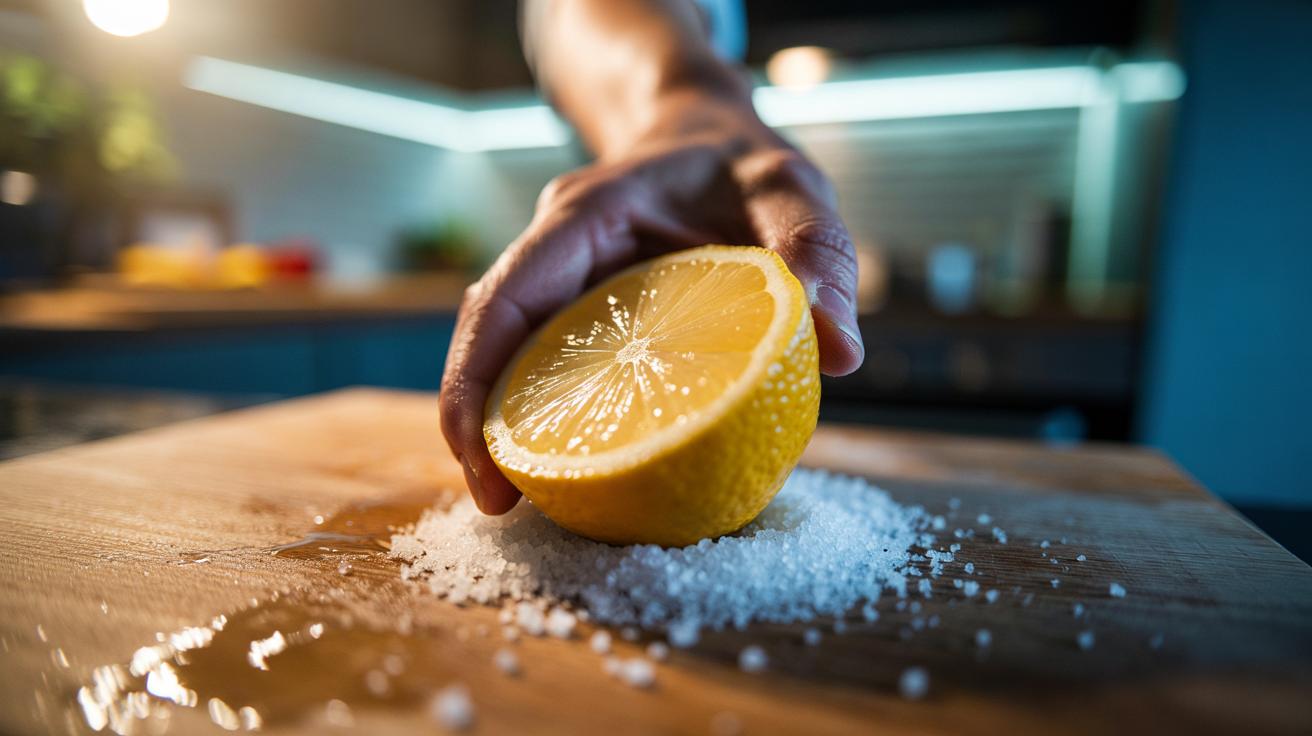
Scatter a tablespoon of coarse salt over a damp board. Halve a lemon and use the cut face as a scouring pad, squeezing as you scrub to release juice. Work with the grain on wood to avoid lifting fibres. Focus on stained areas and knife marks. Leave the citrus-salt slurry on the board for 5–10 minutes for a low-pH contact period, then rinse with hot water and dry thoroughly. For wood, stand the board upright to air-dry; for plastic, towel dry and, if possible, follow with a hot cycle in the dishwasher for a stronger hygienic finish.
Avoid prolonged soaking of wooden boards; it can swell fibres and promote warping. Don’t mix lemon with chlorine bleach—acids can release chlorine gas. Keep expectations realistic: lemon and salt are excellent for day-to-day refreshes but not for high-risk contamination. Boards used for raw poultry, minced meat, or offal should be sanitised with proven methods or reserved solely for those foods and cleaned immediately after use.
When to Use Stronger Sanitisers and How to Choose
Domestic cooks juggle convenience and safety. If your board has handled raw chicken, burgers, or eggs, aim beyond cosmetic cleaning. The UK’s food safety guidance supports hot, soapy washing followed by either a dishwasher cycle (where heat and detergent disrupt biofilms) or a food-safe sanitiser. Sodium hypochlorite (household bleach, correctly diluted), hydrogen peroxide, or certified kitchen sprays are appropriate for plastic boards that tolerate chemicals. Wooden boards are more delicate: use brief contact times with milder agents, then rinse and dry well. Colour-coded or separate boards for raw and ready-to-eat foods remain a simple, effective barrier against cross-contamination.
Remember that natural acids are not sporicidal and may underperform on heavy contamination. Evaluate by surface type and task: plastic copes with stronger sanitisers and dishwashers; wood benefits from swift cleaning, thorough drying, and occasional re-oiling to keep fibres sealed. Replace boards that are heavily gouged; deep channels shield pathogens from any cleaner. The goal is not just a whiter board, but a safer one.
| Method | What It Does | Best For | Typical Contact Time | Cautions |
|---|---|---|---|---|
| Lemon + Salt | Lowers pH, abrasively lifts stains, disrupts biofilm | Routine refresh; wood and plastic | 5–10 minutes | Not sufficient for high-risk raw meat contamination |
| Dishwasher (Hot Cycle) | Heat and detergent sanitise and degrease | Plastic boards | Full cycle | Can warp wood |
| Bleach (Diluted) | Broad-spectrum sanitising, oxidises residues | Plastic boards after raw meat | 1–5 minutes | Rinse well; avoid mixing with acids |
| Hydrogen Peroxide | Oxidative sanitising and stain lift | Light-coloured plastics | 1–10 minutes | May lighten dyes; store safely |
Lemon and salt earn their place by pairing everyday chemistry with visible results: lower pH plus abrasion means fewer microbes and fewer stains. Yet the kitchen is an ecosystem of risks, and method matters. For low-risk produce and daily upkeep, citrus and salt shine. For raw animal products and deep grooves, use heat, approved sanitisers, and—when wear sets in—a new board. Clean, dry, and separate remains the mantra that keeps households safer. How will you refine your own board routine to balance natural cleaning with the right level of sanitising for the way you cook?
Did you like it?4.4/5 (28)