In a nutshell
- 🍋 The lemon peel simmer releases citrus steam rich in terpenes (limonene, citral) that mask and dampen kitchen odours by reducing the volatility of VOCs.
- 🔬 It’s a blend of chemistry + humidity: aromatic vapour competes with sulphur- and amine-based smells while moist air helps odours settle, cutting through fish, frying, and curry scents.
- 🥄 How-to: use a saucepan half-filled with water, lid off, gentle simmer for 10–30 minutes, top up as needed, place near the source, favour stainless steel, and supervise; optional cloves, avoid big vinegar/bicarb mixes.
- ⚖️ Comparisons: lemon steam offers quick, pleasant freshness; vinegar is potent but sharp; baking soda is slow; an extractor fan vents air—best results come from pairing citrus steam with extraction.
- 🌍 Low-waste habit: repurpose peels (freeze extras), keep energy use modest, reuse cooled lemon water for pre-soaking and board refresh, then compost—guided by the aroma + humidity principle.
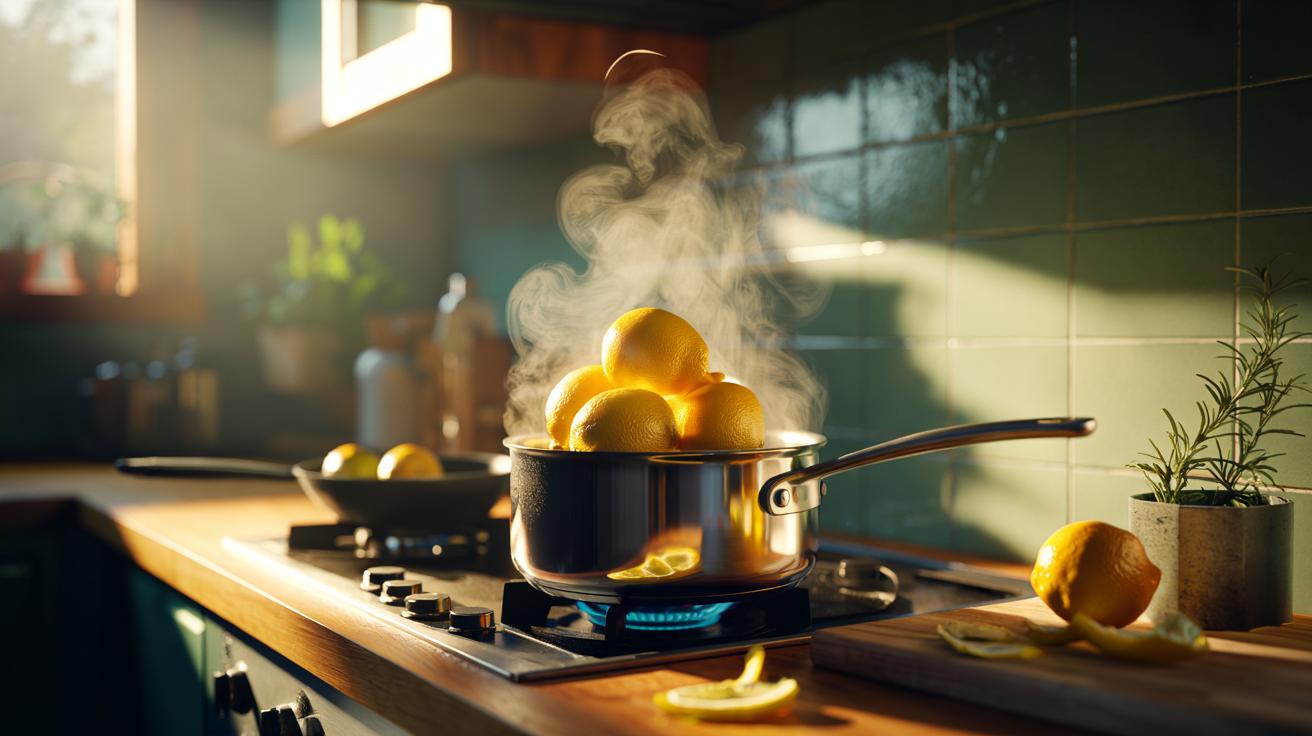
Fried bacon, seared mackerel, garlicky stir-fries: delicious on the plate, less welcome lingering in the curtains. A simple, low-tech trick from British home cooks is the lemon peel simmer, which sends a plume of citrus steam through the kitchen and seems to erase stubborn smells. It isn’t magic but chemistry and humidity working in tandem. By simmering leftover peels, you release aromatic compounds that mask and neutralise odours, while moist air helps pull smelly molecules out of circulation. For a small cost and almost no effort, you can turn scraps into a whole-room refresh. Here’s how it works, how to do it well, and when it beats other methods.
The Science of Citrus Steam
Cooking odours are driven by volatile organic compounds (VOCs) that readily evaporate and cling to textiles and paintwork. Lemon peel is rich in limonene, citral, and other terpenes. When gently heated in water, these aromatics evaporate with the steam, creating a fragrant vapour that competes for the same airspace as malodorous molecules. Many food smells are sulphur- or amine-based; citrus terpenes can soften their sharp edges by masking, while increased humidity reduces volatility and helps odours deposit onto cooler surfaces for easier removal.
Mild acidity from the peel may also help tame alkaline odours, and warm moisture accelerates dispersion, pushing fresh air around corners a candle can’t reach. The humid, terpene-rich plume doesn’t just cover smells; it changes how strongly they evaporate and how your nose perceives them. That explains why a pot of lemon steam can cut through fish night, curry day, or last night’s fry-up faster than opening a window alone.
How to Simmer Lemon Peels Safely and Effectively
Use a small saucepan, half-filled with tap water, and add the peels of one or two lemons. Keep the lid off and set the hob to a steady simmer—not a rolling boil—to produce constant steam without waste. Ten minutes will freshen a compact flat; 20–30 minutes treats open-plan spaces. Top up water as needed. Gentle heat is key: too fierce and you scorch; too low and you won’t move air or aromatics. Orange and lime peels work too, though lemon’s brighter profile tackles fish and frying odours especially well.
Position the pan centrally or near the source of the smell. Run the extractor on low to circulate air rather than vent everything outdoors immediately. Add a few cloves for warmth if you like; avoid mixing large slugs of vinegar or bicarbonate, which can muddle aromas or fizz unnecessarily. Choose stainless steel over bare aluminium, as acidic water may stain. Keep an eye on the pot, particularly on gas hobs, and crack a window if the room feels heavy.
Comparing Citrus to Other Odour Fixes
Different solutions shine in different situations. The table below outlines what each method does, with strengths and trade-offs to consider in a busy UK kitchen.
| Method | How It Works | Pros | Cons |
|---|---|---|---|
| Lemon Peel Simmer | Releases terpenes via steam; masks and dampens VOCs | Uses scraps, pleasant scent, quick effect | Needs supervision, minor energy use |
| Vinegar Simmer | Acetic acid bonds with alkaline odours | Very effective on smoke and fish | Sharp smell during use, less “cosy” |
| Baking Soda Bowls | Passive adsorption of acidic odours | Cheap, safe, no heat | Slow, limited to small spaces |
| Extractor Fan | Physically vents air outdoors | Prevents buildup at source | Noise, heat loss, not always powerful |
Use citrus steam for fast, friendly air; pair it with extraction during cooking for best overall control. If odours are heavy—post-grill smoke or burnt-on mishaps—start with ventilation, then simmer peels to reset the room’s character. For lingering bin smells, baking soda nearby quietly supports the background.
Sustainability and Kitchen Economy
The lemon peel simmer excels as a low-waste habit: it’s a second life for what many would bin. Save peels after juicing for dressings or tea, then freeze them until needed. A shallow pot and a low hob setting use modest energy, especially on induction. Because the lid stays off to release vapour, time your simmer for when you’re already in the kitchen so heat doubles as gentle warmth. Afterward, the cooled lemon water can pre-soak greasy utensils or freshen chopping boards before composting the peels.
There’s a small bonus in habit-building. Keeping a “peel pot” makes you more likely to tackle smells immediately, which prevents fabrics from absorbing them in the first place. Try seasonal twists—rosemary sprigs in winter, bruised mint in summer—without turning it into potpourri overload. The guiding principle remains simple: aroma plus humidity, delivered steadily, outperforms sprays that briefly spike scent and then fade.
A pot, some water, and yesterday’s lemon: that’s all it takes to shift the mood of a room and the air you breathe. Citrus steam changes both the chemistry and the perception of odours, leaving a clean, bright finish rather than a heavy perfume. The technique is frugal, safe, and satisfying to watch as curls of scented vapour reclaim your kitchen after the sizzling stops. Once you’ve tried it, even the fiercest fry-up loses its staying power. What combination of peels and herbs will you experiment with next to create your signature post-cooking freshness?
Did you like it?4.4/5 (27)