In a nutshell
- 📰 Newspaper’s cellulose fibres absorb and spread liquid via capillary action, creating layered protection that catches drips and prevents leaks.
- 🧱 Practical method: crumpled base for airflow, flat sheets for wicking, side cuff as a secondary barrier, plus a sprinkle of bicarbonate of soda for odour control.
- ⚖️ Materials compared: newspaper balances cost and performance; kitchen roll is fast but short-lived; cardboard adds structure; paper cat litter boosts capacity; compostable liners need a paper pad.
- 🌿 Hygiene and sustainability: modern newsprint uses soy/water-based inks, works with many UK council food-waste schemes, and reduces reliance on double-bagging.
- 🧪 Performance tips: wrap wet scraps, refresh layers when damp, avoid glossy pages and hot oils, and use a hybrid layering approach for wheelie bins and kitchen caddies.
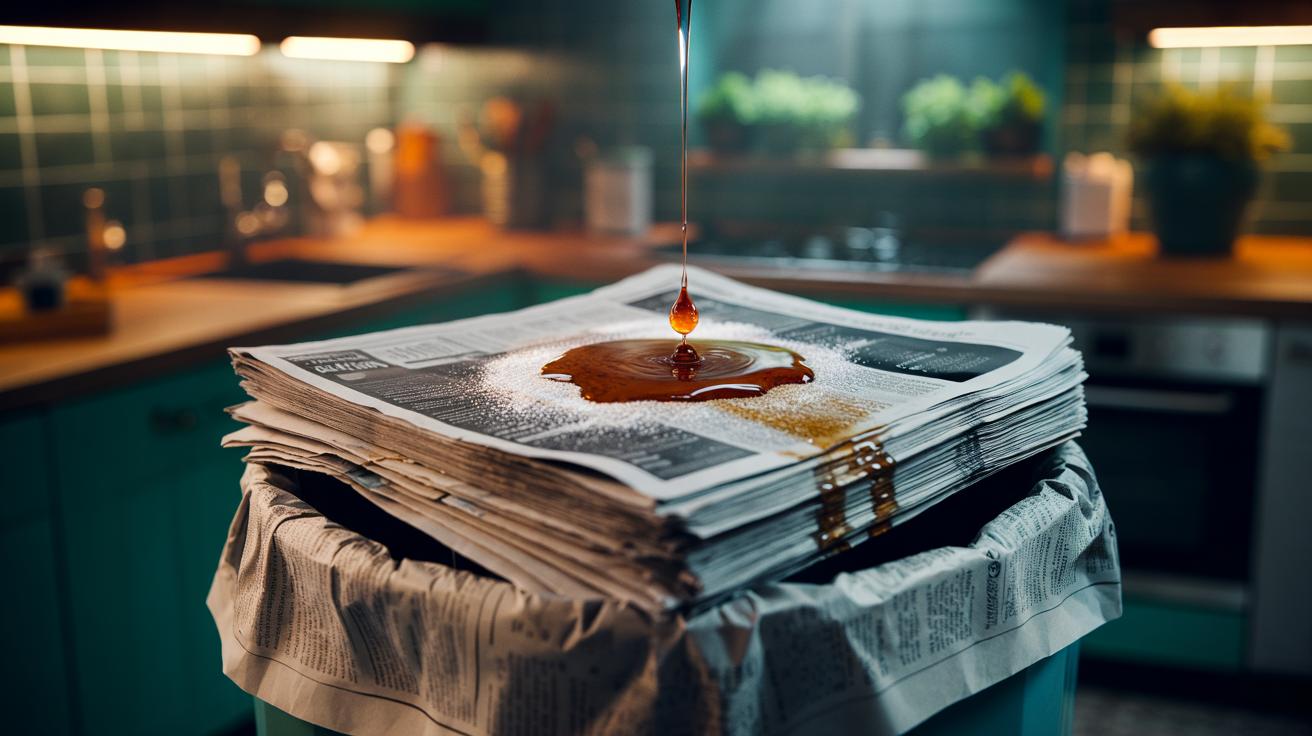
Householders across the UK have rediscovered a quietly brilliant trick: lining kitchen caddies and wheelie bins with old newspaper to catch drips and stop leaks. The method works because the paper’s cellulose fibres soak up liquid and slow its movement, protecting bin bags and floors from grim leachate. It also tames smells, adds a little cushioning against punctures, and gives a second life to yesterday’s news. It’s a low-cost, low-tech fix that makes messy rubbish days less stressful. Here’s how the layers work, why they’re so effective, and the best way to build them—plus what to use when newspaper is scarce.
How Newspaper Layers Stop Leaks: The Science of Wicking
Newspaper is a dense web of cellulose, riddled with microscopic pores. When liquid hits this network, capillary action pulls it along tiny channels, spreading it out and locking it into the fibre structure. The effect lowers the chance of one concentrated drip breaking through a bag seam because the liquid is dispersed across a wider area. Stack a few sheets and you increase both absorption capacity and the distance the liquid must travel, slowing it enough for evaporation or safe disposal. That layered path is your invisible barrier between a soggy bin base and a clean floor.
Texture matters. A bottom cushion of lightly crumpled pages creates air pockets that improve porosity and hold liquid in place, while flat sheets above spread moisture laterally. This dual structure resists compression under the weight of rubbish, helping the paper keep wicking even as the bin fills. Water and water-based sauces wick fastest; oils move more slowly but still bind to fibres. In practice, newspaper can delay or prevent a breach for hours, buying time until collection. The more evenly you spread the load, the longer the layers keep working.
Step-by-Step: Layering a Bin to Catch Drips
Start with a dry bin or caddy. Add a base “spring” of two to three sheets, loosely crumpled to cover the bottom. Lay three to five flat sheets on top, crosswise like a lattice, extending slightly up the sides to form a cuff. If you use bin bags, tuck the cuff between bag and bin wall to create a secondary barrier. Sprinkle a teaspoon of bicarbonate of soda over the top layer for odour control. For food waste, add a final sheet and pierce a few tiny holes near the bin’s lip to encourage airflow without compromising containment. Good air movement keeps the paper active and smells down.
As you fill the bin, wrap wet scraps in a half-sheet before tossing. Swap the paper when it feels cool and damp or after strong spills—do not wait for a breakthrough. Avoid glossy magazine pages and heavily inked inserts that resist wicking. For wheelie bins, scale up: a base of flattened cardboard, then a pad of newspaper, then the bag. In hot spells, refresh the soda and add coffee grounds to mask odours. Consistency—little and often—beats a single thick wad of paper.
Comparing Absorbent Options for Bins
Newspaper is not the only absorber, but it hits a sweet spot of cost, availability, and compostability. Kitchen roll wicks quickly but turns to mush; cardboard is durable but slower to start. Cat litter excels at trapping fluids and smells, though it adds weight and cost. Compostable liners provide neatness yet puncture under sharp waste unless backed by a paper pad. The table below sketches the trade-offs so you can build a layered system that suits your household.
| Material | Absorbency | Leak Control | Cost | Compostable? | Best Use |
|---|---|---|---|---|---|
| Newspaper | High (steady wicking) | Strong with layers | Free/low | Yes (most inks) | Base pad, side cuff |
| Kitchen roll | Very high (fast) | Short-term | Medium | Usually | Top layer, quick spills |
| Cardboard | Medium | Good structure | Free/low | Yes | Wheelie bin base |
| Paper cat litter | Very high | Excellent | High | Check brand | Small caddies, strong odours |
| Compostable liner | Low (barrier only) | Fair with backing | Medium | Yes | Neatness with paper pad |
| Wood shavings | High | Good | Low | Yes | Odour and oil control |
A hybrid wins: a structured base (cardboard), a wicking pad (newspaper), and a quick-grab top (kitchen roll) will outperform any single material. If you need extra capacity before collection day, add a thin sprinkle of paper-based cat litter between layers. Always keep weight in mind for manual handling and for council collection rules.
Hygiene, Odour, and Environmental Considerations
Modern UK newsprint typically uses soy or water-based inks, so newspaper layers are safe for most general and food waste systems. Check your council’s guidance: many accept paper-lined food caddies in kerbside collections. Keep liquids minimal—strain sauces and cool fats before disposal. Never pour hot oil into a paper-lined bin, as it defeats absorption and may damage containers. For pests, fold the top sheet over the day’s scraps at night to deny flies a landing spot. Replace damp layers promptly to prevent bacterial growth and lingering smells.
Disposal is simple: if your area collects food waste, the paper can go with it; otherwise, it can be binned with general waste, where it still reduces mess. In summer, refresh layers more often and ventilate bins to prevent condensation. For households aiming to cut plastic, paper backing reduces reliance on double-bagging while improving cleanliness. Small, repeatable habits make the biggest difference to hygiene and to the planet.
Turning yesterday’s paper into a quiet workhorse under your rubbish is a small act with big returns: fewer split bags, faster clean-ups, and less odour without fancy kit. The trick lies in structure—airy base, flat wicking sheets, and a light sprinkle of bicarbonate or litter where needed. It’s frugal, practical, and greener than extra plastic. With a few sheets and a minute’s care, you can keep leaks at bay week after week. What combination of layers will you try first to match your bin, your waste, and your collection routine?
Did you like it?4.7/5 (26)