In a nutshell
- 🧽 Audit & zone: Empty the cupboard, group by category, measure around pipes, and set task-based zones with a strict one-in, one-out rule to stop duplicates.
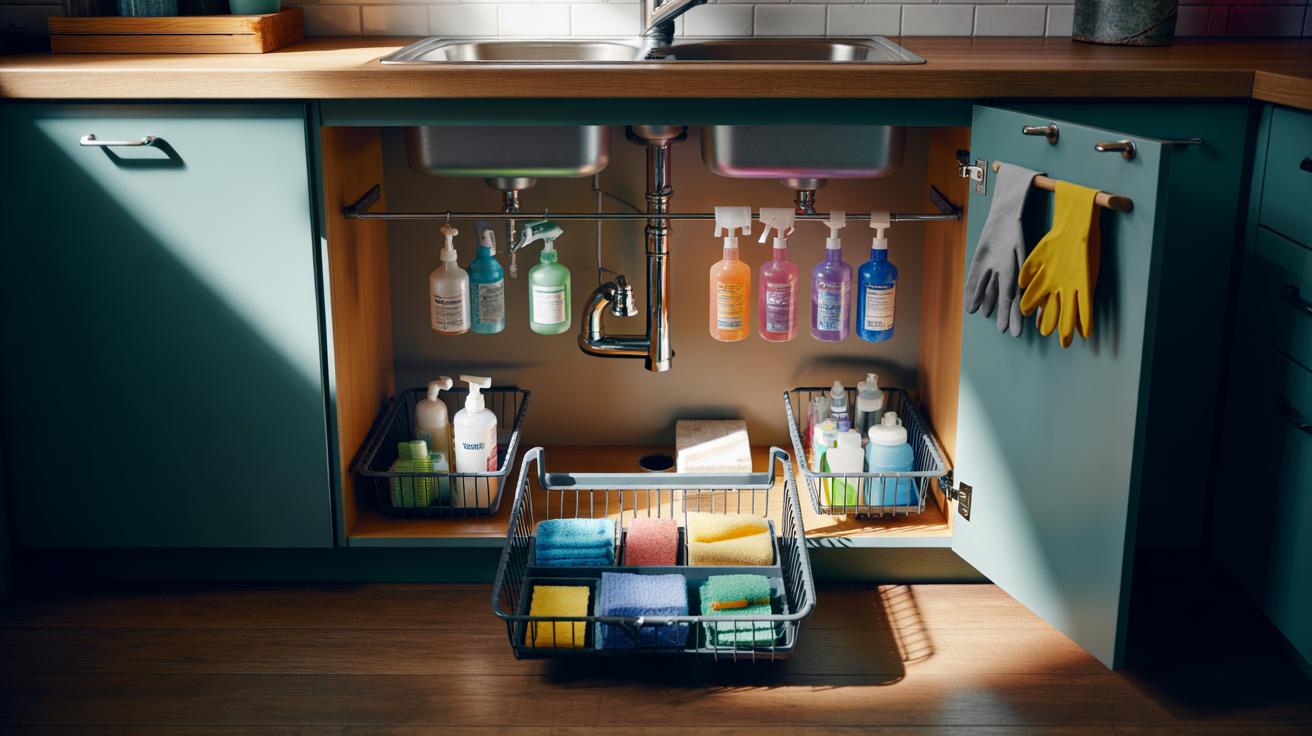
- 🧰 Use vertical space: Add a tension rod to hang sprays, U-bend-friendly shelves, pull-out baskets, door hooks and a short rail so everything slides, swings or hangs into view.
- 🏷️ Label & rotate: Keep originals or safe decants, face labels forward, apply FIFO, and use an inventory card; load a portable caddy with daily essentials for grab-and-go cleaning.
- ♻️ Safety & sustainability: Store bleach and acids separately, fit child locks, use a drip tray; switch to refills and colour-coded microfibres, and follow council guidance for disposal.
- 🔧 UK-specific smarts: Keep the stopcock clear, place heavy bottles low, manage condensation with liners/desiccants, and schedule quarterly checks for leaks and restocking.
Your kitchen cupboard under the sink shouldn’t be a black hole where sponges vanish and half-used sprays multiply. With a few deliberate moves, this cramped, pipe-filled alcove can become a calm control centre for every scrub, wipe, and polish. Think like a shopkeeper. Curate, label, and make it easy to grab, use, and return. In UK homes—where space is tight and plumbing varies—small upgrades deliver outsized results. We’ll map smart zones, show how to use odd corners, and prevent costly duplicates. The aim is simple: find every item in five seconds or less, every time.
Audit What You Own and Set Non-negotiable Zones
Begin with a ruthless audit. Empty the cupboard onto the floor, group products by category—surface sprays, bathroom cleaners, floor care, dish bits—and check expiry dates. Anything unlabeled, leaking, or unidentifiable goes. Note which items you actually finish versus ones you buy out of habit. That snapshot stops “just in case” purchases. Measure the cabinet: width, height to the lowest pipe, and depth to the back. Sketch it. Pipes, traps, and the stopcock are immovable. Mark a “no-stash” buffer around them so you can turn off the water fast.
Create zones that mirror tasks: washing-up, quick kitchen reset, deep clean, bin and recycling care. Place daily-use items front and centre; weekly or monthly behind. Keep chemicals out of children’s reach and never store poisonous products beside food or pet treats. Use a wipe-clean liner to protect the base, and a shallow leak tray beneath bottles. If you rent, take a photo before and after setup; it helps demonstrate care if there’s any damp or plumbing issue later.
Finally, decide your limits: one open bottle per product type, one in reserve at most. This “one-in, one-out” rule preserves clarity. It sounds strict. It’s freeing.
Design Smart Vertical and Pull-out Storage
Most under-sink chaos stems from dead air and awkward corners. Exploit vertical space with a tension rod spanning left to right; hang trigger sprays by their handles to free the base. Fit an L‑shaped, U‑bend‑friendly shelf that skirts the trap and doubles your surface area. Stack two shallow drawers for cloths, bin liners, and dishwasher tablets—things that vanish in deep baskets. If it slides or swings out, you’ll actually use it. That’s the rule.
Install pull-out baskets on runners so items at the back stop becoming archaeology. Consider a small turntable (a lazy Susan) for bottles you rotate often—glass cleaner, stainless polish, limescale remover—so you spin, not dig. Mount adhesive hooks on the door for gloves or a brush; add a slim file holder to park chopping-board-sized trays or spare foil and wrap. A short rail with S‑hooks can host a squeegee and scrubbing heads.
Mind plumbing clearances. Leave space around compression joints in case a plumber needs access. Line shelves with waterproof mats and keep heavy liquids at the lowest point to reduce topple risk. Label each module—“Daily Sprays”, “Floors”, “Dish Zone”—so anyone in the house can return things correctly. That shared language keeps order stable.
Label, Rotate, and Restock Without Duplicates
Once the layout works, lock it in with labels and rotation. Decant compatible products into uniform, UK-compliant labelled bottles only if safety data is preserved; otherwise keep originals. Face labels outward. Practice FIFO—first in, first out—so older stock gets used before newer. Tape a simple inventory card inside the door and tick when you open the final spare. That prompt adds the item to your next shop, not five shops later when you’ve panic-bought three.
Use a portable caddy for common chores: multi-surface spray, microfibres, rubber gloves, sponge, limescale gel, and a small brush. You grab it and go—bathroom, utility, patio door—then return it to the same slot. Below is a handy snapshot to guide your setup.
| Category | Best Container | Check/Restock Frequency |
|---|---|---|
| Daily kitchen sprays | Hanging on tension rod | Weekly glance |
| Floor care | Low shelf or pull-out basket | Monthly |
| Dish and sink items | Shallow drawer near front | Weekly |
| Gloves and cloths | Labeled drawer or door hooks | After each wash cycle |
| Reserves | Clear bin, back left | When “final spare” opens |
Keep duplicates out by capping quantities: one in use, one spare. If you love multi-purpose concentrates, mark dilution ratios on the bottle neck with a waterproof pen. The aim isn’t perfection; it’s a repeatable rhythm that keeps supplies visible and ready.
Safety, Sustainability, and UK-specific Smarts
Under the sink is tempting for heat and steam, but it’s also tight and damp. Prioritise safety. Never mix bleach with acidic products like vinegar or limescale remover; store them in separate bins. Add a child safety catch to the door if little hands visit the kitchen. Keep the stopcock visible and instantly accessible—no stacking in front of it, ever. Fit an absorbent mat or drip tray to flag slow leaks before they become disasters.
Think sustainability without sacrificing performance. Switch to concentrates and refill pouches where possible; many UK supermarkets and zero-waste shops offer refills for washing-up liquid and multi-surface cleaners. Use washable microfibres and colour-code—blue for glass, green for kitchen, red for loo—so cross-contamination decreases and stockholding shrinks. When products expire or fail, consult your council’s guidance for household hazardous waste; don’t pour old solutions down drains.
Plan for British plumbing quirks: shallow units, offset traps, sometimes a fitted water filter. Choose adjustable shelves with cut-outs. Place desiccant packs to curb condensation. Keep heavier bottles (bleach, floor cleaner) on the base, light aerosols up top, and anything pressurised away from heat pipes. Mark a quarterly reminder in your phone to inspect for damp, restock essentials, and wipe liners. Small habits prevent big messes.
The payoff for an organised under-sink cupboard is everyday ease: nothing lost, nothing doubled, and every job started faster. You’ll spend less, waste less, and ditch that low-level annoyance of rummaging in the dark. Start with the audit, add vertical tools, then cement the system with labels and a simple inventory. Aim for five seconds to find, five seconds to put back. Which single change—tension rod, pull-out basket, or a labelled caddy—will you try first this week, and what will you edit out to make space for it?
Did you like it?4.4/5 (27)