In a nutshell
- 🧪 Acetic acid in white vinegar dissolves mineral build-up and aluminium-sweat complexes, making an overnight soak effective at lifting yellow sweat stains and odours.
- 👕 Stains form when aluminium salts from antiperspirants bind to sweat proteins and hard-water minerals, then get “baked in” by heat—especially in high-friction underarm zones.
- 📏 Method: patch test; mix vinegar and water at 1:3–1:4; soak 60 minutes to overnight; gently massage fibres, rinse well, wash with a biological detergent, and air-dry before heat.
- ⚠️ Safety: Never mix vinegar with bleach; avoid direct pairing with peroxide or bicarbonate; keep soaks shorter and weaker for wool and silk; check trims for acid sensitivity.
- 🌿 Prevention and results: let antiperspirant dry before dressing, ensure thorough rinsing, and repeat mild soaks if needed—an affordable, fabric-safe alternative to harsh bleaching.
Yellow sweat marks can make a crisp white shirt look tired before its time, and many households resign those pieces to the back of the wardrobe. Yet the antidote often sits on the kitchen shelf: plain white vinegar. This cupboard staple contains acetic acid, a gentle yet effective solvent that targets the chemistry behind those stubborn halos. Overnight soaking gives the acid time to loosen mineral deposits, dissolve deodorant residues, and release odours trapped in fibres. Used correctly, a vinegar soak restores fabric brightness without harsh bleaching, offering a low-cost, low-impact fix. Here’s how the science works—and how to do it with confidence at home.
Why Sweat Turns Shirts Yellow
Human sweat is mostly water, but it carries trace salts, urea, and amino acids. On its own, it generally doesn’t stain. Problems begin when sweat meets antiperspirant. Most antiperspirants rely on aluminium salts that plug pores. Those aluminium compounds bind to proteins in sweat and to fatty residues from skin and laundry products, creating insoluble complexes that lodge deep in cotton weaves. Add hard-water minerals like calcium and magnesium, and you get a perfect storm of build-up that oxidises to a yellow tint. Heat from an iron or tumble dryer can further “bake” these residues into the fibres, making them tougher to shift. The yellowing isn’t just dirt—it’s chemistry hardened by heat, which is why a simple detergent wash often falls short.
The underarm zone is a hotspot: friction compresses fibres, sebum transfers more readily, and deodorant is most concentrated there. Over time, layers of residue increase stiffness and trap odour-causing bacteria. Regular bleaching might brighten the surface temporarily but can weaken fibres, accelerate greying from mineral deposits, and fail to remove the underlying aluminium complexes. To fix the stain for good, you must dislodge the metal-protein build-up and dissolve mineral crusts. That’s where a controlled acid soak shines—powerful enough to break bonds, gentle enough for everyday fabrics when used correctly.
How a Vinegar Soak Works Overnight
White distilled vinegar (typically 5% acetic acid) lowers the pH of the soak bath, encouraging mineral dissolution and disrupting aluminium-based residues from antiperspirants. Acetic acid can solubilise calcium and magnesium deposits that make fabrics feel stiff, while also helping to loosen aluminium complexes that bind to sweat-derived proteins. The mild acidity is key: strong enough to target the alkaline-leaning build-up, gentle enough not to strip dyes from most colourfast garments. Extended contact time—60 minutes to overnight—allows the acid to penetrate the weave and lift compounds that detergent alone leaves behind. As those residues break down, odours diminish because their bacterial hosts and binding sites are dislodged.
For clarity, here’s a practical guide to ratios and timings:
| Fabric | Vinegar-to-Water Ratio | Soak Time | Notes |
|---|---|---|---|
| Cotton/Poly-Cotton | 1:3 (250 ml vinegar to 750 ml water) | 60 min to overnight | Most effective for yellow halos and stiffness |
| Linen | 1:4 | 30–90 min | Check colourfastness; avoid prolonged soaks on dark linen |
| Wool/Silk | 1:6 (well diluted) | 15–30 min | Patch test first; rinse promptly |
| Bright Colours | 1:4 | 45–90 min | Test seam for dye stability before soaking |
Always use plain white vinegar, not malt or balsamic, which can introduce dyes or sugars. After soaking, a standard wash completes the process by flushing out loosened residues. If a faint shadow persists, a second soak typically finishes the job without resorting to bleach.
Step-by-Step Method for Stain Removal
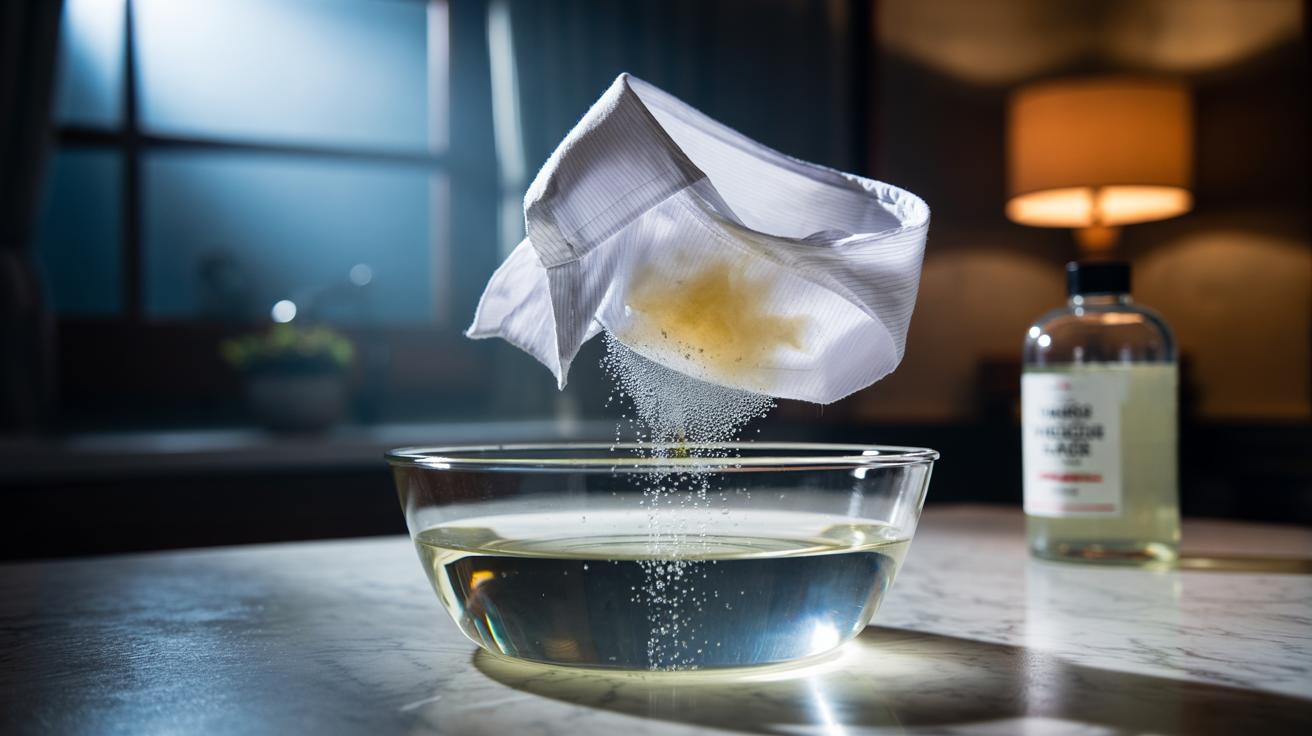
Begin with a patch test on an inside seam: dab diluted vinegar, blot, and check for colour bleed. In a basin, mix 1 part white vinegar with 3–4 parts cool water—for example, 250 ml vinegar to 750–1,000 ml water for a single shirt. Pre-rinse the underarm area in cool water to remove surface salts. Submerge the stained zones fully, pressing trapped air from the fabric so the solution can reach the fibres. For set-in yellowing, leave the shirt to soak overnight; for lighter marks, 45–60 minutes often suffices. Gently massage the fabric midway to help release build-up.
After soaking, lightly rub the area between your fingers or use a soft brush to nudge residue from the weave. Rinse thoroughly in cool water until the vinegar smell fades. Wash as usual with a quality biological detergent if the care label allows, avoiding fabric softener which can add new deposits. Air-dry first, rather than tumble-drying, so heat doesn’t set any lingering shadow. Inspect in daylight; repeat the soak if needed. For prevention, reduce antiperspirant residue by letting it dry completely before dressing and using a slightly shorter wash cycle with adequate rinsing.
Safety, Fabric Care, and Common Myths
Never mix vinegar with bleach; the reaction releases dangerous chlorine gas. Avoid combining vinegar directly with hydrogen peroxide or bicarbonate of soda in the same container—those pairings neutralise each other or form irritants. If you want to try oxygen-based brightening later, rinse the garment thoroughly and wash once before applying any separate product. Delicate fibres like silk and wool prefer shorter, weaker soaks and immediate rinsing. Check trims: real metal components can tarnish in acid; sequins and plasticised prints may be more tolerant but still need testing.
One persistent myth is that vinegar “fixes” all colour: it does not. It can help remove alkaline residues that cause dullness, but it won’t permanently set dye and can reveal pre-existing dye instability. Another misconception is that a baking soda–vinegar paste is stronger together; in reality, they largely cancel each other out. For heavy, heat-set stains, patience beats potency: repeated mild soaks protect fibres while steadily reducing the mark. If a vintage or high-value shirt shows persistent discolouration or fabric thinning, consult a professional cleaner with experience in acidic demineralisation treatments.
Used thoughtfully, a vinegar soak is a quiet workhorse: it dissolves mineral build-up, breaks down aluminium-sweat residues, and refreshes fabric without the collateral damage harsh bleaches risk. It’s frugal, widely available, and adaptable to most wardrobes when you respect fabric types and rinse thoroughly. Next laundry day, try the method on one tired white tee and judge the result in daylight. When a simple acid bath rescues your favourite shirt overnight, it’s hard to argue with the chemistry. Which garment in your wardrobe would you revive first—and what result would surprise you most?
Did you like it?4.6/5 (22)