In a nutshell
- 🧤 The rubber glove trick boosts friction via viscoelastic texture, increasing real contact area and delivering more torque with the same effort.
- 🔧 Step-by-step: wear nitrile, latex, or silicone glove, stabilise the jar, press through the heel of your hand, twist anticlockwise, and prioritise safety over force.
- 🌡️ For stubborn lids, add grip with an elastic band or second glove, run warm water over the metal, or gently vent a vacuum seal with a spoon before twisting.
- 🧪 The science: static friction equals coefficient times normal force; rubber raises the coefficient and channels moisture, making slip less likely across different materials.
- 🏠 Practical takeaway: it’s cheap, low-risk, and kinder to wrists; keep surfaces dry, clean threads after opening, and store a texture-rich helper for reliable grip every time.
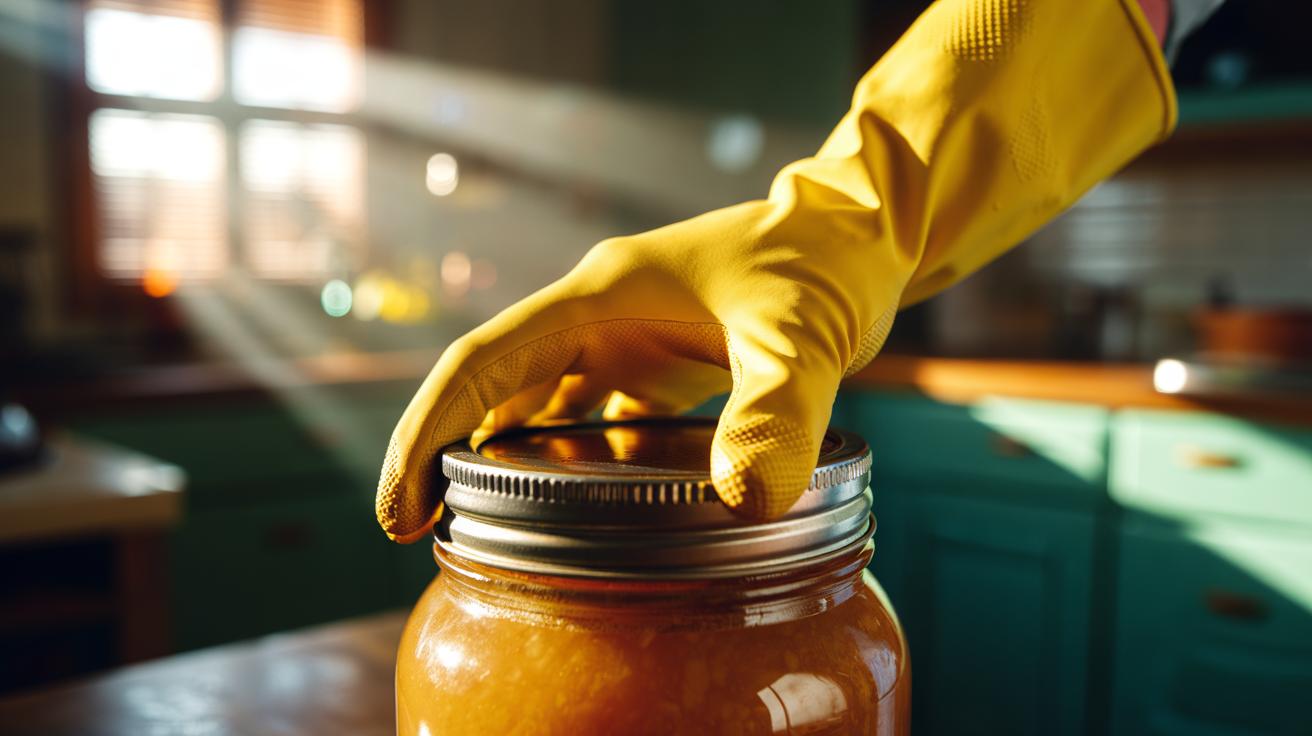
Every kitchen has its villain: the jar that refuses to yield. The simplest remedy is hiding in plain sight — a humble rubber glove. Slide the glove over the lid and your hand, and the lid that felt welded shut often twists free in seconds. The secret isn’t brute force; it’s texture and friction. A thin layer of rubber can multiply your grip without straining wrists or resorting to risky hacks. Here’s why this works, how to do it safely, and what to try if the vacuum seal still won’t blink. With a little science on your side, stubborn jars stop being drama and start being routine.
Why Texture Transforms Grip
The rubber glove trick succeeds because of the way soft, textured materials interact with hard, smooth metal. Jar lids are often lacquered steel with a low surface roughness; bare skin can slide at the first hint of condensation or oil. Rubber is viscoelastic: it deforms around microscopic bumps on the lid, increasing the real area of contact. That deformation, plus rubber’s high coefficient of friction, raises the maximum shear force your hand can apply before slipping. More contact plus higher friction equals more usable torque for the same effort.
Grip is ultimately about torque: turning power equals tangential force multiplied by lid radius. A glove lets you push harder without slipping by increasing normal force safely — you press down and grip the lid, and the rubber holds. The glove’s light texture channels away moisture and tiny slicks of oil, like a tyre sipes on wet tarmac. This is why a thin washing-up glove often beats thick towels: rubber grips while cloth polishes. The result is control, not crush, and a clean, confident twist.
How to Use the Rubber Glove Trick Step by Step
Pick a clean, dry nitrile, latex, or silicone glove. Slip it over your dominant hand, then stretch the palm across the lid so the glove’s texture contacts as much metal as possible. With your other hand, stabilise the jar: wedge the base against the worktop corner or hold it with a damp tea towel to stop the glass rotating. Press down through the heel of your hand to boost normal force, then twist anticlockwise. You want firm, steady pressure — no jerky motions that risk a slip.
If the lid’s knurled edge is sharp, fold an extra layer of glove over the rim. Keep the glove dry; moisture can halve friction. For sticky preserves, wipe the lid first to remove sugar film. If your wrists are sensitive, hug the jar close to your body and turn from the shoulder to spread the load. Never smack glass against hard surfaces or use knives as levers — chips and sudden breaks are a real hazard. Once open, rinse the threads and close gently to prevent the next struggle.
When the Lid Still Won’t Budge: Add-Ons and Alternatives
Some lids resist because of a strong vacuum seal or dried residues acting like glue. Keep the glove on and try a wide elastic band around the lid: rubber-on-rubber raises friction again. Brace the base with a second glove for a two-point hold. Run warm water over the lid (not the glass) for 10–20 seconds so metal expands slightly; dry thoroughly and twist. A tiny tap around the rim with a wooden spoon can break crystallised sugars without stressing the glass.
If vacuum is the culprit, slip the edge of a teaspoon under the lid lip and lift gently to vent; you’ll often hear the tell-tale hiss. Commercial jar openers — wall-mounted grips, rubber discs, or ratcheting wrenches — cost £5–£15 and are friendly for arthritic hands. Avoid extreme heat or freezing; thermal shock can crack glass. Choose the least forceful method first: improving grip is safer than escalating leverage. With these add-ons, most jars give way with minimal effort and no drama.
What Science Says About Friction and Grip
Static friction does the heavy lifting. Before a surface starts sliding, the maximum resistive force is roughly the coefficient of friction multiplied by the normal force. Rubber lifts that coefficient and tolerates higher load without slipping. On a typical 82 mm jam jar, every extra newton of tangential force translates directly into more torque at the lid’s radius — often the difference between stuck and turning. Improving friction is often more effective than simply pushing harder.
Material choice matters: nitrile is thin and grippy, latex conforms well, and silicone excels on wet lids. Texture is equally vital; fine patterns maximise contact while channeling away moisture. Keep surfaces clean and dry to maintain high friction, and apply pressure through the heel of your hand to spread load comfortably. Pairing the right material with steady technique multiplies your advantage without risking injury. Here’s a quick snapshot of typical behaviours to guide your choice.
| Material | Texture | Approx. Coefficient of Friction (dry on metal) | Best Use |
|---|---|---|---|
| Nitrile glove | Fine, matte | 0.7–0.9 | Everyday lids; precise feel, good tear resistance |
| Latex glove | Smooth to light texture | 0.6–0.8 | Conforms well; avoid if allergic |
| Silicone mat/disc | Grippy, patterned | 0.9–1.2 | Wet or oily lids; high-friction assist |
| Elastic band | Ribbed | 0.7–1.0 | Quick friction boost on smooth rims |
| Tea towel | Woven, absorbent | 0.3–0.5 | Base stabilising; limited on slick metal |
The rubber glove trick turns a moment of kitchen frustration into a quick win by harnessing simple physics: more friction, more torque, less strain. It’s inexpensive, safe when used calmly, and kinder to wrists than brute force. Texture is the quiet hero, converting ordinary effort into reliable grip even on slick, stubborn lids. Next time a jar digs in its heels, reach for a glove before you reach for tools. From pickles to pasta sauce, the right material and a steady twist make opening feel effortless. What textured helper do you swear by at home, and which of these techniques are you curious to test next?
Did you like it?4.5/5 (28)