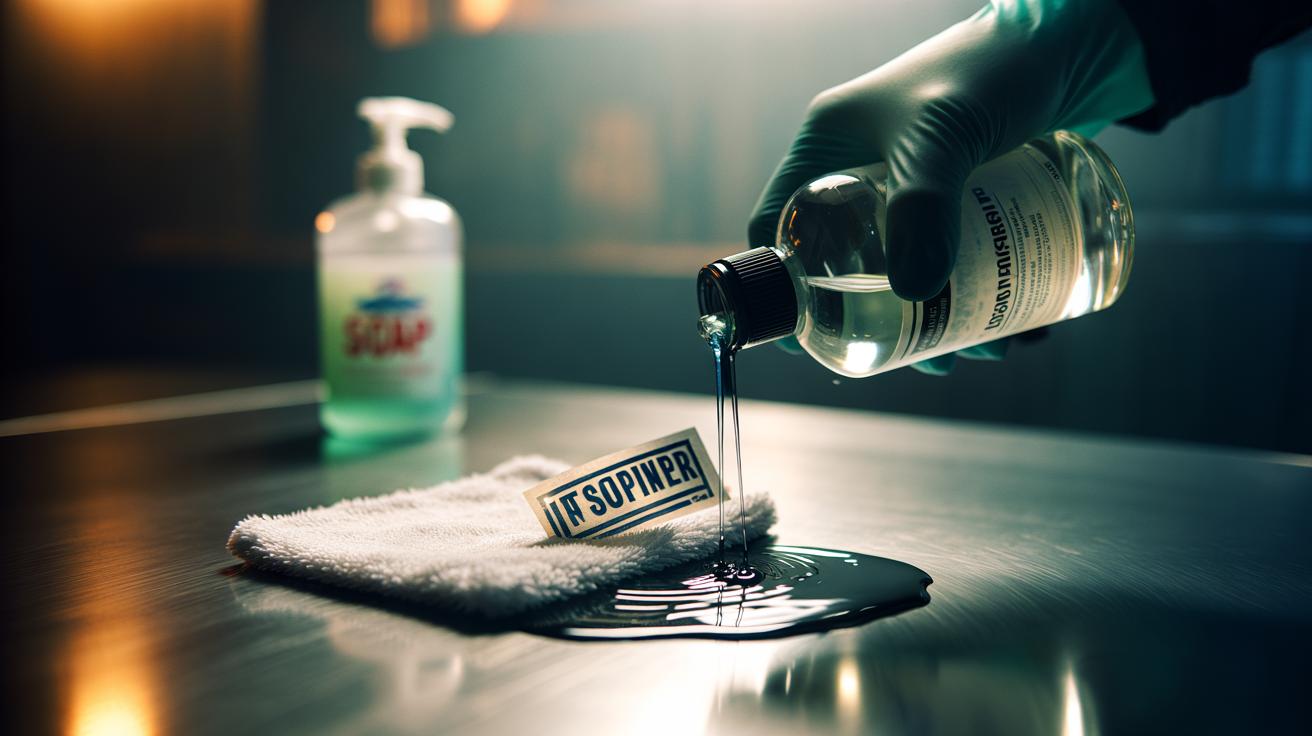
In a nutshell
- 🧴 Rubbing alcohol (IPA) dissolves sticky adhesives at the source, reduces surface tension, and evaporates cleanly—outperforming soap that only lubricates and often smears.
- 🧪 Match concentration to the job: 70% IPA penetrates and softens labels and sap; 99% IPA flashes off fast for electronics; UK surgical spirit is a practical alternative.
- 🔍 Versus soap on common residues: alcohol lifts sticker glue, tree sap, cosmetics, and tape residue with fewer passes and less abrasion, protecting glass, metal, and sealed stone finishes.
- ⚠️ Safety and technique: highly flammable—ventilate, avoid ignition, wear gloves, spot-test on plastics and coatings, apply to a cloth (not the surface), and limit dwell time to prevent damage.
- 💷 Cost and footprint: widely available and economical per job; targeted use saves labour and materials, while mindful ventilation and reusable microfibres help manage VOC and waste impacts.
Sticky residues from labels, tape, tree sap, and spilled cosmetics can turn quick jobs into drawn-out scrubbing sessions. Ask a conservator, an IT technician, or a set dresser on a deadline, and you will hear the same tip: reach for rubbing alcohol. Unlike soap, which relies on micelles and water to lift grime, isopropyl alcohol (IPA) is a fast-evaporating solvent that dissolves stubborn adhesives without leaving suds behind. Its speed and precision cut through the mess while preserving your finish. From camera gear to countertops, professionals prize its controlled action, minimal residue, and time-saving performance—qualities that keep productions moving and maintenance crews efficient.
What Makes Rubbing Alcohol a Sticky-Mess Slayer
Adhesives and gunky residues often contain nonpolar components that resist water. Rubbing alcohol bridges the gap: its molecular structure interacts with both oily and watery substances, breaking down tacky polymers and softening binders so they release. This solvent action tackles the glue itself rather than simply lubricating it. Crucially, alcohol also reduces surface tension, allowing it to creep under labels and into seams, loosening grip at the edges. The result is less scraping and fewer scratches. Because IPA evaporates rapidly, the dissolved residue does not get time to redeposit, and there is no lingering film to attract dust or smear screens.
Professionals choose concentration by task. 70% IPA adds enough water to slow evaporation so the solvent can penetrate gummy layers, ideal for sticky labels and sap. 99% IPA flashes off fast, suiting electronics where moisture is risky. In the UK, many also use surgical spirit (denatured ethanol) for similar results. Picking the right blend is the difference between a single clean pass and a frustrating cycle of wipe, smear, and repeat. This targeted solvent power is why alcohol outperforms soap on cured adhesives, paint transfer, and cosmetic spills.
How It Compares With Soap on Common Residues
Soap excels at body oils and general grime, suspending particles in water for rinsing. Sticky residues are different: they are engineered to stick, resist moisture, and maintain tack. Alcohol disrupts adhesive chemistry, softening resin systems used in tapes, stickers, and labels. Where soap glides over the surface, alcohol penetrates and dissolves. That means fewer repeated passes and fewer abrasive tools that could mar finishes. On glass, metal, and finished stone, this precision prevents clouding and swirl marks that arise when scrubbing with insufficiently powerful detergents.
| Residue | Alcohol Effect | Soap Performance | Pro Note |
|---|---|---|---|
| Sticker/Label Glue | Rapid softening, clean lift | Smears, needs scrubbing | Use 70% IPA, wait 30–60 sec |
| Tree Sap | Dissolves resinous binders | Limited effect | Breathe time improves release |
| Cosmetics (mascara, foundation) | Solubilises oils/waxes | May streak | Spot test on coatings |
| Tape Residue on Plastics | Effective but watch for crazing | Often ineffective | Short contact, gentle wipe |
For food grease on cookware or muddy fabrics, soap still wins because emulsification and water are the goal. But for cured gum, label shadows, and waxy scuffs, alcohol’s solvency and quick evaporation prevent residue rings and sticky afterfeel. Choosing the chemistry that matches the mess is the professional shortcut.
Safety, Surfaces, and Smart Usage
Rubbing alcohol is highly flammable. Keep it away from ignition sources, ensure ventilation, and store it tightly capped. A small amount goes a long way, and less exposure reduces risk. Wear nitrile gloves for extended jobs; some people experience dryness or irritation. On the surface front, alcohol is generally safe for glass, metal, sealed stone, and most painted walls, but it can dull acrylics, lacquer, shellac, and certain soft plastics. Always test an inconspicuous spot and limit dwell time. For screens, check the manufacturer’s guidance; alcohol can strip anti-glare or oleophobic coatings.
Technique matters. Apply to a cloth rather than flooding the surface, so you control spread and avoid wicking into seams. Let it sit briefly on stubborn patches to allow solvent penetration, then lift residue with a microfiber towel. If residue smears, switch to a fresh section of cloth to prevent redeposit. Precision, patience, and light pressure beat force every time. Dispose of soaked rags safely and never mix alcohol with chlorine bleach or other chemicals.
Cost, Availability, and Environmental Footprint
In UK shops, 70% and 99% isopropyl alcohol are widely available via pharmacies, electronics retailers, and online suppliers; surgical spirit is a common alternative. Per-job cost is low because minimal volume achieves results, and quick evaporation reduces drying time. Professionals appreciate the predictable shelf life and the portability of small bottles in kits. It speeds workflows and cuts labour time on set, in workshops, and across maintenance rounds. For recurring adhesive removal, the savings in time and damaged materials outstrip the price difference with standard detergents.
Environmental considerations are real: alcohols are VOCs and should be used with ventilation. That said, targeted solvent cleaning can reduce hot water use, repeated washing, and micro-abrasive pads. Avoid tinted or fragranced blends when residues must not transfer dyes. Choose reusable microfiber towels and decant into refillable sprayers to curb plastic waste. Right-sized application reduces both emissions and cleanup. For eco-sensitive contexts, start with citrus-based adhesive removers or warm soapy water, then reserve alcohol for the patches that resist.
Rubbing alcohol earns its place in professional kits because it solves the exact problem sticky messes present: tenacious, water-resistant binders. By pairing the right concentration with controlled technique, you lift residues cleanly and quickly without collateral damage or lingering films. Soap keeps its crown for general grime; alcohol wins where adhesives rule. Used safely, it is a precise, efficient tool. How might switching your approach—matching chemistry to the mess—change the time, effort, and finish quality in your next cleaning challenge?
Did you like it?4.6/5 (30)