In a nutshell
- 🧪 The science: potato-derived oxalates chelate iron from iron oxide (rust), while salt adds mild abrasion, making the method gentle on steel yet effective on the brittle rust layer.
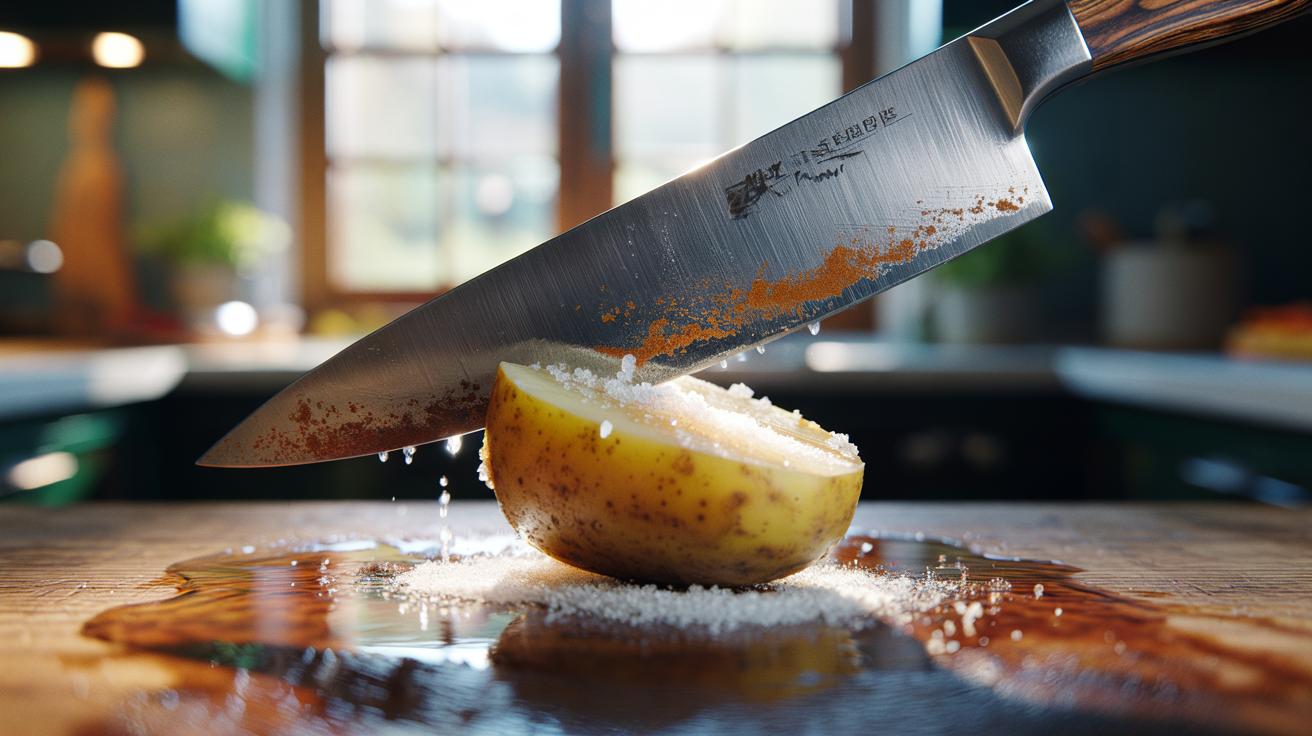
- 🥔 Practical method: clean the blade, halve a potato, dip the cut face in coarse salt, rub in small circles, allow 5–10 minutes of dwell time, then rinse, dry, and apply a thin coat of food-safe mineral oil.
- 🎯 Best use cases: ideal for light surface rust on everyday stainless and carbon steel; less effective on deep pitting and unreachable crevices, which may require stronger products or disassembly.
- ⚖️ Comparisons: gentler and lower odour than vinegar or lemon; slower but safer for finishes than many commercial removers, which excel on heavy scale but carry higher risks.
- 🔒 Care and cautions: avoid abrasive use on coated/DLC blades, don’t soak, keep water off wooden handles, and preserve a beneficial patina by targeting only active rust.
In almost every British kitchen drawer lives a once‑shiny knife flecked with orange blooms of rust. A surprising fix sits in the fruit bowl: a humble potato and a pinch of salt. This simple pair doesn’t just scrub; it works at the level of chemistry. Potatoes contain natural oxalates, compounds famous for binding metals. Salt adds gentle abrasion and speeds contact with the metal’s surface. Used together, they loosen and dissolve rusty films while sparing the steel beneath. Here’s how the science stacks up, how to do it safely, and when to consider stronger options—all with the clarity of a lab note and the thrift of a home remedy.
How Oxalates Attack Rust: The Kitchen Chemistry
Rust on knives is essentially iron oxide, a crust of Fe2O3 or hydrated oxides that cling to the surface. Potatoes contain oxalic acid and oxalate salts, which are superb chelators—they latch onto iron ions to form soluble iron oxalate complexes. That chelation undermines the oxide’s grip, encouraging it to lift. The potato’s mild acidity helps, but the real star is the oxalate group’s two oxygen “claws” that bind iron tightly. Salt acts as a fine, crystalline abrasive, opening micro-pathways through the rust so oxalate can reach fresh oxide and do its work efficiently.
The magic is selective: oxalate prefers the brittle rust layer rather than the sound steel underneath. That’s why this method is gentler than dunking a blade in strong acids. Chloride ions from salt can also help disrupt some oxide layers, but the effect is modest; think of salt as a catalyst for access. Rinse promptly after treatment to avoid prolonged chloride exposure, then dry thoroughly to stop any fresh oxidation before it starts.
Step-by-Step: Using a Potato and Salt to Rescue a Knife
Start with a clean, grease-free blade; a drop of washing-up liquid and warm water removes kitchen oils that shield rust. Halve a firm potato. Dip the cut face in coarse salt, then press and rub it along the rusty areas with small, overlapping circles. The goal is a slurry: potato juice delivers oxalates, salt provides bite. For stubborn specks, leave the salted potato pressed against the rust for 5–10 minutes—this dwell time lets chelation proceed. Reapply salt if the surface loses grit.
Rinse with warm water, then wipe and inspect. A soft toothbrush helps along serrations or the heel near the bolster. Repeat the rub-and-rest cycle for persistent staining, but avoid aggressive force; let chemistry do the heavy lifting. Always dry the knife immediately and wipe a whisper of food-safe mineral oil on the blade to seal out moisture. Keep water away from wooden handles, and never leave the knife soaking in potato juice—prolonged contact invites fresh corrosion at crevices.
When It Works—and When It Doesn’t
This method shines on light surface rust, peppery speckles, and early orange blooms on carbon steel and everyday stainless. It’s also useful when you want to preserve a factory satin finish without harsh scouring. Expect less success with deep pitting, where oxide has burrowed into the grain; oxalate can’t refill metal that’s been eaten away. A grey-blue patina on carbon steel—the protective film cooks cultivate—needn’t be stripped; target only active rust to keep that beneficial layer intact.
Mind coatings and decorative etches. Do not use on blackened, DLC, or painted blades where abrasive salt could mar the finish. For plated cutlery, test on an inconspicuous spot to avoid clouding. Heavy rust near the edge may require a post-clean sharpen, as oxides can undermine the apex. If rust lurks under handle scales or inside folding mechanisms, a potato won’t reach: opt for disassembly or a specialist cleaner designed for crevices and springs.
How It Compares with Vinegar, Lemon, and Commercial Removers
Household acids like white vinegar (acetic acid) and lemon juice (citric acid) also dissolve rust, but they can etch steel if left too long and often strip protective patina aggressively. Potato-and-salt is slower yet gentler, delivering targeted chelation with built-in lubrication from the potato’s starches. Commercial removers, often oxalic, phosphoric, or chelating blends, act fast and reach into pits, though they carry stronger odours and disposal considerations. If you’re restoring a cherished chef’s knife, finesse beats speed; for a garden blade caked in scale, a bottle treatment may be the pragmatic route.
The comparison below outlines the trade-offs. Whatever you choose, control time-on-metal and rinse thoroughly. For kitchen use, neutral odour and food-safety matter as much as raw power—another point in the potato’s favour. Follow every method with drying and a light oiling to delay the next round of oxidation.
| Method | Active Chemistry | Speed | Risk to Finish | Odour | Cost/Access | Notes |
|---|---|---|---|---|---|---|
| Potato + Salt | Oxalates + mild abrasion | Moderate | Low on bare steel | Neutral | Very low; kitchen staples | Gentle; great for light rust |
| Vinegar | Acetic acid | Moderate–fast | Medium; can etch | Sharp | Low | Watch soak time |
| Lemon | Citric acid | Moderate | Medium; brightens aggressively | Citrus | Low | Good on light tarnish |
| Commercial Remover | Oxalic/phosphoric/chelators | Fast | Medium–high | Chemical | Medium | Best for heavy scale |
A potato and a little salt won’t turn back time on a ravaged blade, but they restore dignity to everyday knives with minimal fuss and no harsh fumes. The trick lies in oxalate chelation, a quiet reaction that loosens rust while your hand guides the abrasive crystals. Pair the clean-up with sensible habits—drying, light oiling, a protective sheath—and you reduce the chance of a repeat performance. In a world of aggressive chemicals, this low-tech fix earns its place in the drawer. Which knife in your kitchen will you rescue first, and what finish are you aiming to protect?
Did you like it?4.7/5 (25)