In a nutshell
- 🧂 Salt crystals lift rust via controlled abrasion, while weak acids (vinegar/lemon) soften iron oxide; always rinse and dry to prevent chloride-induced pitting.
- 🧼 Best matches: porcelain, ceramic, chrome, stainless (short contact), and concrete; avoid acids on marble/limestone and patch-test painted surfaces and fabrics to protect finishes.
- 🧪 Method: prep, make a salt–acid paste, allow a short dwell time (2–10 minutes), scrub lightly, then rinse thoroughly; on metals, dry immediately and oil tools to deter re-rusting.
- 🧩 Science notes: salt is ~2–2.5 on Mohs, gentle on hard surfaces; crystal size matters more than iodisation; choose coarse for crusty deposits and fine for delicate finishes.
- ⚠️ Common pitfalls: don’t over-soak stainless, don’t crush grains flat, never mix acidic cleaners with bleach; use iterative, short cycles instead of aggressive scrubbing.
Rust has a way of telegraphing neglect, whether it’s a tea-coloured halo on a porcelain sink, a ring on patio slabs, or flecks on stainless tools. A humble salt scrub counters that story with a mix of mechanical and mild chemical action, lifting stains without harsh abrasives. The trick lies in the crystalline texture and the way salt pairs with a weak acid such as lemon juice or vinegar. Coarse grains work as tiny chisels; fine grains polish and wick moisture. Use the right grade, the right partner liquid, and the right dwell time and you can release rust stains efficiently while keeping surfaces safe and budgets intact.
How Salt Crystals Lift Rust
At the surface, rust is brittle iron oxide bonded to pores and micro-scratches. Salt’s angular crystals create controlled abrasion, nudging those oxide fragments loose without gouging most hard finishes. Add a few drops of water or lemon juice and the grains glide yet still bite, a balance between lubrication and friction that dislodges particles. Coarse crystals wedge under crusty patches; finer grains slip into tiny pits. Salt alone mainly provides mechanical lift; pairing it with a weak acid helps dissolve the bonds that keep stains in place, making fewer strokes do more work.
Chemically, the mix is simple but effective. Weak acids like acetic (vinegar) or citric (lemon) soften iron oxide at the surface, while salt increases ionic strength, helping that acidity reach into pores and hold moisture where it’s needed. The pastey slurry traps loosened oxide so you can wipe it away cleanly. Because chloride can accelerate corrosion if left behind, prompt rinsing is essential on metals, followed by thorough drying to stop new flash rust.
Best Surfaces and When to Avoid
Salt scrubs shine on tough, glazed, or mineral surfaces—think porcelain sinks, ceramic tiles, glass cookware, and outdoor concrete. They’re also handy on stainless steel and chrome fixtures if you keep contact times short and rinse immediately. On painted or powder-coated metals, test a small spot; salt can matte down soft coatings. Avoid acids on calcareous stone such as marble and limestone, where even a mild citric splash can etch. For textiles, use caution: salt can help lift a fresh iron mark, but acid partners may bleach dyes.
Match crystal size and partner liquid to the job. Coarse or kosher salt gives grip on crusty deposits; fine table salt suits delicate finishes that need a gentle touch. Think of the scrub as a guided micro-sanding with chemistry assisting at the edges—effective, targeted, and brief.
| Surface/Item | Salt Grade | Partner Liquid | Contact Time | Key Caution |
|---|---|---|---|---|
| Porcelain sink/tub | Coarse | White vinegar or lemon | 5–10 min | Rinse well; don’t let acid dry |
| Stainless tools | Coarse | White vinegar | 2–5 min | Rinse and dry immediately |
| Chrome fixtures | Fine | Lemon juice | 1–3 min | Light pressure to avoid swirl marks |
| Concrete/pavers | Coarse | Vinegar | 10–15 min | Flush thoroughly to disperse salt |
| Marble/limestone | Fine | Distilled water (no acid) | As needed | Avoid acids—risk of etching |
| Light fabrics | Fine | Lemon on white only | 5 min | Patch test; launder promptly |
Step-by-Step Salt Scrub Method
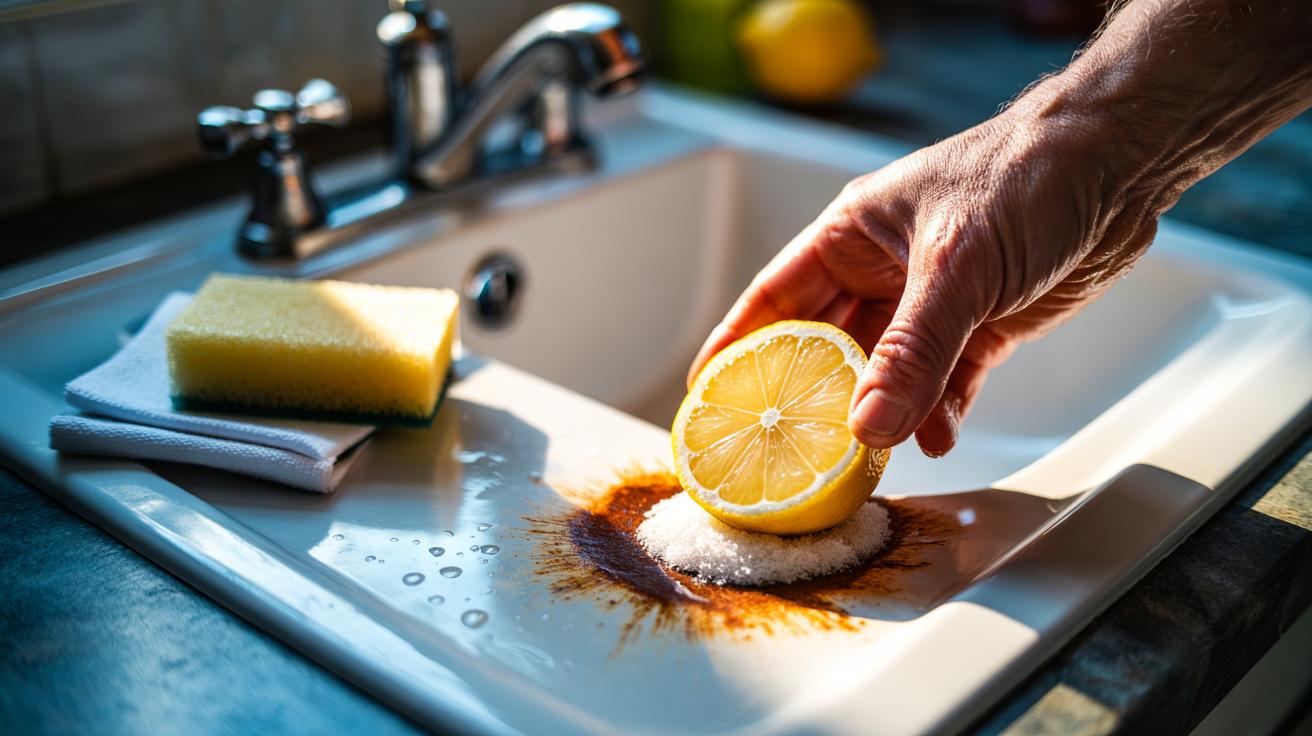
Prep: Brush away dust so the grains contact the stain. Choose coarse salt for heavy marks or fine for delicate finishes. Make a paste with lemon juice or white vinegar—thick enough to cling. Never mix acidic cleaners with bleach. For vertical surfaces, cut a lemon in half, dip the cut face in salt, and use it as a ready-made applicator.
Apply: Spread a thin, even layer over the rust. Allow a short dwell—two to ten minutes depending on the surface. Agitate: Using a soft cloth or non-scratch pad, scrub in short, overlapping strokes. Let the crystals do the work; heavy pressure just smears the paste and risks scuffing.
Finish: Rinse thoroughly with warm water. On metals, wipe with a damp cloth, then dry immediately; a hairdryer or a few drops of light oil on tools prevents re-rusting. On stone or grout, flush well to disperse any lingering salt. Rinse and dry is the insurance policy that preserves your result.
Science Notes and Common Mistakes
Why it’s gentle: Salt’s hardness sits around 2–2.5 on the Mohs scale, far softer than porcelain or glass, which means it polishes rather than gouges. On softer substrates—aluminium, lacquer, certain plastics—crystals can haze the surface, so downshift to fine grains and minimal pressure. Short contact, light touch, thorough rinse is the formula that prevents collateral damage while lifting oxide efficiently.
Common pitfalls are easy to avoid. Don’t leave salty, acidic paste on stainless steel to “work longer”; prolonged chloride exposure can encourage pitting. Don’t crush crystals into talc—without edges you lose bite. Iodised vs non-iodised makes little difference; crystal size matters more. If a stain persists, repeat a short cycle rather than one aggressive session. The winning approach is iterative, not forceful, keeping surfaces intact while the stain retreats.
Used with a light hand, a salt scrub is a frugal, low-tox tactic that turns stubborn rust stains into rinseable residue. The crystals supply grip; the weak acid loosens bonds; your technique keeps surfaces safe and the finish bright. Stock a couple of grain sizes, pair them with lemon or vinegar, and you’ve got a kit that travels from kitchen sink to garden spade with equal confidence. What surface in your home or shed would benefit most from a smart salt-and-acid scrub—and how will you tailor the grain and dwell time to suit it?
Did you like it?4.6/5 (29)