In a nutshell
- 🧪 Dilution optimises chemistry: right-size mixes hit near the CMC, improving wetting, coverage, and dwell time while reducing streaks and sticky residues.
- 💷 Major savings, smaller footprint: concentrates at ratios like 1:20 slash cost per litre, cut plastic waste, and lower transport emissions with refillable trigger bottles and closed-loop recycling.
- 📏 Get ratios right: measure consistently (e.g., 68 ml into a 750 ml bottle for 1:10), respect contact times, label/date solutions, and never mix bleach with acids or ammonia.
- 🏠 Versatile performance: fine mists excel on kitchens, glass, chrome, classrooms, gyms, and car interiors—delivering even coverage, controlled moisture, and faster, cleaner finishes.
- 🧴 Tools that elevate results: chemical‑resistant triggers, adjustable nozzles, and colour‑coded bottles turn small amounts of the right dilution into reliable, repeatable cleaning that extends product lifespan.
In homes and workplaces across the UK, a quiet revolution is happening at the end of a trigger. Spray bottles are teaching cleansers to work smarter, not harder, by using dilution to stretch performance and budgets. Concentrates paired with a good sprayer unlock the chemistry that lifts grime, sanitises surfaces, and leaves fewer streaks. They reduce plastic, cut transport emissions, and deliver precision dosing for consistent results. The surprise for many users is that properly diluted solutions often clean better than pouring neat product straight onto a cloth. From glass to grease, measured mixes spread thinly, wet uniformly, and stay where you need them long enough to do the job.
Why Dilution Delivers Better Cleaning
At the heart of most cleaners are surfactants, molecules that break surface tension and surround soil. They are most effective around their critical micelle concentration (CMC): too little, and they cannot lift dirt; too much, and they leave sticky residues that trap fresh grime. Right-size the dose, and your spray creates a uniform film that wets, loosens, and suspends soil for effortless wipe‑off. Atomised droplets from a trigger head maximise coverage while minimising runoff, so the chemistry stays on the surface rather than pooling or evaporating too quickly.
Good dilution also improves dwell time. A fine mist clings to vertical tiles or the side of a fridge door, allowing enzymes or sanitisers to act for the labelled contact period. This controlled application reduces streaking on glass, avoids over-wetting fabrics, and cuts the need for repeat passes. Add in less fragrance overload, fewer colourants left behind, and a lower risk of material damage, and you have a chemistry lesson in a bottle: measured water makes cleaners work harder, last longer, and leave a better finish.
Economics and Environmental Wins in Every Spray
Dilution multiplies value. A £6 litre of multi-surface concentrate at 1:20 (one part concentrate to twenty parts water) yields 21 litres of usable solution—about £0.29 per litre. Compare that with ready-to-use sprays at several times the price and far more plastic. A single refillable trigger bottle rotated through a batch of mixes can displace dozens of disposables across a year. By switching to concentrate and a durable sprayer, households and facilities can cut costs sharply while shrinking waste and transport emissions. Those savings scale in schools, shops, and offices, where routine top-ups add up to thousands of wipes.
The environmental benefits are just as tangible as the financial ones. Less packaging means fewer lorry miles and lower storage footprints. Concentrated products usually ship in stronger, reusable containers, and many are compatible with closed-loop recycling. The maths is straightforward, the impact significant, and the habit easy to keep once a simple system is in place.
| Cleaner Type | Typical Dilution | Usable Litres from 1L | Example Cost per Litre | Approx. Bottles Saved (750 ml) |
|---|---|---|---|---|
| Multi-surface | 1:20 | 21 L | £0.29 (from £6/L) | 28 bottles |
| Glass cleaner | 1:50 | 51 L | £0.12 (from £6/L) | 68 bottles |
| Degreaser | 1:10 | 11 L | £0.55 (from £6/L) | 14 bottles |
Figures are illustrative; always check the label for recommended ratios and pricing.
Getting the Ratio Right: Practical Methods and Mistakes to Avoid
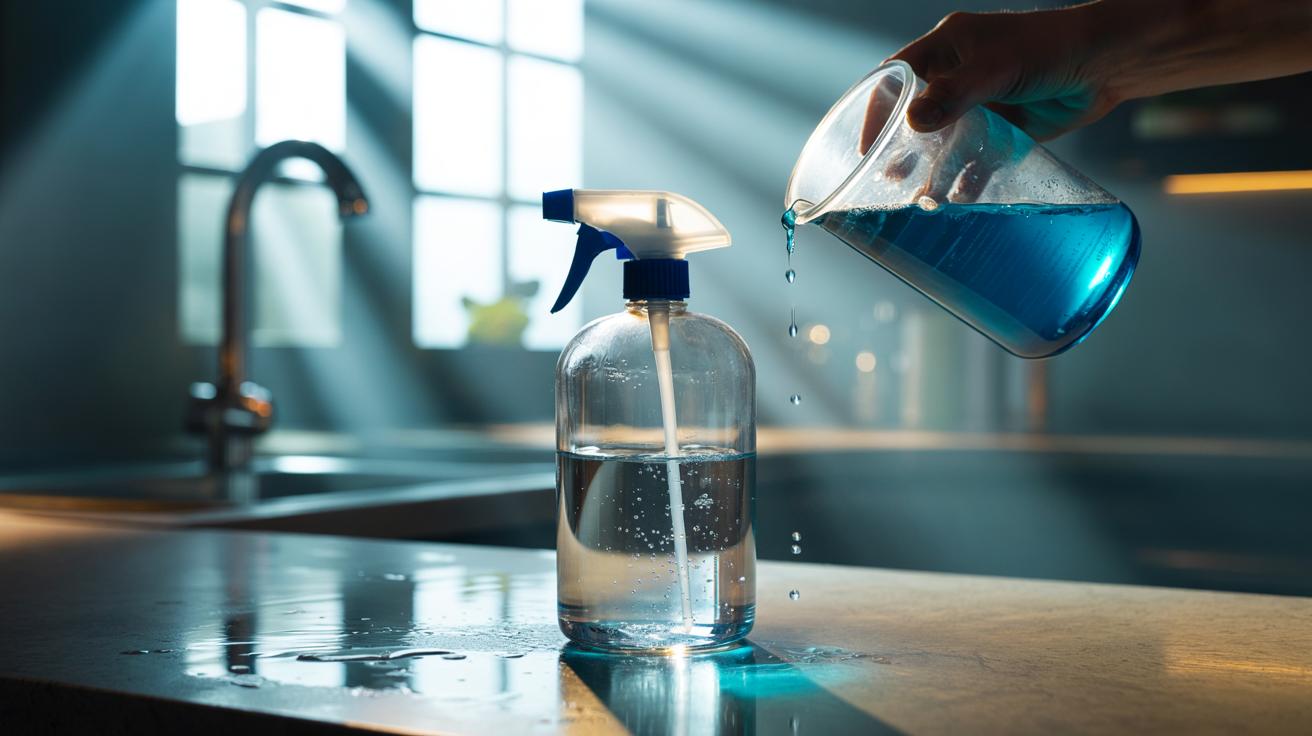
Ratios can be confusing, so choose a system and stick to it. A label that reads 1:10 means one part concentrate to ten parts water (11 parts total). For a 750 ml bottle, that’s roughly 68 ml of concentrate topped with water. Use a measuring cup, dosing cap, or pre-marked bottle to avoid guesswork. Consistency is king: the same dilution each time ensures the same results. Soft water improves performance for glass and stainless steel; in hard-water areas, consider a diluted rinse or a cleaner with sequestrants to prevent spotting.
Common errors include overdosing (leading to smears and sticky residues) and underdosing (reduced efficacy, especially with sanitisers). Respect contact times, keep solutions labelled and dated, and replace mixes that sit for weeks. Never mix products, and never combine bleach with acids or ammonia. Choose chemical‑resistant trigger heads, adjust from stream to fine mist for task fit, and colour‑code bottles to avoid cross‑contamination in kitchens, bathrooms, and food prep areas. When in doubt, follow the product’s UK label and safety data sheet.
Where Sprays Excel: Kitchens, Classrooms, and Car Interiors
In the kitchen, a fine mist of diluted degreaser coats hobs and splashbacks without flooding gaps or undercutting seals. On stone or composite worktops, measured dilution reduces the risk of etching and keeps finishes bright. For glass and chrome, a lean mix flashes off cleanly, leaving fewer wipe marks and faster shine. Because a spray reaches corners and verticals with minimal runoff, you use less product yet gain more coverage. Food-contact areas benefit from sanitisers applied evenly, then left to work for the full contact time before a potable-water rinse where specified.
Beyond the home, trigger bottles shine in classrooms, gyms, and car interiors. Touchpoint cycles—desks, rails, steering wheels—demand fast coverage with controlled moisture. Upholstery and headliners need gentle mists to avoid soak-through. On dashboards and screens, a light pass of diluted cleaner avoids blooming and maintains anti-glare coatings. Facilities teams value refill stations and coded ratios that any shift can follow at speed. Sprays turn small amounts of the right solution into wide, even, and reliable cleaning.
Spray bottles are not just delivery tools; they are amplifiers, turning dilution into reach, consistency, and savings. With a marked bottle, a reliable trigger, and a simple measuring routine, concentrates outlast expectations and leave surfaces genuinely clean rather than perfumed or sticky. The environmental gains are immediate, the financial payback obvious, and the daily workflow smoother. The smartest clean is the one you can repeat, bottle after bottle, with the same precise outcome. Where could measured mixing and a durable sprayer make the biggest difference in your home, workplace, or vehicle today?
Did you like it?4.5/5 (20)