In a nutshell
- 🟡 The tennis ball hack uses elastic impacts and gentle mechanical agitation (shear) to break clumps, reintroduce airflow, and restore pillow loft.
- 💧 Clumps form when moisture, skin oils, and compression create surface tension and friction; down interlocks, polyester mats—issues that are reversible with targeted agitation.
- 🧺 Practical dryer method: place balls in socks, use low/medium heat (down on low or air-fluff), run in short stages with hand-fluff pauses; 2 balls per standard pillow, 3 for king, and avoid dryer sheets.
- ⚠️ Safety first: never tumble memory foam/latex, use clean balls, keep loads modest, stop if scorching or harsh clattering, and ensure pillows are bone-dry to prevent mildew.
- 🔄 Smart alternatives and care: try wool dryer balls or light trainers; repair torn ticking, store in breathable bags, rotate during use—treat bouncing as routine maintenance to extend lifespan.
Deflated pillows are the great betrayal of a good night’s rest. After washing or months of head weight, the fill compresses into stubborn clumps that refuse to rebound. Enter the humble tennis ball—a laundry-room hack that uses bounce to tease fibres apart and coax air back into the core. The trick works because controlled mechanical agitation can reverse the microscopic knots that trap moisture and collapse loft. This is not a gimmick but a small-scale engineering fix: repeated impacts break bridges inside the pillow and restore spring. Done correctly, it refreshes synthetic and down pillows alike, rescuing comfort without a costly replacement.
Why Pillows Clump in the First Place
Pillows clump when moisture, pressure, and time conspire to mat fibres together. Sweat and ambient humidity seep into polyester microfibres or coat down clusters, increasing surface tension so strands stick rather than slide. Inside the ticking, night-after-night compression forces fibres into tight contact, creating frictional “bridges” that lock neighbouring tufts. Oils from skin act as a light adhesive. When a freshly washed pillow dries slowly, steam condenses unevenly, welding small knots that become larger balls. Clumping is a physics-and-moisture problem, not a permanent failure of the fill. Without intervention, those knots harden and airflow dwindles, sapping resilience and making the pillow feel lumpy around the edges and thin in the centre.
Down behaves differently from synthetic fill, but the end result is similar. Down collapses when barbs interlock and stay damp, while hollow fibres flatten as their tiny voids shed air and the strands entangle. The ticking fabric can amplify the issue by corralling migrating tufts into corners, producing the classic “pea in a pod” lump. The solution is not just drying: it’s targeted agitation that interrupts fibre-to-fibre bonds while encouraging air back into the structure. A source of small, frequent impacts does exactly that, loosening knots and opening space for air to return.
How a Tennis Ball Restores Loft
A tennis ball works because it delivers quick, elastic impacts that create shear inside the pillow. Each bounce compresses then releases the shell, sending ripples through the fill that pry apart micro-knots. The ball’s textured felt increases friction on contact, so tufts are tugged rather than merely tapped. That motion entrains airflow, letting the pillow “breathe” as it tumbles; air replaces compressed voids, rebuilding loft. In effect, bouncing replaces static clumps with mobile fibres that can float and reposition. Because impacts are distributed randomly, different zones get attention each minute, preventing new lumps from forming where old ones broke.
The physics is gentle but persistent: rapid, low-mass collisions deliver enough energy to unstick fibres without shredding them. Think of it as massage rather than beating. The dryer’s warm environment lowers residual moisture, weakening the capillary bonds that held clumps together. A few minutes of energetic bouncing can undo hours of compression. Still, there are limits—aged, degraded fibres may not fully rebound, and over-drying risks brittleness. The goal is controlled agitation paired with careful heat, not a marathon spin that cooks the filling.
Step-By-Step Dryer Method
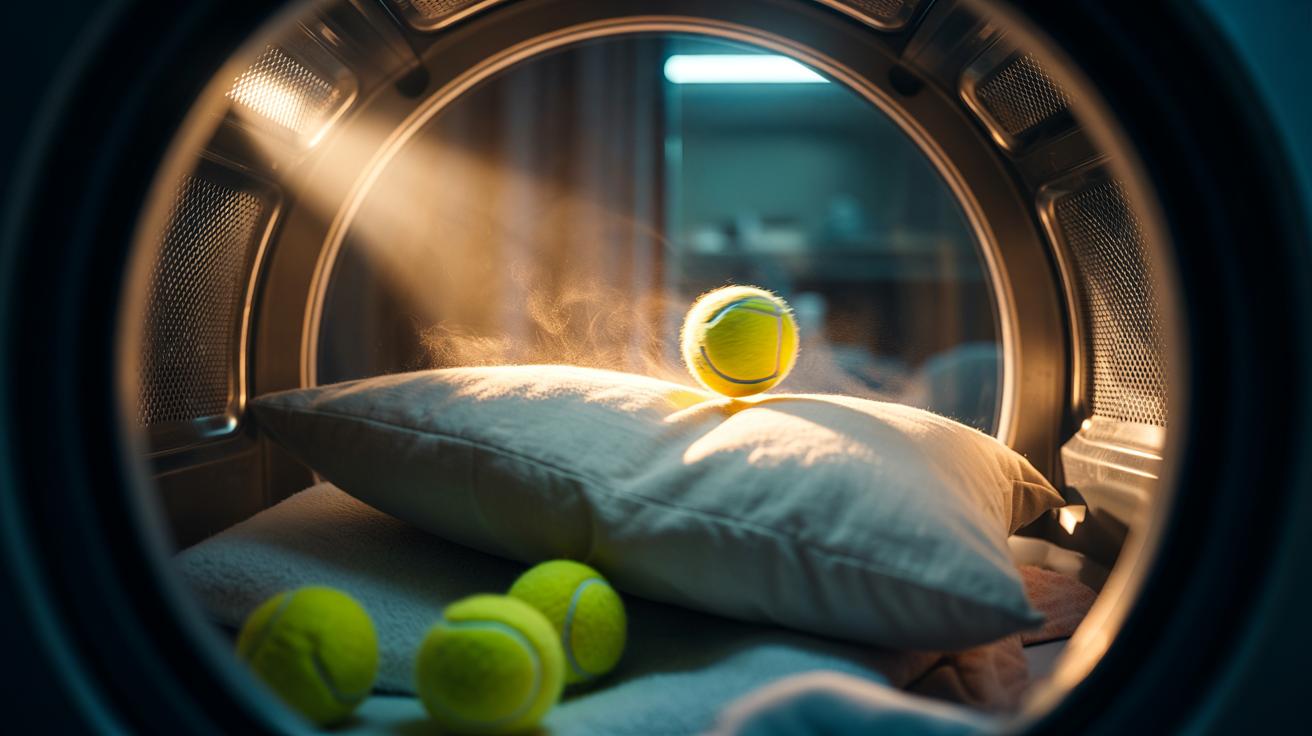
First, check the care label. Remove covers, then pre-shake the pillow to loosen obvious knots. Place one or two clean tennis balls in white cotton socks and tie the ends; this prevents dye transfer and reduces scuffing. Load the dryer no more than half full so items can circulate. For synthetic fill, use low to medium heat; for down, choose low heat or “air fluff” to protect natural oils. Add a dry towel to wick moisture and speed the cycle. Run 15–20 minutes, pause, hand-fluff, redistribute fill, and resume as needed until the pillow feels evenly plump.
Typical cycles take 30–60 minutes depending on fill density and humidity. Use two balls for a standard pillow, three for a king or dense side-sleeper model. If the pillow feels warm but not fully dry, let it rest and cool, then repeat short bursts; this staged approach preserves fibre integrity. Avoid fragranced dryer sheets, which can coat fibres and encourage future sticking. Never use this method on memory foam, latex, or shredded-foam pillows, which can crumble or deform under impact and heat.
| Pillow Type | Heat Setting | Tennis Balls | Cycle Length | Notes |
|---|---|---|---|---|
| Polyester/Microfibre | Low–Medium | 2 per pillow | 30–45 mins | Add dry towel for wicking |
| Down/Feather | Low or Air Fluff | 2–3 per pillow | 40–60 mins | Check frequently; protect natural oils |
| Memory Foam/Latex | Do not tumble | None | — | Air dry; hand-fluff only |
Safety, Hygiene, and Smart Alternatives
Use new or laundered tennis balls to avoid transferring court grime. Slip them into light-coloured socks to reduce felt shedding and noise. If you dislike the thud, try wool dryer balls; their softer mass achieves similar agitation with less racket. Purpose-made dryer spheres and clean canvas trainers can also work, though weight should be kept modest to protect the drum. Stop the cycle if you smell scorching or hear harsh clattering that suggests overloading or trapped items. Always ensure pillows are bone-dry before returning them to cases to prevent mildew and musty odours.
Skip the method if the ticking is torn, if feathers leak, or if the label forbids tumble drying. In those cases, air-dry flat and break clumps by hand, pinching and pulling tufts apart over time. For heavy clumping after washing, a second spin in the washer can remove hidden water that sabotages loft. Store pillows in breathable bags, not plastic, and rotate during use to spread wear. Good care—gentle wash, thorough dry, periodic bouncing—extends lifespan and keeps nighttime support consistent.
The tennis-ball trick endures because it taps basic mechanics to solve an everyday comfort problem: break the bonds, reintroduce air, restore loft. Approached methodically—with clean balls, controlled heat, and pauses for hand-fluffing—it can make a flat pillow feel newly buoyant without spending a penny. It is not a cure-all, but it is a reliable, low-risk first step before considering replacement. Treat the process as maintenance, not crisis response, and your pillows will repay you in supportive sleep. Where could a little targeted bounce improve other home textiles you rely on, from duvets to padded jackets, and how might you test it safely?
Did you like it?4.4/5 (28)