In a nutshell
- 🧪 The £1 cleaning staple soda crystals (washing soda/sodium carbonate) are a high-pH alkaline degreaser that breaks down oils and softens water, making grime release fast.
- 🧽 Room-by-room uses: kitchen hobs and hoods (1 tbsp/500 ml), oven rack soaks, bathroom tiles/tubs (2 tbsp/L), laundry booster (1 tbsp per wash), and slow drains with a hot flush—always pair with hot water for quicker action.
- ⚠️ Safety and surfaces: wear gloves and test first; avoid aluminium, natural stone, lacquered finishes, and wool/silk; never mix with acids, bleach, or ammonia; rinse food-contact areas thoroughly.
- 💷 Cost and eco: typically £1–£1.50 per kilo for cleans at pennies per use; minimal additives and packaging; limits apply—not a disinfectant and won’t remove limescale (use an acid separately).
- 🧰 Pro tips: match concentration to mess, allow brief dwell time to “melt” grime, use microfiber for lift, decant into an airtight jar to prevent clumping, and keep out of reach of children and pets.
It’s the under-the-sink hero your gran swore by and pros still reach for: soda crystals. Costing roughly £1 a bag at many UK shops, this quietly powerful cleaner cuts through greasy films, food splatters, and bathroom grime without fumes or mystery additives. A pinch in hot water can transform scummy surfaces into a quick wipe-and-go job. Unlike trendy sprays, this forgotten staple is versatile, thrifty, and rooted in simple chemistry. Here’s why cleaners swear by it, how to use it from hob to drain, and the few places you shouldn’t let it touch.
What Soda Crystals Are and Why They Work
Soda crystals—also known as washing soda or sodium carbonate—are an alkaline salt historically used for laundry, pans, and general degreasing. With a high pH, they loosen and break down oily residues, turning sticky fats into soap-like particles that rinse away. They also soften water by tying up calcium ions, helping dirt release faster and detergents perform better. That’s why they seem to “melt” grime: the chemistry disrupts the bond between grease, mineral deposits, and surfaces, so your cloth does less heavy lifting.
In practice, this means baked-on oven splashes shift sooner, dull soap scum in the bath cuts more easily, and stinky laundry smells less clingy after a booster wash. Importantly, soda crystals contain no bleach or fragrance, so they’re ideal for households seeking a low-additive clean. Pair with hot water for best effect: heat speeds dissolving and increases the action on congealed grease. For everyday jobs, a mild solution is enough; for heavy messes, go stronger.
How to Use It Room by Room
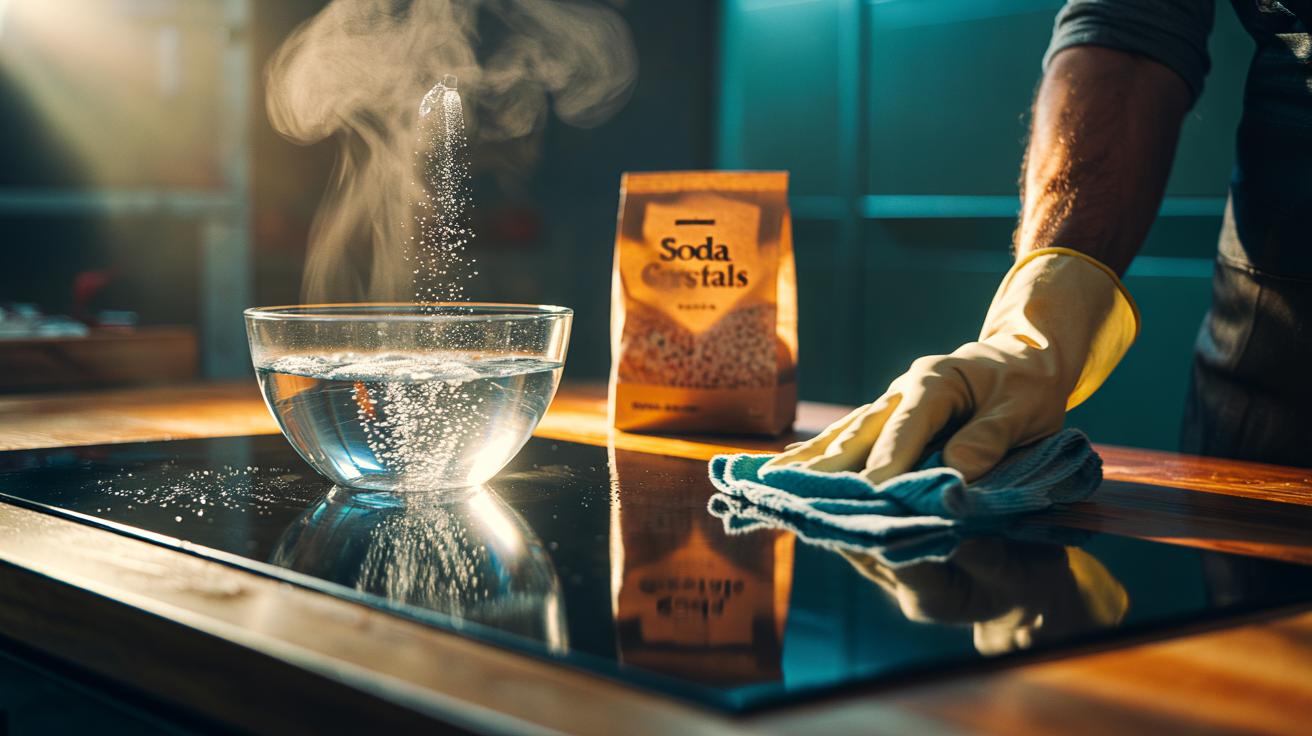
Kitchen: Dissolve a tablespoon in a spray bottle of hot water to wipe hobs, cooker hoods, and cupboard doors. For pans, trays, or oven racks, soak in a sink of very hot water with a generous handful. Grease lifts off in sheets when the solution has time to work. Bathroom: Tackle soap marks on tiles and tubs with a warm solution, then rinse well. Laundry: Add a tablespoon to the detergent drawer to boost cleaning in hard water and freshen towels. Bins and outdoor furniture also benefit from a brisk scrub with a stronger mix.
| Task | Ratio | Method | Wait Time | Avoid On |
|---|---|---|---|---|
| Greasy hob/hood | 1 tbsp per 500 ml hot water | Spray, wipe, rinse | 1–3 mins | Aluminium trim |
| Oven racks/trays | ½ cup in sink of hot water | Soak, scrub lightly | 15–30 mins | Anodised coatings |
| Bathroom tiles/tub | 2 tbsp per litre | Wipe, rinse thoroughly | 3–5 mins | Natural stone |
| Laundry booster | 1 tbsp per wash | Add to drawer | Wash cycle | Wool/silk |
| Slow drains (soap/grease) | ½ cup, then boiling water | Pour, flush carefully | 5 mins | None (domestic PVC ok) |
Safety, Surfaces, and Smart Combinations
Because soda crystals are strongly alkaline, wear gloves and avoid contact with eyes. Always test on an inconspicuous spot first. Steer clear of aluminium, lacquered finishes, natural stone (like marble), waxed or oiled wood, and delicate fibres such as wool or silk—alkali can etch, dull, or strip finishes. Rinse thoroughly where food is prepared. For ovens, remove racks and treat separately to protect surrounding materials. Keep the packet sealed and dry, and store out of reach of children and pets.
Don’t mix with other cleaners. Acids like vinegar or lemon neutralise alkali, cancelling the cleaning effect; with bleach or ammonia, mixed chemicals are a safety risk. Think one product, one job, and a clear water rinse. For limescale, which needs an acid, clean grease first with soda crystals, rinse, then use a dedicated descaler. On painted walls, use a very mild solution and dab rather than scrub to avoid burnishing. A microfiber cloth boosts performance without harsher chemistry.
Cost, Availability, and Eco Credentials
You’ll find soda crystals in most UK supermarkets, discount stores, and hardware shops, often around £1–£1.50 for a kilo. That bag makes dozens of litres of usable solution, cutting the cost per clean to pennies. A £1 staple that replaces several single-purpose sprays is budget housekeeping at its smartest. Because the crystals are concentrated and fragrance-free, you avoid propellants, dyes, and heavy packaging. Choose cardboard-boxed options when available and decant into an airtight jar to prevent clumping.
From an environmental standpoint, sodium carbonate breaks down into common ions in water systems and helps reduce reliance on solvent-heavy degreasers. Using it as a laundry booster can also let you lower detergent doses in hard water areas. The trade-offs: it’s not a disinfectant and won’t remove mineral scale, so keep a separate, targeted product for those tasks. Paired with hot water, a good brush, and sensible rinsing, it delivers a minimal-waste clean that feels both old-school and modern.
Whether you’re dealing with a greasy range hood, dulled bath enamel, or towels that won’t quite freshen up, soda crystals deliver rapid, reliable results with little fuss. The secret is matching the concentration to the mess, letting the alkalinity work, and finishing with a thorough rinse. For households seeking value and fewer bottles under the sink, this forgotten staple earns its place. Will you keep a £1 bag on standby—and which grimy corner of your home will you put it to the test on first?
Did you like it?4.4/5 (20)