In a nutshell
- 🔬 The boiling vinegar trick dissolves kettle limescale as acetic acid reacts with calcium carbonate, forming soluble calcium acetate and CO2 fizz.
- 🧪 Method: mix white vinegar and water 1:1, bring to a brief boil, rest 10–20 minutes, then rinse and reboil clean water; safety: ventilate, don’t seal the spout, never mix with bleach.
- ⚙️ Why it matters: scale insulates heating elements, wastes energy, slows boil times, and sheds flakes that impair taste; regular descaling restores efficiency and flavour.
- 🔄 Alternatives: try citric acid for low odour or a commercial descaler for severe buildup; avoid prolonged acid on aluminium or decorative finishes.
- 🛡️ Prevention: empty standing water, do light weekly descaling in hard-water areas, and consider filters or softeners to reduce mineral deposits.
Across the UK, hard water leaves stubborn limescale in kettles, dulling stainless steel and wasting energy with every brew. The quick fix that households swear by is the boiling vinegar trick: heat a simple vinegar-and-water solution, watch the fizz, and the crusty deposit melts away. The science is straightforward, the results are visible, and the cost is pennies. Handled correctly, this method is safe for most electric and stovetop kettles, restores fast boil times, and improves the taste of hot drinks. Here’s how it works, why it’s effective, and what to try if your buildup is especially severe.
Why Limescale Builds Up in Kettles
Most British households draw hard water rich in calcium and magnesium ions from chalk and limestone aquifers. When water is heated, bicarbonate ions break down into carbon dioxide and carbonate, which then bind with calcium to form calcium carbonate, the chalky deposit we call limescale. It clings to heating elements and the kettle base, forming a rough, insulating layer.
That insulating crust forces your appliance to work harder, adding seconds to every boil and nudging up energy use. It also flakes off, leaving cloudy bits in tea and coffee that impair flavour and appearance. The rate of build-up varies by postcode, kettle design, and how often you boil. Frequent topping-up and leaving water to sit between boils accelerate deposits.
Because limescale is alkaline, the most effective cleaners are mild acids that react with calcium carbonate to create a soluble salt and carbon dioxide gas. This is why everyday kitchen acids such as white vinegar and citric acid are effective: they dissolve the crust without heavy scrubbing, limiting wear on the kettle’s interior surface.
How Boiling Vinegar Dissolves Minerals
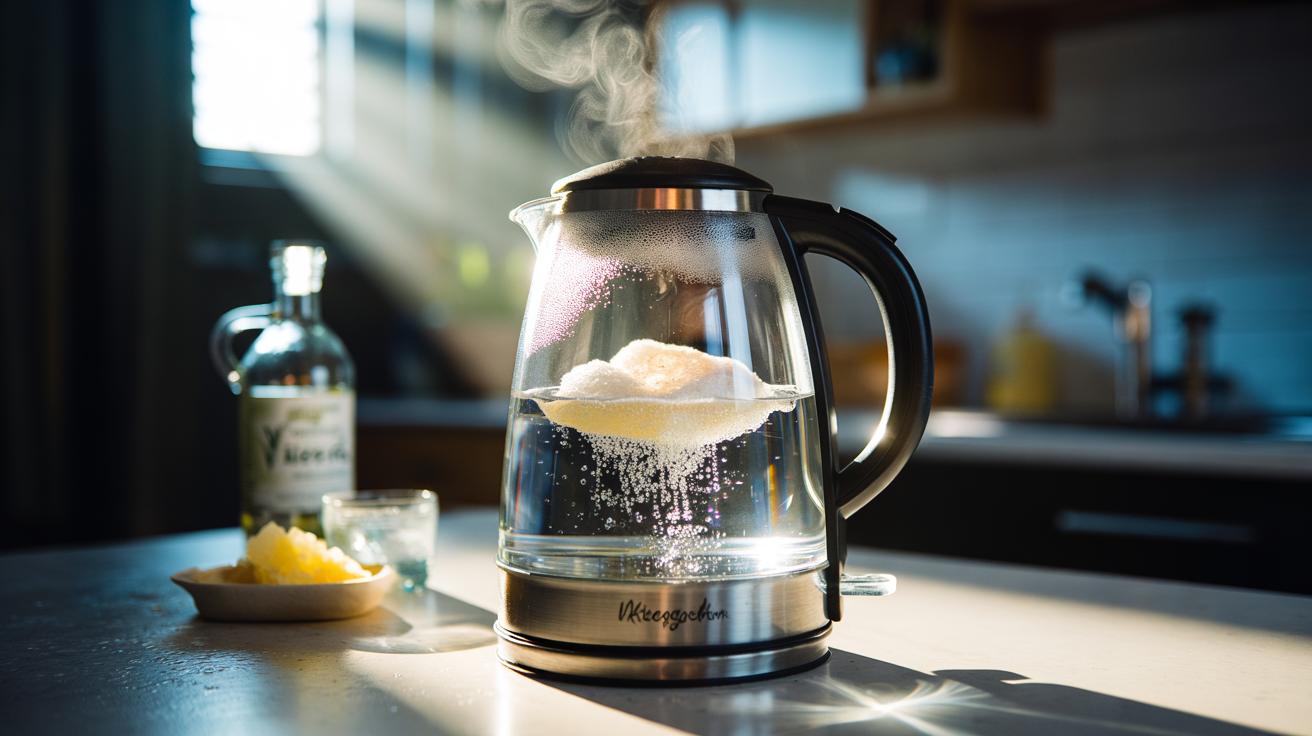
White distilled vinegar is typically 5% acetic acid. When it meets limescale (calcium carbonate), a simple reaction occurs: acetic acid + calcium carbonate → calcium acetate (soluble) + water + carbon dioxide. The visible fizz is the CO2 escaping as the crust converts into a harmless, rinseable solution. That fizz is your proof the chemistry is working.
Heat speeds up the process. Warmer liquids increase reaction rates and help the newly formed calcium acetate stay dissolved. Bringing the diluted vinegar to a brief boil exposes the entire surface of the scale, especially around elements and seams where deposits concentrate. The sound and sight of bubbling around the crusted areas often pinpoints the thickest patches.
Because acetic acid is relatively weak, it’s gentle on stainless steel and most plastics used in modern kettles. Keep contact time sensible and rinse thoroughly to remove odour. For heavy deposits, a second cycle or a short soak while the kettle is hot completes the reaction without harsh scrubbing. Avoid mixing vinegar with bleach or other cleaners; use it on its own.
Step-by-Step: The Safe Boiling Vinegar Method
Start by removing any loose anti-scale mesh or filters and emptying the kettle. Add a 1:1 mix of white vinegar and water until the scale is covered, taking care not to exceed the maximum fill line. Open a window or switch on an extractor for ventilation. Do not seal the spout or lid vents while heating.
Bring the solution to the boil, then switch the kettle off immediately. Let it sit for 10–20 minutes. You’ll see fizzing where the scale is thickest. For stubborn patches, gently swirl the hot solution so it contacts hidden crevices. If deposits remain, reheat once more rather than scraping aggressively, which can mark the surface.
When the fizzing subsides, pour the solution away and rinse thoroughly—twice—with clean water. Boil a full kettle of fresh water and discard to clear any residual odour. Wipe the interior with a soft cloth. Safety note: hot acidic vapour can be irritating; keep your face away from the spout and handle with care. Never leave a heating kettle unattended.
When Vinegar Isn’t Enough: Alternatives and Prevention
If thick, brownish scale resists vinegar, try citric acid (food-grade crystals) at about 1–2 tablespoons per 500 ml hot water; it works quickly and leaves less odour. Commercial descalers are stronger still and effective on severe build-up—follow the manufacturer’s directions and check compatibility with your kettle’s materials and any warranty conditions.
| Method | Active Acid | Typical Ratio | Contact Time | Pros | Watch-outs |
|---|---|---|---|---|---|
| White Vinegar | Acetic (5%) | 1:1 with water | 10–20 mins | Cheap, widely available | Temporary odour; needs rinse |
| Citric Acid | Citric | 1–2 tbsp/500 ml | 5–15 mins | Low odour, fast | Can etch aluminium |
| Commercial Descaler | Proprietary blend | As directed | 5–15 mins | Very effective | Cost; read safety notes |
Prevention saves effort. Empty standing water after use, give a weekly quick descale in hard-water areas, and consider a jug filter or inline softener. Avoid prolonged acid soaks on aluminium or decorative finishes, and wipe spills—acids can dull natural stone countertops. Regular care keeps your kettle efficient, quiet, and free from flakes in your cuppa.
The boiling vinegar method combines kitchen-cupboard simplicity with sound chemistry, turning stubborn kettle crust into an easily rinsed solution. Used monthly in hard-water regions, it restores fast, efficient boils and keeps drinks clean-tasting without specialist products. For extreme deposits, step up to citric acid or a branded descaler, then adopt a light-touch routine to slow future build-up. A few minutes now can save energy and extend your kettle’s lifespan. What tweaks—filter jugs, scheduled mini-cleans, or different acids—will you try to keep limescale from returning?
Did you like it?4.4/5 (20)