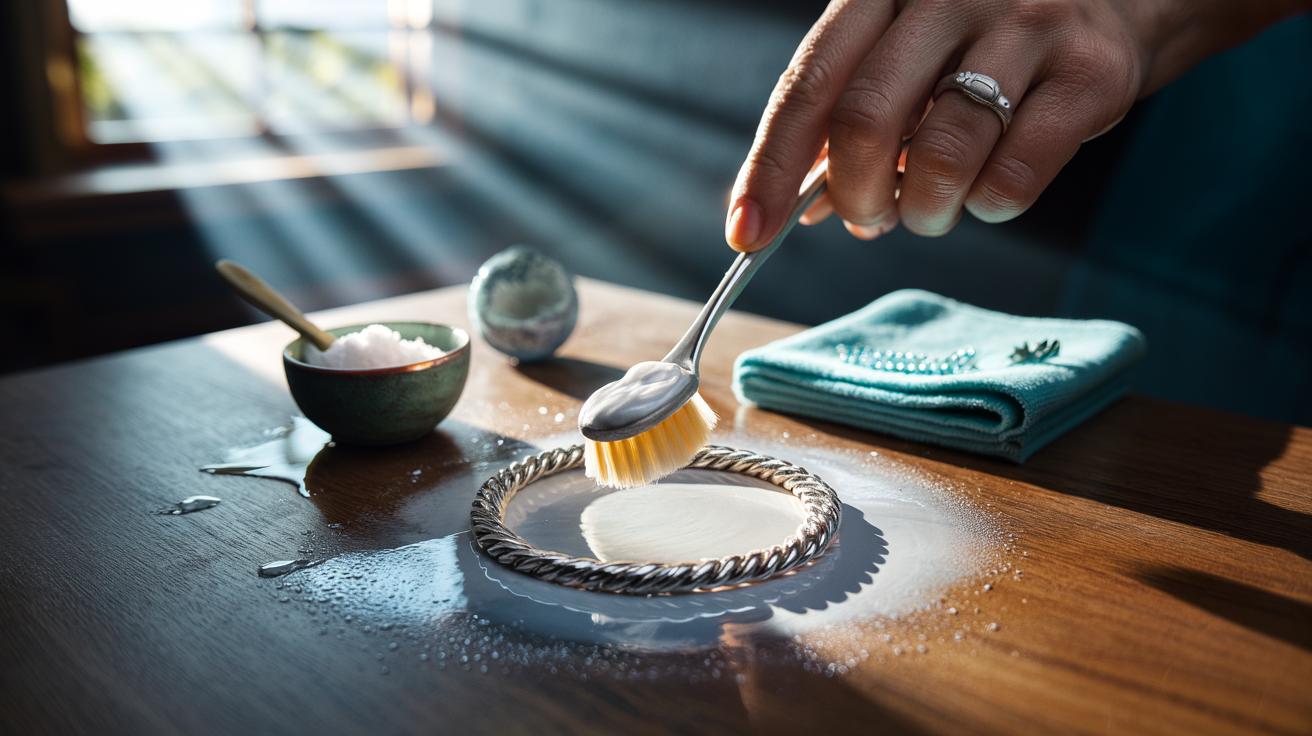
In a nutshell
- 🧪 Cream of tartar (potassium bitartrate) gently softens silver sulphide tarnish, preserving engravings and hallmarks; ideal for sterling silver with controlled contact times.
- 🥄 Mix a fresh paste at a 3:1 ratio (cream of tartar : water) to a toothpaste-like consistency; distilled water helps prevent mineral spots.
- 🧼 Apply a thin coat for 2–5 minutes, agitate lightly with a soft brush, then rinse and dry thoroughly before a final buff; use shorter times for plated jewellery.
- 🛑 Keep paste off pearls, opals, turquoise, malachite, coral, amber, and lapis; test discreetly, avoid oxidised accents, and see a pro for loose stones or deep damage.
- 🗃️ Store in anti-tarnish pouches with silica gel, wipe after wear, and avoid lotions, perfumes, and pools to extend that just-polished shine.
There’s a quiet miracle hiding in your baking cupboard: a simple, two-ingredient paste that restores the gleam to silver jewellery without harsh chemicals or specialist tools. The star is cream of tartar, the kitchen-friendly acid that—when mixed with water—lifts stubborn tarnish and revives dulled chains, rings, and earrings. Unlike abrasive scouring powders or aggressive dips, this method is gentle, controllable, and perfect for home care. It’s just cream of tartar and water—nothing more. Whether you’re prepping heirlooms for a party or refreshing a favourite necklace after months in a drawer, this fuss-free paste delivers impressive, camera-ready sparkle with minimal effort and maximum safety for most sterling pieces.
Why This Pantry Staple Works on Tarnish
At its heart, cream of tartar is potassium bitartrate, a mild acid with a knack for softening the silver sulphide layer that makes jewellery look grey and lifeless. Tarnish forms when silver reacts with sulphur compounds in the air, perfumes, or rubber. The gentle acidity loosens that layer so it can be coaxed away with a soft cloth, avoiding the aggressive bite of strong chemical dips. This is a surface refresh, not a metal strip, which is why the method preserves detail on engravings and hallmarks while brightening the overall finish.
Because the paste is slightly viscous, it clings to curves and crevices where grime collects, ensuring even coverage. Unlike electrolytic baths, you’re not changing the metal’s structure; you’re lifting and dispersing the tarnish. That makes it especially friendly to sterling silver and solid pieces. For silver-plated items, use shorter contact times. If your piece has an intentional oxidised (blackened) finish, keep paste off those areas to preserve contrast.
How to Mix the 2-Ingredient Paste
The recipe couldn’t be simpler: combine 3 parts cream of tartar with 1 part water to create a spreadable paste, similar to toothpaste. Distilled or deionised water helps avoid mineral spots. Stir until smooth—no gritty clumps. The aim is a paste that will stick to the metal without dripping. If it’s runny, add a pinch more powder; if it’s too thick, add a few drops of water. Always mix fresh; the paste works best immediately after preparation.
| Parameter | Recommendation |
|---|---|
| Ratio | 3:1 (cream of tartar : water) |
| Quantity for one ring | 1 teaspoon paste |
| Dwell time | 2–5 minutes (1–2 for plated items) |
| Tools | Soft brush, cotton buds, microfibre cloth |
| Safe on | Sterling silver, solid silver, most chains |
| Avoid | Pearls, opals, turquoise, amber, porous stones |
Gather a small bowl, a spoon, cotton buds, a soft-bristle toothbrush, and a clean microfibre cloth. Lay jewellery on a towel to prevent slipping. Do not submerge set pieces; apply the paste sparingly, especially around gemstones and joins. Mask delicate stones with a thin film of petroleum jelly if needed, then proceed confidently.
Step-by-Step: Restore Shine Without Scratching
First, wash your hands and give the piece a quick pre-clean with mild soap to remove skin oils. Pat dry. Using a cotton bud or fingertip, spread a thin coat of the cream of tartar paste over tarnished areas. Let it sit for 2–5 minutes. For heavy tarnish, work in sections rather than layering thickly. Shorter contact times protect plating and delicate finishes.
With a soft toothbrush, lightly agitate the paste along the metal’s grain—small, controlled strokes, not scrubbing. Focus on crevices around clasps and settings, then wipe away residue with a damp microfibre cloth. Rinse under lukewarm water to clear all traces. Rinse thoroughly and dry completely; trapped moisture can restart tarnish.
Finish by buffing with a clean, dry polishing cloth to revive the mirror sheen. If dark spots persist, repeat once rather than pressing harder. For chains, pinch the strand in a cloth lined with a little paste and draw through gently. Avoid snagging on prongs or filigree. When satisfied, store immediately in an anti-tarnish pouch.
Care Tips, Caveats, and When to See a Pro
Keep sparkle longer with simple habits. Store pieces in zip bags or anti-tarnish pouches with silica gel. Rotate wear so skin oils naturally polish the surface. Remove jewellery before swimming, cleaning, or applying lotion and perfume. Wipe down with a dry cloth after each wear. Regular light maintenance beats infrequent heavy cleaning. If you love oxidised contrast on vintage pieces, target only the high points and avoid recessed patina to preserve character.
Be cautious around pearls, opals, turquoise, malachite, coral, amber, and lapis; these porous or delicate stones dislike acids and moisture. Keep paste off gemstone faces and into metal-only areas, using a guarded cotton bud. Check settings before cleaning—if a stone moves, stop and seek a jeweller. Deep scratches, split chains, or heavy black corrosion deserve professional attention. When in doubt, test on an inconspicuous spot and limit dwell time to keep heirlooms safe while restoring their radiance.
This two-ingredient method is fast, frugal, and kind to silver, turning a dull afternoon into a sparkling reveal. With a small bowl, a cloth, and a pinch of cream of tartar, your favourite pieces can look shop-fresh without a trip to the high street. The secret is gentle repetition, careful rinsing, and intelligent storage so you clean less over time. A little paste goes a long way, especially when paired with mindful everyday habits. Which piece in your jewellery box is first in line for a safe, at-home revival—and what story will it tell once it shines again?
Did you like it?4.5/5 (29)