In a nutshell
- 🍋 Chemistry: the combo of citric acid and salt lifts oxides; fine crystals add gentle abrasion, restoring brass to a bright finish under a minute for light tarnish.
- 🧰 Method: halve a lemon, add 1 tablespoon fine salt, use light circular strokes, watch the juice turn grey, then warm rinse, thorough dry, and a quick buff; let gentle pressure and chemistry work.
- ⏱️ Control: keep contact to 30–60 seconds (up to 2 minutes for stubborn spots), work in sections, and stop as soon as the gold tone returns; use short, repeated passes instead of long soaks.
- ⚠️ Suitability: confirm solid brass (magnet test), avoid lacquered or plated pieces and prized patina; wear gloves, protect stone, never let acid dry, and skip steel wool.
- ✨ Aftercare: microfibre buff plus a thin coat of beeswax/microcrystalline wax slows re-tarnish; pre‑warm fixtures, crosshatch the lemon for better salt hold, and wipe dry after use.
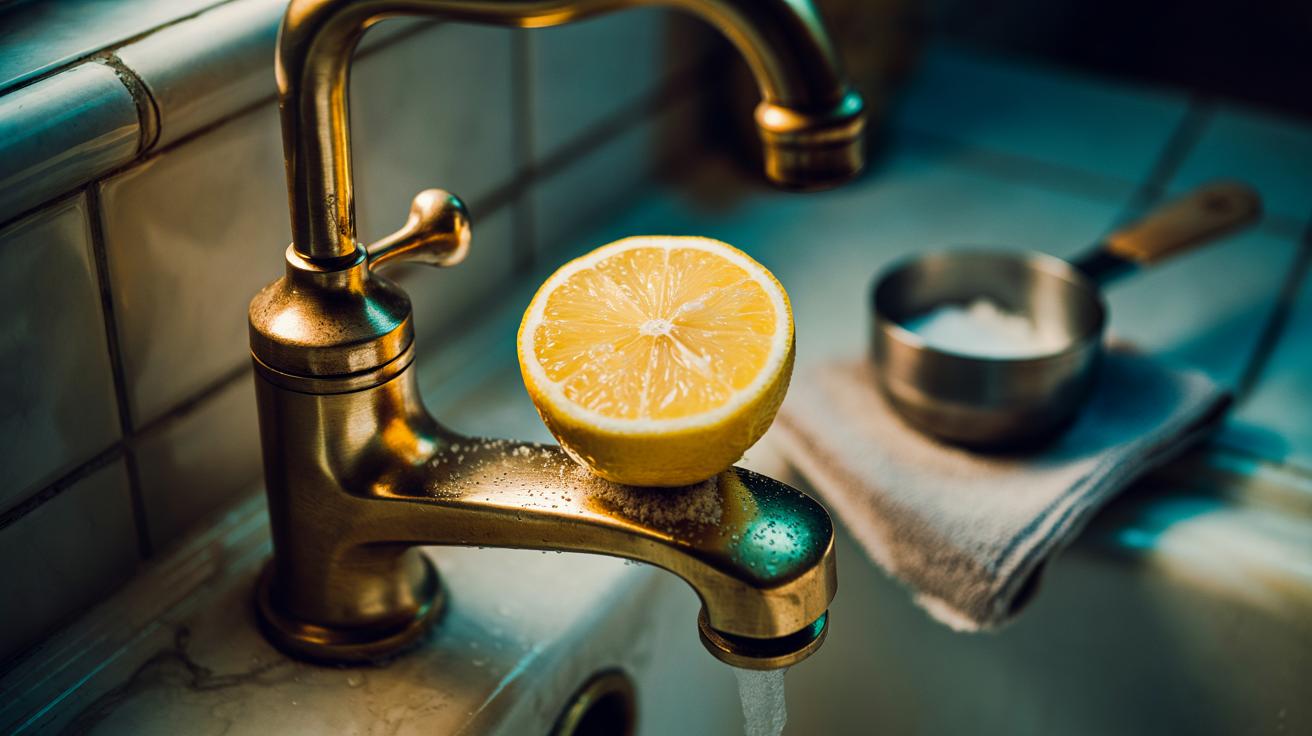
The simplest kitchen trick is often the one that feels like a revelation. Take a halved lemon, add exactly one tablespoon of salt, and you can revive dull brass fixtures with a gleam worthy of a showroom. This quick method trades harsh chemicals for pantry staples, relies on straightforward chemistry, and, with light tarnish, polishes in under a minute. It suits taps, door handles, escutcheons, and decorative plates, provided they are solid brass and not lacquered. Below, I explain why it works, how to do it cleanly, where to be cautious, and the small finishing touches that protect the shine for longer.
Why Lemon and Salt Work on Brass
Brass is an alloy of copper and zinc; its brownish tarnish is mainly oxides and carbonates formed by air and moisture. The juice brings citric acid, which loosens and dissolves those films, while salt acts as a fine, soluble abrasive that speeds removal without gouging the surface. This two‑part action is why a single wipe can shift months of dullness. Because the acid is mild, it targets the oxide layer rather than the metal beneath, offering control that stronger agents lack.
There is also a practical upside: the lemon’s pectin-rich juice clings to vertical fixtures, keeping the active solution where it needs to be. Salt crystals add bite until they dissolve, then the liquid continues the chemical clean-up. The result is a rapid lift from brown to gold. On gently tarnished pieces, the transformation is visible within 30 to 60 seconds, cutting the time you spend scrubbing and reducing the risk of scratching from aggressive pads.
How to Do the 1-Tablespoon Salt + Lemon Polish
Start with a clean, dry surface. Halve a fresh lemon. Sprinkle exactly 1 tablespoon of fine salt onto the cut face; fine grains distribute evenly, preventing random scouring. Press the lemon lightly against the brass and work in small circles. You will see the juice turn grey as it lifts oxides. Keep the lemon moving and refresh with a pinch more salt if the crystals dissolve before the shine appears. Gentle pressure is enough; let chemistry, not force, do the work.
When the metal brightens, stop. Rinse immediately with warm water to remove acidic residue, then dry thoroughly with a soft cloth. Buff for 10 seconds to raise a mirror finish. If fingerprints are an issue, wipe with a tiny drop of mild washing-up liquid before the final buff. For crevices around screws or escutcheon edges, dab with a cotton bud dipped in lemon juice and a touch of salt, then rinse and dry to avoid hidden moisture.
At-a-Glance Measurements and Timing
For repeatable results, keep the quantities tight and the dwell time short. The following summary helps you avoid overdoing the acid or scrubbing for too long, both of which can dull the metal’s colour or disturb delicate detailing.
| Key Point | Recommendation |
|---|---|
| Salt Quantity | 1 tablespoon (fine salt) per lemon half |
| Contact Time | 30–60 seconds for light tarnish; up to 2 minutes for stubborn spots |
| Pressure | Light, circular motion; avoid scouring |
| Rinse and Dry | Immediate warm rinse; towel dry and buff |
| When to Stop | As soon as a bright gold tone returns |
If you reach the two-minute mark without a uniform shine, pause. Rinse, dry, and reassess. Very heavy tarnish often benefits from a second short cycle rather than one long session. Short, controlled passes protect the surface and preserve crisp edges on knurling or engraving. For large fixtures, work in sections so the juice does not dry on the metal before you rinse.
Safety, Suitability, and When to Avoid
Confirm you’re dealing with solid brass rather than brass-plated steel. A quick magnet test helps: a magnet sticking firmly indicates plating. On plated items, acids and abrasion can breach the thin coating, exposing the base metal. Also, check for lacquer. Many modern fixtures are sealed; the lemon-and-salt method can cloud or lift that coating. Test in a discreet spot. If lacquer is present, clean with a damp cloth and mild soap instead, then consider professional refinishing if it’s compromised.
Take care with heritage pieces where the aged patina is part of the character. Acidic cleaning removes patina and can reduce value. Wear gloves if you have sensitive skin, and protect nearby stone or grout, which can etch under acids. Never leave acidic residues to dry on the metal. Rinse thoroughly, and avoid pairing this method with steel wool or hard scouring pads; the combination can scratch and embed particles that later rust.
Speed Tricks and Aftercare for a Lasting Shine
To accelerate the clean, pre-warm the fixture slightly with a hairdryer; warmth helps the citric acid work faster. For vertical taps, score the lemon’s surface with shallow crosshatches so it holds more salt. If you encounter speckled tarnish near water lines, a second pass with a fresh lemon face usually clears it. Keep a microfibre cloth to hand: a brisk 20-second buff after rinsing often makes the difference between “clean” and “brilliant”.
Protection is the real time-saver. After drying, apply a whisper-thin coat of beeswax or a neutral microcrystalline wax, then buff. This seals pores, resists fingerprints, and slows oxidation, extending the interval between cleans. In hard-water areas, wipe fixtures dry after use to prevent mineral spots that seed tarnish. Store any leftover lemon halves wrapped in the fridge for a day, but always add fresh salt before the next polish to restore the abrasive edge.
With a lemon, a spoon of salt, and a minute of attention, brass regains the warm lustre that elevates a room. The method is quick, inexpensive, and tactile—just enough effort to feel satisfying without becoming a chore. By keeping contact time short, rinsing promptly, and finishing with a protective wax, you secure a durable shine that stands up to daily life. Which brass piece in your home most deserves a 60‑second revival, and how will you build this tiny ritual into your weekly clean?
Did you like it?4.3/5 (27)