In a nutshell
- 🧽 A scrunched aluminium foil ball works via countless micro-ridges; its abrasive texture shears off charred bits on warm grates while remaining softer than stainless steel or cast iron.
- 🧤 Follow a safe routine: heat to medium, grip with gloves and tongs, use short strokes, then wipe and lightly oil the bars; always inspect for stray foil fragments before cooking.
- ⚠️ Avoid on porcelain- or ceramic-coated grates and thin chrome; for heavy build-up, deep-clean and reseason. Consider alternatives like a hardwood scraper, chainmail, pumice, or a cool-usage nylon brush; skip wire-bristle brushes.
- 🌱 Prioritise safety and sustainability: ventilate, don’t use flammable sprays on hot grates, reuse foil until dulled, and recycle clean foil where accepted; adopt burn-off and warm-wipe routines to prevent build-up.
- 🔥 Benefits include cleaner grates, quicker maintenance, fewer flare-ups, and a better sear with cleaner flavours—ideal for stainless steel and seasoned cast iron when used correctly.
It’s the backyard hack that actually works: scrunching a ball of ordinary aluminium foil (aluminum in the US) to scour stubborn, carbonised residue from grill bars. The wrinkled ball presents a field of micro-peaks that grab and shear off charred bits without specialist kit. Used warm, the grates release crust more easily, leaving you with a cleaner cooking surface and fewer flare-ups. This guide explains the science behind the abrasive texture, a step-by-step method for safe use, and the moments when foil is not your friend. Handled properly, a foil scrunch can be an inexpensive, quick win for stainless steel and bare cast-iron grates.
Why a Scrunched Foil Ball Works
The secret is geometry. Crumpling aluminium foil creates countless sharp ridges and hard contact points. When pushed along a bar, these asperities act like a flexible rasp, biting into brittle carbon deposits and lifting them in flakes. Aluminium is softer than stainless steel or seasoned cast iron, so it conforms rather than gouges. On a warm grate, denatured proteins and caramelised sugars lose rigidity, and the foil’s abrasive texture can shear them away with moderate pressure.
There’s also an element of work-hardening: repeated scrubbing compresses the foil, stiffening the peaks and improving bite. You gain coverage as the ball compresses into the contours that stiff brushes miss. Do not use this technique on porcelain- or ceramic-coated grates, where sharp edges can scratch the glaze. A brief preheat, a firm yet controlled grip, and short strokes along the metal’s grain maximise removal while protecting the underlying surface.
Step-by-Step: The Safe Foil-Ball Method
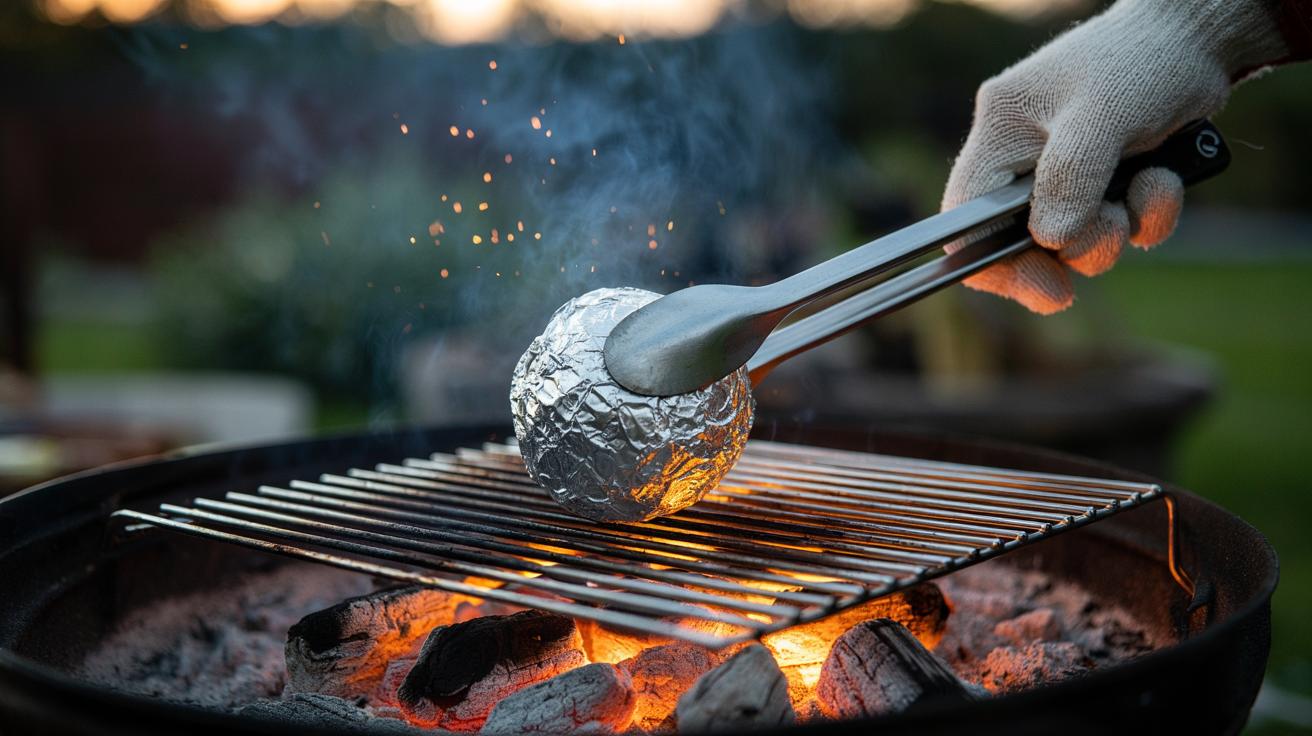
Heat the barbecue to medium, then turn burners low or let a charcoal bed settle so the grates are hot but not scorching. Tear a sheet of heavy-duty foil, fold twice, and scrunch into a tennis-ball-sized wad. Wear heatproof gloves and keep a long-handled tongs to maintain distance. With the grates still warm, run the foil ball along each bar, focusing on crusted spots. Use short, overlapping passes rather than grinding in one place. Tap off loosened debris as you go.
Follow up with a damp, folded cloth held in tongs to wipe residue, then lightly oil the bars with a high smoke-point oil to inhibit rust and sticking. Inspect closely for any stray foil flecks and remove them. Discard the foil responsibly once it loses structure. Never scrub directly over exposed food or open trays, and always check the cooking surface for fragments before the next use. The whole routine takes minutes and extends grate life.
When to Avoid Foil and What to Use Instead
Skip the foil on delicate, glossy coatings, ultrathin chrome-plated grids, or grates with visible chips where scratching could accelerate rust. If heavy, tarry build-up won’t budge, a deeper clean—soak, scrape, then reseason—makes more sense than brute force. Alternatives include a hardwood scraper that gradually conforms to your grate profile, a stainless chainmail scrubber for robust cast iron, or a pumice stone for flat plates. For cool grates, a stiff nylon brush paired with hot, soapy water works well.
An onion-halves-and-heat trick can loosen light film via steam and mild acids, but it won’t erase baked-on lacquer. Avoid wire-bristle brushes; shed bristles have caused serious injuries. The compact guide below contrasts common tools so you can choose appropriately for your kit and cleaning stage.
| Tool | Abrasiveness | Best For | Risks | Reusability/Cost |
|---|---|---|---|---|
| Foil ball | Medium | Warm stainless or bare cast iron | Scratching coatings; small foil flecks | Single-use; low cost |
| Hardwood scraper | Low–Medium | Routine cleaning, grate-friendly | Slow shaping; ash splinters if burnt | Reusable; moderate |
| Chainmail scrubber | Medium–High | Cast iron and flat plates | Too harsh for coatings | Long-lasting; higher |
| Pumice stone | High | Heavy deposits on flat griddles | Can wear surfaces if overused | Consumable; moderate |
| Nylon brush (cool) | Low | Soap-and-water cleans | Melts on hot grates | Reusable; low |
Care, Safety, and Environmental Considerations
Think about safety first: ventilate well, keep a bucket of water nearby for fat flare-ups, and use gloves. Never combine the foil method with flammable sprays on a hot grill. After scrubbing, wipe the bars to capture any detached fragments. If you cook for children or anyone with swallowing difficulties, double-check grates by touch and sight. Consider the grate material: seasoned cast iron welcomes mild abrasion; porcelain and thin chrome do not.
On sustainability, reuse a clean piece of aluminium by re-scrunching until it’s compact and dulled, then recycle if your local authority accepts foil that’s free of grease. For greener routine maintenance, burn off residues after cooking, then brush while warm and finish with a light oiling to reduce future build-up. The goal is prevention: a few seconds post-service saves minutes later and reduces waste. Cleaner grates mean better sear, less smoke, and far fewer off-flavours.
Used thoughtfully, the aluminium foil scrunch is a nimble, low-cost way to restore grill grates and keep flavours honest. Its jagged texture excels on warm stainless and cast iron, provided you avoid delicate coatings, check for fragments, and finish with a simple wipe and oil. For big jobs, the table of alternatives points you to stronger or gentler tools as needed. How will you blend this quick hack with your own maintenance routine, and which tool combination best suits the grill you use most?
Did you like it?4.3/5 (21)