In a nutshell
- 🧺 Towels feel rough due to detergent residue, fabric softener build-up, and hard-water minerals coating fibres; an apple cider vinegar rinse dissolves these films to restore plushness and absorbency.
- 🧪 ACV’s ~5% acetic acid neutralises alkaline residues and converts limescale into soluble acetates, leaving fibres bare and absorbent without perfumed coatings.
- 📋 Method: wash with a modest detergent dose, then add 120–250 ml ACV to the rinse drawer (not the wash); avoid overloading, and dry with wool dryer balls or a brief tumble to fluff loops.
- ⚠️ Safety: never mix vinegar with bleach; don’t pair ACV with baking soda in the same cycle; use occasionally (every 3–4 washes) to protect machine seals and always check care labels.
- 🔄 Options: Distilled white vinegar works similarly and is colourless; traditional fabric softeners give instant feel but reduce absorbency by coating fibres.
There is a quiet scandal hiding in your linen cupboard: towels that feel like sandpaper despite careful laundering. The culprit is often detergent residue and hard-water mineral build-up that stiffen cotton loops and throttle absorbency. A humble fix sits in the pantry. An apple cider vinegar rinse, added at the right moment, uses gentle acidity to dissolve the gunk that clings to fibres and traps odours. Add vinegar only in the rinse stage, never with detergent or bleach. Done properly, it restores the plush hand you remember, lifts lingering smells, and leaves towels ready to wick away moisture instead of smearing it across your skin.
Why Towels Go Crunchy: Residue, Hard Water, and Fibre Physics
Modern detergents are powerful, yet many households use more than necessary. Surfactants that aren’t fully rinsed combine with calcium and magnesium from hard water, forming stubborn films on cotton. Add in the cationic surfactants from fabric softeners, and loops that should spring back instead dry into brittle stacks. The result is that towels feel crisp rather than cloud-like, and absorbency dives because the fibre surface is coated. That squeaky “clean” sound when you rub a towel isn’t purity; it’s residue. High-efficiency washers, crammed loads, and cool cycles can all make incomplete rinsing worse.
Cotton’s terry loops work by capillary action, but only when the fibre surface is free to interact with water. Residue interferes with that wicking, while limescale adds rigidity, locking loops in place. An alkaline wash environment can set the build-up even harder. This is where an acidic rinse changes the chemistry and the feel under your fingers.
How Apple Cider Vinegar Works: The Chemistry of a Softer Towel
Apple cider vinegar (ACV) is around 5% acetic acid, with a pH typically near 2.5. In the rinse, it neutralises alkaline residues, breaks down the bonds between leftover detergent and fibre, and converts chalky carbonate deposits into soluble acetates that wash away. By reducing rinse water pH, it also helps tighten the cotton fibre slightly, which can enhance softness once dried. Odours fade because volatile compounds and amines are protonated and released. The magic isn’t perfume; it’s chemistry undoing build-up.
Unlike commercial softeners that mask roughness with a coating, ACV leaves fibres bare and absorbent. The amber colour of ACV is too dilute to stain at rinse dosages, and the scent vanishes as towels dry. If you prefer absolute neutrality, distilled white vinegar performs similarly, but many swear ACV leaves fabric feeling livelier.
| Rinse Agent | Approx. pH | Best For | Typical Dose | Pros | Cautions |
|---|---|---|---|---|---|
| Apple Cider Vinegar | ~2.5 | Residue, limescale, odour | 120–250 ml in rinse | Restores absorbency; deodorises | Never mix with bleach; avoid overuse on rubber seals |
| Distilled White Vinegar | ~2.4 | Hard water scale, neutral odour | 120–200 ml in rinse | Colourless; predictable | Same bleach warning; check machine guidance |
| Fabric Softener | N/A | Immediate feel | As directed | Instant plush | Coats fibres; reduces absorbency |
Step by Step Rinse Routine for Fluffy, Absorbent Towels
First, strip back the wash. Use a modest dose of powder detergent suited to your water hardness and a warm cycle (40°C for colours, 60°C for whites if your care label allows). Do not add fabric softener. If suds are excessive or towels feel slimy, run an extra rinse to clear the load. Overloading is the enemy of rinsing; give towels room to move.
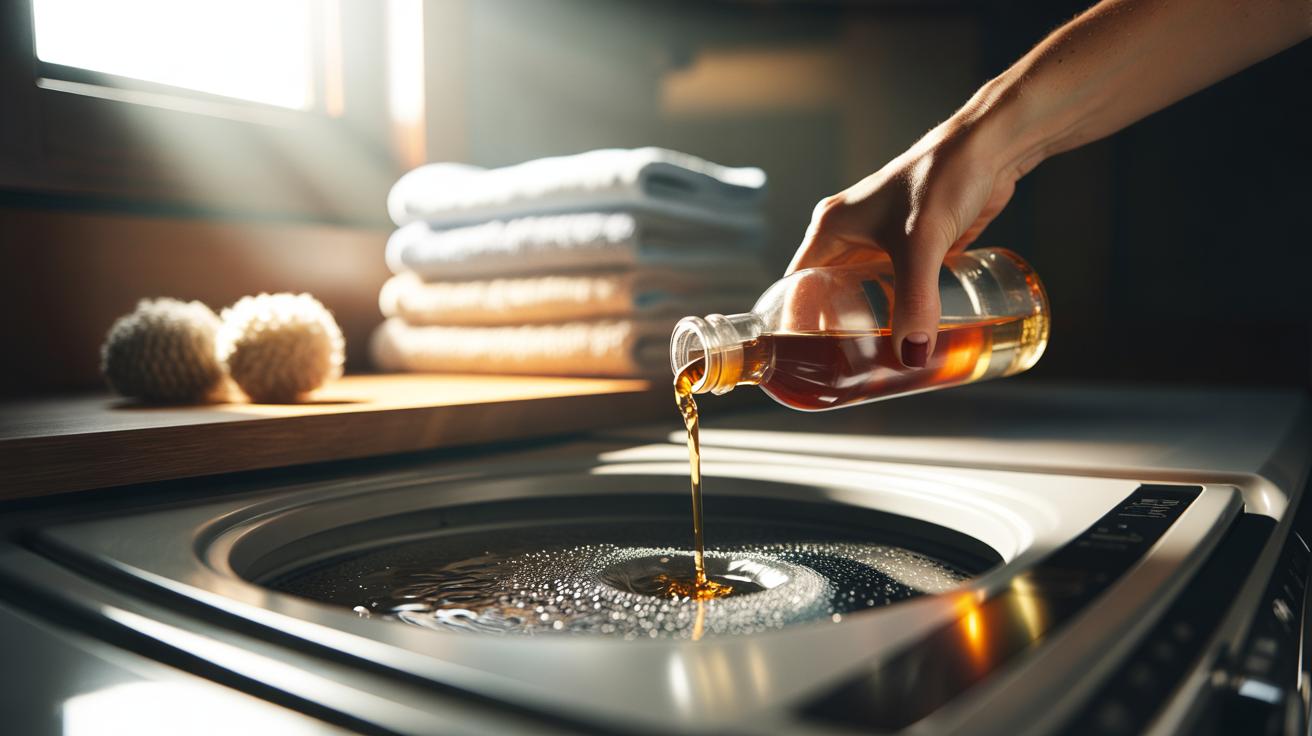
Now for the hero move: add 120–250 ml of apple cider vinegar to the rinse compartment and run a full rinse and spin. For very hard water, use the higher end of the range. Add vinegar only in the rinse drawer, never with detergent, so it can neutralise residues instead of being neutralised in the wash. If build-up is severe, repeat once. Avoid pairing ACV with baking soda in the same cycle; they cancel each other out.
Drying sets the finish. Tumble on low-to-medium heat with wool dryer balls to separate fibres, or line-dry until almost done and finish with a brief tumble to fluff. Skip softeners and dryer sheets; they re-coat fibres. Shake towels once out of the washer to lift loops, and ensure they are fully dry to prevent mustiness.
Troubleshooting and Myths: Safety, Frequency, and Results You Can Expect
Some towels are beyond a single rescue rinse. If they’ve been saturated with silicone-heavy softeners or body oils, perform a “stripping” wash in a separate hot cycle using washing soda or a specialist residue remover before returning to the ACV rinse. For ongoing care in hard-water regions, schedule an acidic rinse every three to four washes, or monthly for light use. Never mix vinegar with chlorine bleach—this creates dangerous chlorine gas.
Worried about damage? Occasional, diluted ACV in the rinse is considered safe for most machines, though it’s wise to consult your manufacturer and avoid daily use to protect rubber seals. ACV’s scent will not linger after drying. Microfibre and bamboo-viscose towels also benefit, but always check labels. If you prefer absolute colour neutrality, use distilled white vinegar; the softening chemistry is comparable, with ACV adding a folkloric charm rather than a functional edge.
The towel you want is already in your cupboard—its fibres just need freeing from the films that smother them. A measured apple cider vinegar rinse clears away detergent residue, neutralises hard-water scale, and restores that deep, thirsty fluff without perfumed coatings. Keep doses modest, space out treatments, and dry with care to lock in softness wash after wash. As households chase quieter, cleaner routines, this pantry solution earns its place alongside the eco-essentials. What will your first test be: a single tired bath sheet, or the whole family’s stack to see just how soft your laundry can be?
Did you like it?4.5/5 (29)